







Fill out the form with your details, and we will attend to your request as soon as possible.


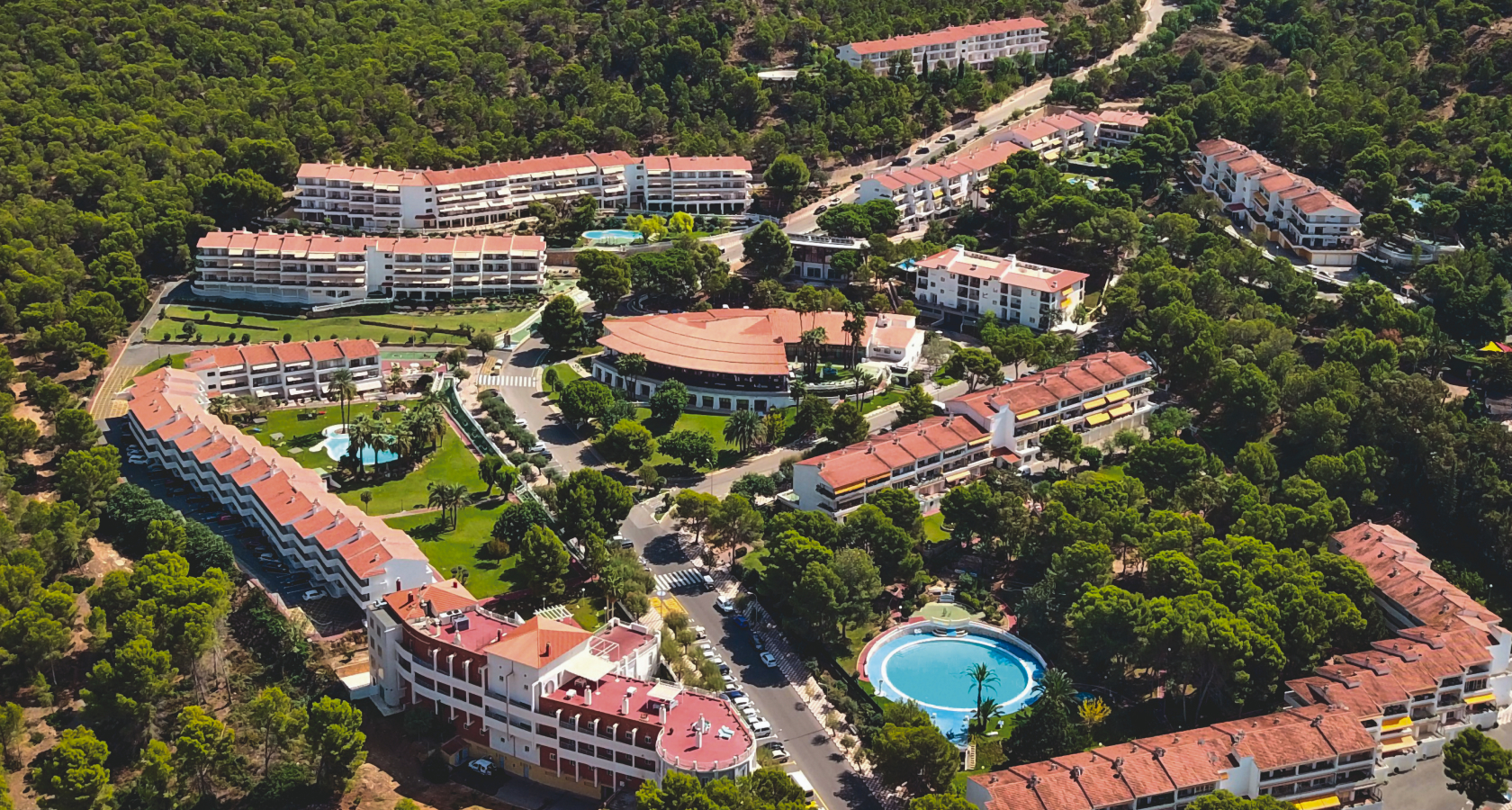


Central Building
Iris Building
Gardenia Building
Hortensia Building
Flora Building
Elisa Building
Heated Swimming Pool
Swimming pools
Swimming Pools
Restaurant
Indoor Pool
Reception

 Filters
Central Building
It is the core of community life at Ciudad Patricia. The reception area, restaurant, beauty centre, and some of our main services are located here.
Iris Building
Iris, completed in 2018, offers 15 apartments built to luxury quality standards. It is located just 50 metres from the Central Building.
Gardenia Building
Gardenia is located right across from the Central Building, allowing you to enjoy all the facilities that are just a stone’s throw away from your apartment.
Hortensia Building
At Hortensia, you can enjoy two worlds: the vibrant bustle of the city and the peaceful and relaxing atmosphere of the adjacent pine forest.
Flora Building
Flora, our tallest building, boasts stunning panoramic views of the valley, the mountains, and the resort.
Elisa Building
Elisa is located in a tranquil setting near the Central Building, indoor pool, fully equipped gym, and hobby room.
Heated Swimming Pool
We have an indoor swimming pool that you can enjoy all year round, whether you would like to exercise or have a moment of relaxation.
Swimming pools
We have several swimming pools at the resort where you can swim, cool off, or simply relax and enjoy the healthy climate of the Costa Blanca.
Swimming Pools
We have several swimming pools at the resort where you can swim, cool off, or simply relax and enjoy the healthy climate of the Costa Blanca.
Restaurant
Discover the delicious and healthy menu at the resort’s restaurant, and have an unforgettable time at its bar, in the dining area, or at its outdoor terrace.
Indoor Pool
We have several swimming pools in the complex, where you can swim, cool off, or simply relax and enjoy the healthy climate of the Costa Blanca.
Reception
In the Central Building, our staff are available to assist and help you with whatever you may need.
 Go back
Your First Month in a Retirement Community: What Takes Time to Feel Familiar?

Quick Summary
- The first month in a retirement community is usually a period of adjustment, not an instant transformation. The apartment, routes, names and daily rhythm all take time to become familiar.
- Meeting people can happen surprisingly quickly, but friendships and routines develop more gradually. Our residents remain free to decide how sociable they want to be.
- Unpacking is often about more than finding places for possessions. Making a new apartment feel like your home can take several weeks.
- Couples may settle at different speeds, particularly when one person was more enthusiastic about moving than the other.
- Privacy remains important. At Ciudad Patricia, you have your own apartment and front door, so settling in does not mean becoming involved in every activity or spending all your time within the community.
- Moving day is strange. For months, perhaps even years, you have been thinking about the decision. You have looked at apartments, discussed finances, sorted furniture, told friends, packed boxes and eventually closed the door on your previous home.
Then suddenly you are here and nothing is quite where you expect it to be. The light switch is on the opposite side of the bedroom. You cannot remember the name of the person you met yesterday. You know where the Central Building is, but you still take the slightly longer route to get there. The apartment may look finished, but it does not necessarily feel like home yet.
The first month in an independent retirement community is not really about arriving. It is about the gradual process of becoming familiar with a new home, new surroundings and new routines without feeling that you have to reinvent your entire life.
The apartment may feel new before it feels like yours
One of our earlier articles about moving to Spain described the first weeks rather neatly: the new apartment can initially feel slightly more like a hotel than a home. You know it belongs to you, but the smells, sounds, kitchen cupboards and morning light are all different.
The quickest way to change that is usually not to buy more things, it is to live there.
You discover which chair you naturally sit in to read. You work out where the coffee cups should really go rather than where you put them on moving day. A picture gets hung because the wall suddenly looks too empty. Books start appearing on the table.
The apartment gradually stops being “the new apartment” and it becomes home.
One genuine resident story illustrates how useful practical help can be during this stage. Norman and Margo, who moved to Ciudad Patricia a few years ago, described how staff helped them with the small jobs they wanted completed before and after their move. Once settled, they said they had met “so many friendly people and made new friends.”
Those two parts of settling in often happen together: making the apartment yours and gradually becoming familiar with the people around it.
Unpacking can be more emotional than you expect
If you have moved from a large villa or a family home, unpacking may involve more than finding cupboard space. Objects arrive with history attached to them. A box of photographs is not clutter just because you have not opened it recently.
One person in a couple may find it liberating to arrive with fewer possessions. The other may suddenly notice everything that has been left behind.
There is no prize for having the apartment completely organised within a week. In fact, it can make sense to leave some decisions until you have lived in the space for a while. Where should that picture go? Do you really need another storage unit?
The answers may be different after three weeks from the answers you gave on moving day.
Learning names takes longer than meeting people
You are likely to meet quite a few people during the first weeks. Remembering all their names is another matter.
There may be neighbours in your building, people you see in the Central Building, somebody you repeatedly encounter while walking through the gardens and someone else you recognise from the restaurant but cannot quite place.
But that is how community often develops, not through formal introductions to fifty people at once, but through repeated encounters. You see the same person again and then again in a different context and eventually the name sticks.
The same applies to staff and practical routines. You learn who to ask about a particular question, when the restaurant is busiest, which path you prefer through the gardens and how long it really takes you to get from your apartment to the indoor pool.
Together, those small pieces of recognition are what make a new place familiar.
You do not need to make friends immediately
Moving into a retirement community does not create an obligation to acquire a new social circle within thirty days! Some residents are naturally sociable and begin joining activities almost immediately while others prefer to watch for a while. You might have coffee with somebody one morning and then spend the next two days happily on your own.
If you have been living locally, like many of our residents, you may already have a full circle of friends elsewhere on the Costa Blanca and have little immediate interest in constructing another one from scratch.
Our residents frequently mention just how friendly people are here. A couple who moved to Ciudad Patricia after living for 15 years in Torrevieja described meeting many people after arriving and also emphasised that they could take part in “as many or as few” activities as they wanted.
Social opportunity should be available without becoming social pressure.
We look at this in more detail in our article about community without compulsory sociability. Community Without Pressure: Why Good Retirement Living Should Never Feel Forced
Finding a routine may take longer than unpacking
During the first few days, moving creates its own timetable. The boxes need opening along with trying to remember what Room 1, carefully writing on the lid, really meant. The furniture still needs arranging properly - a drawer won’t open because of the sofa! And then, in the middle of half empty boxes, your daughter texts, your best friend calls five minutes later and not surprisingly by 4 pm you feel exhausted.
Slowly things become quieter and this is often when the real adjustment begins. You no longer have the move itself to organise, but nonetheless you have not yet established your normal week.
It may be that before you used to drive to a particular supermarket every Tuesday to do the weekly shop. Do you still want to do that? Or perhaps you previously spent several mornings each week maintaining the garden or dealing with the house. What are you going to do to fill that time now? How about the morning routine of a swim, outdoors in the summer and indoors in the cooler weather.
Perhaps you start using the restaurant occasionally - take a break from the kitchen and planning menus. On the other hand, perhaps nothing changes except that managing your home takes less effort. There is no standard Ciudad Patricia routine that you are expected to adopt.
The useful part of having facilities, activities, gardens, restaurant, transport and social opportunities nearby is that you have options while you work out what suits you. Your routine should emerge rather than be assigned to you.
Retaining your old routines can be just as important
Moving home does not mean everything before the move has to disappear. This is particularly relevant if you already live on the Costa Blanca. You may already have a doctor you trust, friends in Altea or Alicante, a favourite restaurant, a walking group or a hairdresser you have used for years out advice would be to keep them.
The aim of moving into an independent retirement community does not have to be replacing your life, it may simply be making the home around that life easier to manage.
The same is true for your hobbies. If Wednesday morning has been golf for the last fifteen years, there is no reason Wednesday suddenly has to become an organised community activity simply because you have changed address.
Moving from Northern Europe involves another layer of adjustment
If you are coming from Britain, the Netherlands, Germany or France, the apartment is only one of the things that is new. Spain itself may still be becoming familiar. You have probably visited often and may even have had a holiday home here, but living here is a different matter.
You may be learning where to shop, how local healthcare works, which bus goes where, how Spanish paperwork is organised and how much Spanish you actually need for everyday situations. There is a lot to absorb at once - so give it time.
First thing first. You do not need to understand every Spanish administrative process during your first week. Our staff can help with practical matters such as understanding Spanish correspondence, and translation or accompaniment to appointments can be arranged where needed.
We have already looked separately at how people can manage retirement in Spain without speaking fluent Spanish. Retiring in Spain Without Fluent Spanish: What Support Makes the Difference?
The useful principle in the first month is simple: solve the problems you actually have rather than worrying about every problem you might theoretically encounter.
Privacy sometimes becomes easier once you realise you control it
Quite a few prospective residents worry that living within a community will mean being constantly visible.
- Will people expect you at activities?
- Will neighbours knock on the door all the time?
- Will it be difficult simply to be left alone?
In practice, privacy starts with something very simple: you have your own apartment and your own front door and, most importantly, it is you decides whether to open it or not.
Our apartments provide private home life alongside shared spaces and opportunities for contact. Participation in activities is optional, and residents can decide how much or how little community life they want.
During the first weeks, someone may feel they should accept every invitation because they are new. Let us assure you: you do not have to. Settling in also means learning that saying “not today” does not mean withdrawing from the community.
Practical help can make the first weeks less tiring
Moving home generates an extraordinary number of small jobs. A light needs fitting, something needs adjusting you have no idea what the controls mean, you cannot remember which document you need, your told you have a parcel bit no idea where it is.
Our reception team, caretakers and resident coordinator provide clear points of contact for practical matters, and additional services can be arranged where appropriate.
One long-term resident account describes staff helping to get beds, lights and curtains sorted when the couple first moved in, as well as assisting with paperwork and medical arrangements.
The first month is also about learning the geography
Ciudad Patricia covers around 100,000 square metres of landscaped grounds and has several residential buildings alongside the Central Building and communal facilities.

You will not necessarily understand the geography on your first day but you will learn it by using it.
- Which way to the restaurant feels quickest?
- Where is the nicest route for an evening walk?
- Which entrance do you normally use?
- Where does the bus stop?
- Which path has more shade?
The same process happens outside Ciudad Patricia. You work out which route into Benidorm you prefer, where you want to shop, and which nearby places naturally become part of your routine.
This is why we encourage people thinking about retirement here to imagine ordinary life rather than a single impressive day. A Month of Retirement on the Costa Blanca: Life Beyond Your Front Door
When does it start to feel like home?
Quite simply there is no date. For one person it may happen quickly but for somebody else it may take months. Most probably it won’t happen in one dramatic moment. Much more often, familiarity appears almost unnoticed.
You stop checking which cupboard contains the glasses, you know three neighbours by name and they know yours, you no longer have to think about the route to the Central Building and you have have worked out where you like sitting in the apartment in the afternoon - well at least during the current month.
Our resident comments suggest that this sense of belonging can become very strong. One resident says she has lived here for almost four years without regretting the move, while another, after a year, said she wished she had come earlier.
Be kind to yourself and allow yourself enough time to settle in your own way.
What if the first month feels harder than expected?
A successful move does not require every day to feel positive. There may be, and quite possibly will be, a morning when you miss the old house or perhaps your partner seems to be settling faster than you are. Moving home is disruptive even when the move is voluntary and carefully planned.
If you have also moved country, left a long-term home or changed a routine built over decades, expecting everything to feel normal after ten days is unrealistic. What matters more is the direction of travel.
- Are more things becoming familiar?
- Are practical tasks getting easier?
- Are you beginning to develop routines that feel like yours?
- Does the apartment feel more personal than it did on moving day?
If the answer is gradually yes, the process is working.
Do not judge community life by how busy your calendar is
There can be a temptation during the first month to measure success by participation. You joined three activities, you met twelve people (yes you counted them), you had lunch four times and dinner once in the restaurant. Guess what, no-one is counting.
For one resident, a successful first month may involve joining several activities. For another, it might mean discovering a good walking route, meeting two neighbours they like and feeling completely comfortable spending most afternoons privately at home.
Independent senior living should accommodate both and our own approach is based on making community available rather than compulsory. Shared spaces make contact easier, but private life remains private.
If you are considering a move, think beyond moving day
When people visit us before moving, it is understandable that the apartment gets most of their attention. But try imagining the first four weeks too.
- Where would you walk in the morning?
- Would you use the restaurant?
- How much contact with neighbours would feel comfortable?
- What parts of your old routine would you keep?
- If one of you settles more slowly, how would you handle that?
- What would make the apartment feel personally yours?
- And when you want to close the front door and have a quiet day, would you feel comfortable doing so?
That is so much more than a floor plan.
Come and experience the community before you move
One of the best ways to make the first month less unfamiliar is to become familiar with Ciudad Patricia before moving day.
- Visit more than once if you can.
- Walk the gardens.
- See where reception is.
- Have a coffee.
- Look at the Central Building and pools.
- Notice how people use the shared spaces, but also how much ordinary private life happens behind apartment doors.
You are not trying to decide whether you could enjoy one afternoon here, you are trying to imagine whether, after a few weeks, the place could begin to feel like home.
Arrange a visit to Ciudad Patricia
Key Takeaways
The first month in a retirement community is an adjustment period, even when the move has been carefully chosen. Practical things may settle quickly, but familiarity with the apartment, neighbours, routes and daily rhythm develops through repetition.
Meeting people does not mean friendships have to form immediately, and joining a community does not mean surrendering privacy. Couples may adjust at different speeds, while people moving from Northern Europe also have Spain itself to become familiar with.
Ciudad Patricia resident stories show that practical help, friendly neighbours and the freedom to choose activities can make the transition easier, but there is no correct timetable for feeling at home.
Before moving, think beyond moving day and consider what will help your own routines, possessions and relationships feel familiar again.
Frequently Asked Questions
How long does it normally take to settle into a retirement community?
There is no standard timetable. Practical matters such as unpacking may take days or weeks, while routines, friendships and a sense of familiarity can develop more gradually. Moving from another country or leaving a long-term family home may make the adjustment more complex. It is more useful to notice whether everyday life is becoming easier and more familiar than to expect to feel completely settled by a particular date.
Do I have to join activities when I first arrive?
No. Activities can be a useful way to meet people and discover the community, but participation is optional. Some residents enjoy joining things immediately, while others prefer to settle into their apartment and establish their own routine first. You can also choose individual activities that interest you rather than treating the programme as a timetable you are expected to follow.
What if my partner settles in faster than I do?
That is entirely possible. One person may have been more enthusiastic about moving, while the other may feel more attached to the previous home or routine. Independent living allows couples to develop different routines rather than requiring both people to participate in the same activities. Give each other time and avoid treating enthusiasm for the move as something that has to appear at the same speed.
Can I maintain my privacy while getting to know the community?
Yes. Residents live in private apartments and decide when they want to use communal spaces, attend activities or spend time with other people. Your front door remains yours to close. Many residents value having social opportunities nearby precisely because they can choose when to use them rather than having social contact imposed on them.
Is settling in different if I already live on the Costa Blanca?
Often, yes. You may already have friends, doctors, favourite restaurants, shops and routines in Spain, so the main adjustment is to the new home and community rather than to the country itself. Keeping familiar parts of your existing life can make the move feel less disruptive. Someone arriving from Northern Europe may also need time to learn Spanish systems, transport, healthcare arrangements and local routines.
What support is available during the first few weeks?
Our reception team, caretakers and resident coordinator provide points of contact for practical questions. We can also help residents understand Spanish correspondence, while additional services such as translation, cleaning, shopping assistance or transport can be arranged according to individual requirements. Independent living means residents remain in control of their own lives, with practical support available when needed.
Summary
The first month in a retirement community is usually a gradual adjustment rather than an instant transition. This article explains how new residents may need time to unpack, personalise their apartment, learn names and routes, establish routines and decide how much community life suits them. It also considers couples who settle at different speeds, residents already established on the Costa Blanca and people moving from Northern Europe. Genuine Ciudad Patricia resident accounts describe practical help and friendly neighbours after arrival, while privacy and participation remain matters of personal choice. The main recommendation is to allow familiarity to develop naturally rather than expecting the new home to feel completely settled immediately.
