







Fill out the form with your details, and we will attend to your request as soon as possible.


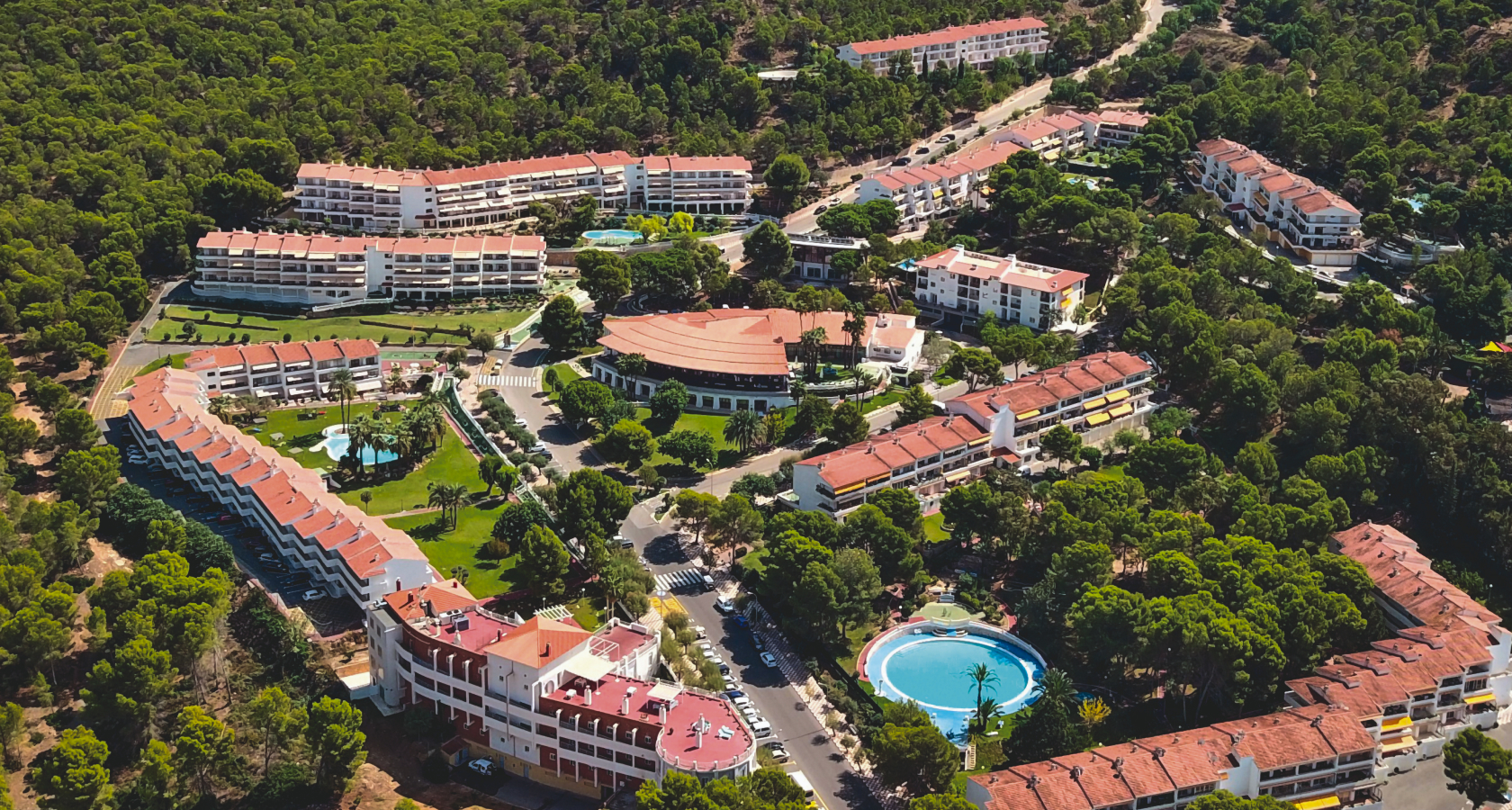


Central Building
Iris Building
Gardenia Building
Hortensia Building
Flora Building
Elisa Building
Heated Swimming Pool
Swimming pools
Swimming Pools
Restaurant
Indoor Pool
Reception

 Filters
Central Building
It is the core of community life at Ciudad Patricia. The reception area, restaurant, beauty centre, and some of our main services are located here.
Iris Building
Iris, completed in 2018, offers 15 apartments built to luxury quality standards. It is located just 50 metres from the Central Building.
Gardenia Building
Gardenia is located right across from the Central Building, allowing you to enjoy all the facilities that are just a stone’s throw away from your apartment.
Hortensia Building
At Hortensia, you can enjoy two worlds: the vibrant bustle of the city and the peaceful and relaxing atmosphere of the adjacent pine forest.
Flora Building
Flora, our tallest building, boasts stunning panoramic views of the valley, the mountains, and the resort.
Elisa Building
Elisa is located in a tranquil setting near the Central Building, indoor pool, fully equipped gym, and hobby room.
Heated Swimming Pool
We have an indoor swimming pool that you can enjoy all year round, whether you would like to exercise or have a moment of relaxation.
Swimming pools
We have several swimming pools at the resort where you can swim, cool off, or simply relax and enjoy the healthy climate of the Costa Blanca.
Swimming Pools
We have several swimming pools at the resort where you can swim, cool off, or simply relax and enjoy the healthy climate of the Costa Blanca.
Restaurant
Discover the delicious and healthy menu at the resort’s restaurant, and have an unforgettable time at its bar, in the dining area, or at its outdoor terrace.
Indoor Pool
We have several swimming pools in the complex, where you can swim, cool off, or simply relax and enjoy the healthy climate of the Costa Blanca.
Reception
In the Central Building, our staff are available to assist and help you with whatever you may need.
 Go back
Independent Living in Spain: What It Really Means After 70

Real independence after 70 is not about doing every single thing alone. That is a rather narrow definition, and often not a very useful one. Independence is about keeping control over your life, your time, your privacy and your choices. Sometimes, the right support around you makes that easier, not harder.
Independence is not the same as isolation
There is a kind of independence that looks strong from the outside but feels tiring from the inside.
You still live in your own place. You still manage the bills, the appointments, the shopping, the cooking, the small repairs, the diary, the travel arrangements and the occasional unexpected problem. You are coping. No crisis. Nothing dramatic. But more of the week is being used up by things that do not add much pleasure.
That is where the conversation about independent living becomes more interesting.
For some people, the issue is not loneliness in the obvious sense. They have friends. They know people. They may have family who call regularly. But life has become more spread out than it used to be. Friends live in different towns or urbanisations. Some return to northern Europe for long periods and others are dealing with their own health or family concerns.
So social life starts to need more planning. A coffee becomes a WhatsApp negotiation. A lunch needs transport. A simple evening out feels less spontaneous than it did ten years ago.
That does not mean someone needs care. It means they need a setting where everyday contact is easier.
At Ciudad Patricia, the idea of community is not about forced sociability. It is about making contact available without making it compulsory. You can have a conversation, join others for a meal, take part in something, or keep your door closed and enjoy your own company. That choice is central to independence.
The mistake is thinking independence means no support
Many people, especially those who have lived abroad for years, are proud of managing. Understandably so. Moving to Spain, whether from the UK, the Netherlands, Germany, France or elsewhere, takes nerve. You learn how things work, find your doctor, gestor, favourite market, routes, and local shortcuts. You build a life.
But managing everything alone is not always the same as living freely.
There is a difference between choosing independence and carrying every practical detail on your own shoulders. One gives you energy and the other slowly takes it out of you.
The right services do not take independence away; they protect it, by making everyday life easier before small complications start to dominate the week. That might mean fewer practical worries around the home, easier access to everyday support, or simply knowing that you are living in a place designed for this stage of life rather than constantly adapting a home that was chosen for a different one.
The real strain is often not one big problem. It is the background management. The mental tabs left open all day. Did I reply to the doctor’s message? Is the pharmacy open this afternoon? Who did I say I would call back? Have I got enough cash for the cleaner? Is the boiler making that noise again, or am I imagining it? Can I leave that until tomorrow? Life still works, but it asks for more attention. A good independent living community reduces some of that background noise without taking over the decisions.
None of these things makes someone dependent. But they do show how independence can become thinner if the structure around daily life is not right.
A home should still feel like yours
One of the biggest worries people have about independent living in Spain is the fear of moving into something that does not feel personal. A place that looks practical, perhaps even attractive, but somehow not like home.
That is a real concern. Later life should not feel like being moved into a standardised space.
A good independent living apartment should allow you to continue being yourself. Your furniture, your books, your routines, your morning habits, your preferred way of cooking, resting, reading, working at a desk, calling family, watching television or sitting outside. These details are not minor. They are what make a home feel familiar.
That is why the apartments at Ciudad Patricia matter in the wider conversation. The apartment is not simply where you sleep. It is your private base. It gives you separation from the community when you want it and access to community when you choose it.
Some people want company at lunch but silence in the afternoon. Some enjoy activities but dislike being over-scheduled. Some are sociable in bursts. Some need time alone to feel like themselves. Independent living should allow for all of that. The point is not to become a different person. The point is to live with less friction around the person you already are.
After 70, freedom often becomes more practical
In your 50s or early 60s, freedom may have meant travel, career choices, a move abroad, a larger home, perhaps a pool, a terrace, visiting family, building a social circle in Spain. After 70, freedom often becomes more practical. It becomes the freedom to say yes without calculating too much.
- Yes to a swim because it is easy.
- Yes to lunch because you do not have to organise everyone.
- Yes to a walk because the setting invites it.
- Yes to a few days away because your home does not feel like a burden in your absence.
- Yes to privacy because no one is expecting you to perform sociability all day.
- Yes to help with a practical issue without feeling that you have surrendered control.
This is a more adult understanding of independence. Less heroic, perhaps, but much more useful.
Independent living is not only about property type. It is about how a home supports your week. Does it make life easier to start? Does it reduce the number of unnecessary decisions? Does it allow you to live privately without feeling cut off?
A large home can become a kind of obligation. Not always, of course in fact some people love the space and still use every part of it. But others realise, slowly, that their home is now asking more from them than it gives back. Rooms are kept because they have always been there. Possessions are stored because deciding is tiring. Outdoor areas are maintained rather than enjoyed. Entertaining becomes less frequent because it feels like work.
Moving to a more manageable home is not a reduction in life if the life around it becomes richer.
Community should be available, not imposed
One of the better tests of any retirement community or independent living setting is whether people can participate at their own pace.
A community that tries too hard can feel exhausting. A community that offers too little can feel empty. The right balance is somewhere more natural: people around, things happening, places to go, but no sense that you are being watched, judged or pushed into joining.
At Ciudad Patricia, that balance is part of the appeal for many expats. You can live privately in your apartment, but still have daily contact close by. You can take part in leisure activities if they interest you. You can use the gastronomy options when you want an easier meal or a more social moment. You can keep your own routines without having to build every piece of the day from scratch.
That last point matters more than people admit.
After 70, starting new friendships can feel different. People are still curious, still funny, still independent, but they may be more selective. They may not want to join clubs just for the sake of joining. They may not want to explain themselves endlessly to new acquaintances. They may prefer contact to grow through repeated small moments: the same faces, the same terrace, the same walk, the same café table, the same person who remembers how you take your coffee.
That is not a small thing. It is how belonging often begins.
Independent living in Spain also means staying connected to the life you chose
For many expats, Spain is not an experiment. It is home. They may have lived here for years, sometimes decades. The Costa Blanca is not just a sunny destination from a brochure. It is where they know the roads, the hospitals, the restaurants, the bureaucracy, the seasonal rhythms, the mix of languages, the visiting family routines and the strange little pleasures of ordinary Spanish life.
So the question is not always “Should I move to Spain for retirement?” For many people, it is “How can I stay in Spain in a way that still works well?”.
Independent living at Ciudad Patricia allows people to remain connected to the Costa Blanca while changing the structure of daily life. You are still in Benidorm. You are still close to the coast, the light, the outdoor culture, the international atmosphere and the wider region. What changes is the amount of effort required to keep life comfortable, social and manageable.
This can be especially reassuring for adult children living abroad. They may not want to interfere. Most do not. But they worry. They wonder what happens if a parent has a bad day, misses an appointment, feels unwell, stops eating properly, becomes more isolated, or simply starts finding Spanish life harder to manage alone.
A move to independent living can answer some of those worries without taking control away from the parent. It says: I am still living my life, but I have put a better structure around it.
Staying active should feel normal, not like a programme
Activity matters after 70, but it should not feel like a performance. Not everyone wants a full calendar and not everyone wants organised sport. Basically, not everyone wants to be described as “active” in the same way.
For some people, staying active means swimming, fitness or regular classes. For others, it means walking every day, stretching in the morning, taking the stairs when they feel like it, sitting outside, joining an occasional activity or having more reasons to leave the apartment without making a big plan.
At Ciudad Patricia, sport and movement are available as part of daily life, without the assumption that everyone wants the same pace. That is the important part. Independent living should support movement naturally. It should make it easier to do a little more, not make people feel measured against someone else’s version of ageing well.
The same applies to outdoor life. In Spain, being outside is part of the day in a way that can feel very different from northern Europe. A short walk after breakfast, a swim, a bench in the shade, a conversation after lunch, a quiet place to read, these are not dramatic lifestyle claims. They are the small habits that help a day feel open.
The outdoor areas at Ciudad Patricia are part of that rhythm. They give residents space to move, pause, meet naturally or simply enjoy being outside without planning an outing. That is one of the quiet strengths of living in a community designed for later life in Spain.
The real question is what kind of independence you want
When people search for independent living in Spain, they are often trying to answer a question they have not fully put into words.
They may still be managing perfectly well. They may have no immediate problem. They may not need care. They may not want a dramatic change. But they can feel that the current version of independence is becoming more demanding than it needs to be.
That is a sensible moment to think, not a reason to panic.
The better question is not “Can I still cope?” Most people can cope for longer than they enjoy. The better question is: “What would make life feel easier, freer and more enjoyable without taking away my privacy?”
For some, the answer will be staying exactly where they are. For others, it may be moving closer to family. For many expats in Spain, especially those who already feel attached to the Costa Blanca, independent living in a retirement community offers a more balanced answer.
You keep your own home. You keep your own choices. You keep Spain. But you remove some of the unnecessary weight around daily life.
That is not giving up independence.
It is treating independence as something worth protecting.
To understand how that works in practice, you can explore the apartments, learn more about the available services, or see how daily life is shaped by the wider community at Ciudad Patricia. If you are comparing options for yourself or for a parent, you can also contact Ciudad Patricia and ask the practical questions that matter for your own situation.
