







Fill out the form with your details, and we will attend to your request as soon as possible.


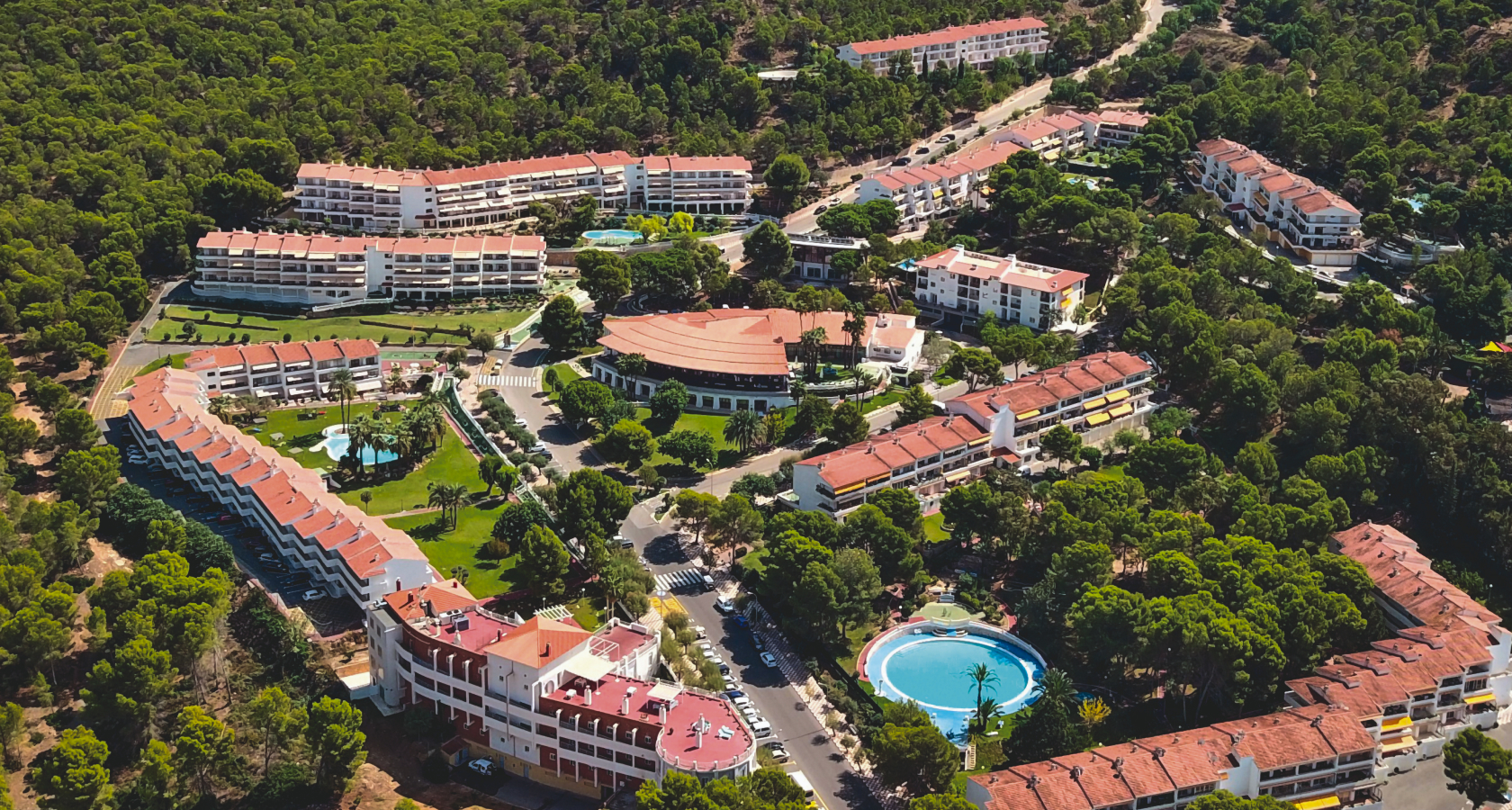


Central Building
Iris Building
Gardenia Building
Hortensia Building
Flora Building
Elisa Building
Heated Swimming Pool
Swimming pools
Swimming Pools
Restaurant
Indoor Pool
Reception

 Filters
Central Building
It is the core of community life at Ciudad Patricia. The reception area, restaurant, beauty centre, and some of our main services are located here.
Iris Building
Iris, completed in 2018, offers 15 apartments built to luxury quality standards. It is located just 50 metres from the Central Building.
Gardenia Building
Gardenia is located right across from the Central Building, allowing you to enjoy all the facilities that are just a stone’s throw away from your apartment.
Hortensia Building
At Hortensia, you can enjoy two worlds: the vibrant bustle of the city and the peaceful and relaxing atmosphere of the adjacent pine forest.
Flora Building
Flora, our tallest building, boasts stunning panoramic views of the valley, the mountains, and the resort.
Elisa Building
Elisa is located in a tranquil setting near the Central Building, indoor pool, fully equipped gym, and hobby room.
Heated Swimming Pool
We have an indoor swimming pool that you can enjoy all year round, whether you would like to exercise or have a moment of relaxation.
Swimming pools
We have several swimming pools at the resort where you can swim, cool off, or simply relax and enjoy the healthy climate of the Costa Blanca.
Swimming Pools
We have several swimming pools at the resort where you can swim, cool off, or simply relax and enjoy the healthy climate of the Costa Blanca.
Restaurant
Discover the delicious and healthy menu at the resort’s restaurant, and have an unforgettable time at its bar, in the dining area, or at its outdoor terrace.
Indoor Pool
We have several swimming pools in the complex, where you can swim, cool off, or simply relax and enjoy the healthy climate of the Costa Blanca.
Reception
In the Central Building, our staff are available to assist and help you with whatever you may need.
 Go back
Community Without Pressure: Why Good Retirement Living Should Never Feel Forced

Quick Summary
- A good retirement community makes social contact easy, but never turns participation into an obligation.
- Privacy remains essential. Residents should be able to close their own front door, follow their usual routines and decide how sociable they feel each day.
- Shared spaces, activities, meals and outdoor areas create opportunities for natural contact without requiring organised entertainment.
- The right balance is different for everyone and may change over time.
- When comparing retirement communities in Spain, ask whether daily life is genuinely flexible, not simply how many activities appear on the calendar.
The whole concept of moving into a retirement community carries with it a worry. A lot of people who have to deal with elderly parents have been inside traditional retirement homes. The worry is to see the people there forced to participate in activities they neither want or can participate in.
You get the picture.
Breakfast at nine. An activity at eleven. Lunch at one. A cheerful group event in the afternoon. All perfectly pleasant in theory, but rather less appealing if you would prefer to read on your terrace, go into Benidorm or simply spend the day doing very little.
Most people do not reach retirement and suddenly lose their need for privacy. Nor do they become equally sociable. Some enjoy a full table and a lively conversation. Others prefer coffee with one neighbour. Many want both, depending on the day.
Good retirement living recognises this. Community should be available, visible and easy to join, but it should never feel compulsory.
The difference between company and compulsory sociability
Social contact matters, particularly if you live alone or have moved away from a familiar neighbourhood. But that does not mean every resident wants a programme of organised activity filling the week.
Compulsory sociability can be exhausting. Even invitations can begin to feel like obligations if declining them attracts questions or makes someone feel that they are not participating properly.
A healthier model gives people choices:
- Joining others for coffee when they feel like it
- Eating at home or going to the restaurant
- Taking part in an activity without committing to everything else
- Using shared facilities independently
- Spending time with existing friends and family outside the community
- Having a quiet day without needing to explain it
This is the distinction between living independently within a community and becoming part of an institution. The first expands your choices. The second can feel as though it is making choices on your behalf.
At Ciudad Patricia, residents live in their own independent apartments, with their own living rooms, kitchens and private outdoor spaces. The community is there beyond the front door, but the apartment remains home.
That front door matters more than it might seem. You decide when to open it.
Privacy does not mean isolation
The word “community” can make independent people slightly nervous. It may conjure up images of group timetables, communal meals and organised fun.
But privacy and community are not opposites.
You can value your own company and still enjoy recognising people as you walk through the gardens. You can prefer eating at home most evenings and still appreciate having somewhere nearby to meet a friend for lunch. You can avoid group activities entirely for a week, then decide that a concert or excursion sounds interesting.
The important thing is that contact does not require a major effort.
In an ordinary villa or apartment, seeing people may mean arranging a date, driving somewhere, finding parking and driving home again. That is manageable, but it can make a casual cup of coffee surprisingly complicated.
Within a well-designed community, the threshold is lower. You may encounter someone while walking, at the pool or over a coffee. A brief conversation can remain a brief conversation. It does not have to become a social engagement.
Ciudad Patricia’s community spaces and activities give residents places to meet and spend time together. Their real value, however, is not measured simply by the number of events. It lies in making ordinary, unplanned contact possible.
You should not have to become a different person
Moving home does not require a new personality.
If you have always enjoyed clubs, classes and group activities, you may naturally look for plenty to do. If you have spent much of your life choosing your own company carefully, retirement is unlikely to change that.
Couples may also have very different social appetites. One person might happily join an activity while the other remains at home with a book. One may want to meet people quickly after moving from the UK, the Netherlands, Germany or France. The other may need more time.
Neither approach is wrong.
A retirement community works best when couples do not have to move through it as a single social unit. Each person should be able to develop a routine that suits them. That may include shared activities, separate interests and plenty of time together at home.
The same applies to people moving alone. You should be able to meet others without feeling that you must immediately establish a new circle of close friends. Familiarity often comes first. Friendship may follow, but it cannot be scheduled.
The best social contact often happens around something else
Putting people in a room and asking them to socialise is not always the most natural way to create a community.
Conversation tends to happen more easily when it grows around another activity. It might begin while waiting for a fitness class, looking at something in the garden, sharing a table after an event or asking whether a particular dish is worth trying.
This is why the physical design and everyday facilities of a retirement community matter. They create reasons for residents to cross paths without making conversation the official purpose.
Ciudad Patricia’s lifestyle includes gastronomy, sport, leisure, community activities and opportunities to enjoy the surrounding Costa Blanca. These are not simply items to count on a facilities list. They allow residents to decide how much contact they want and what form it should take.
Someone may enjoy swimming but have no interest in organised games. Another resident might prefer a creative activity but never use the gym. A third may find that sitting on a terrace with coffee provides all the company wanted that afternoon.
Choice is the point.
Eating together should remain a choice
Food can be one of the most natural ways for a community to come together. It can also become one of the clearest tests of independence.
Having a restaurant nearby is useful when you do not want to cook, when friends or family visit, or when you would like the company of other people. It should not mean surrendering your own kitchen or being expected to eat communally every day.
The apartments at Ciudad Patricia have their own kitchens, while the restaurant and bar in the Central Building provide another option. Residents can choose whether a particular day calls for cooking at home, having coffee on the restaurant terrace or sharing a meal with somebody else.
That flexibility matters because eating habits are personal. Some people enjoy a substantial lunch and very little in the evening. Others have dietary routines they prefer to manage themselves. A couple may want most meals at home but enjoy eating out at the weekend.
There is also a difference between eating alone and being lonely. Plenty of people genuinely enjoy a quiet breakfast or supper. What becomes difficult is having no easy alternative when company would be welcome.
Good retirement living keeps that alternative open.
Activities should add possibilities, not fill time
A long activity programme can look impressive in a brochure. It does not necessarily tell you what living in a community feels like.
The more useful questions are:
- Can you join an activity occasionally, or is regular attendance expected?
- Are there options for different interests and energy levels?
- Can facilities be used without joining a class?
- Is there space for residents to organise their own interests?
- Does the programme leave room for life outside the community?
- Do residents appear comfortable declining an invitation?
Retirement is not an empty timetable waiting to be filled. You may already have friends, hobbies, family commitments and favourite places. If you have lived on the Costa Blanca for years, your dentist, hairdresser, walking group and preferred café may all be elsewhere. A move should not require abandoning them.
People arriving from abroad may initially welcome more organised opportunities because these make it easier to meet others. Six months later, once they have established their own routines, they may want less structure. A good community can accommodate both stages.
Ciudad Patricia offers leisure, fitness, cultural and recreational possibilities. Their value lies in being available when they suit the resident, not in keeping everyone continually occupied.
Outdoor life creates gentler forms of connection
One reason people retire to the Costa Blanca is that so much of life can take place outdoors. A mild day does not demand a formal plan. You can walk, sit outside, visit a nearby town or have coffee on a terrace.
Outdoor space also supports a less intense kind of social contact. Saying hello to someone in the gardens feels different from entering a room specifically to meet people. You can stop for a conversation or continue with your walk.
Ciudad Patricia is set in extensive green grounds in a residential area of Benidorm. Its pools, gardens and outdoor spaces allow residents to spend time outside without every outing becoming an organised excursion.
The wider location matters too. Community life should not become a closed world. The Costa Blanca provides towns, beaches, restaurants, markets and cultural places to explore. Residents may enjoy these independently, with visiting family or through an organised outing.
The purpose of a retirement community is not to replace the outside world. It should make engaging with it easier.
What happens when you do want more contact?
Social needs are not fixed.
You may be content with your existing friendships when you first move. Later, a friend may return to Northern Europe, a partner may become less active, or you may simply decide that you would like more company.
This is where living among other people can make a practical difference. You do not have to build a social life from nothing. You already recognise faces, know where people gather and have activities available if you want to participate.
The reverse is equally important. There may be periods when you want less contact. Family may be visiting. You may be working on a personal project, recovering from an illness or simply enjoying the quiet. The community should not treat temporary withdrawal as a problem to be corrected.
Supportive social contact respects both movement towards other people and movement back into privacy.
How can you judge the atmosphere before moving?
Atmosphere is difficult to assess from a website. Photographs can show the gardens, apartments and shared areas, but not whether residents feel free to use them on their own terms.
Notice whether residents appear to move around independently. Are some talking in groups while others sit alone comfortably? Does the restaurant feel like an optional place to visit or the centre of a compulsory routine? Are people using the outdoor areas in different ways?
Ask direct questions:
- How do residents usually hear about activities?
- Is it easy to attend something for the first time?
- Are meals entirely a matter of personal choice?
- Can family and friends visit the restaurant?
- How much of the day is organised?
- Do residents maintain social lives outside the community?
- What do people do if they prefer quieter forms of contact?
- Can residents suggest or organise activities themselves?
If you are visiting as a couple, compare impressions afterwards. The more sociable partner may focus on what is available. The quieter partner may be more alert to whether privacy feels protected. Both views matter.
Community should make life larger, not narrower
The strongest retirement communities do not tell residents what a fulfilling retirement should look like. They provide a setting in which different versions of it are possible.
For one person, that might mean regular exercise, shared meals and a busy social calendar. For another, it could mean an independent apartment, a morning walk, occasional coffee with neighbours and plenty of time alone. Most people will move between those two patterns.
Ciudad Patricia combines private homes with shared spaces, community life, dining, leisure and access to outdoor life on the Costa Blanca. The important word is access. Possibilities are close by, but a resident’s time remains their own.
That is what community without pressure should feel like. You can take part without being managed, meet people without performing sociability and spend time alone without becoming isolated.
Your life remains recognisably yours. It simply has more options within reach.
Frequently Asked Questions
Do residents have to take part in organised activities?
Independent retirement living should allow residents to choose how they spend their time. Activities provide opportunities to exercise, learn, meet people or try something new, but they should not define a resident’s daily routine. When comparing communities, ask explicitly whether participation is optional and whether residents feel equally comfortable attending regularly, joining occasionally or not taking part.
Can I live privately within a retirement community?
Yes. At Ciudad Patricia, residents have their own apartments, including a living room, kitchen and private balcony, terrace or garden depending on the property. This makes it possible to maintain an independent home life while having shared areas and social opportunities nearby. Privacy should be part of the community’s design, not something residents have to request.
Do residents have to eat in the restaurant?
Ciudad Patricia’s apartments include their own kitchens, so residents can prepare meals at home. The restaurant and bar offer another option for coffee, meals and meeting other people. This flexibility is important because some residents enjoy eating socially, while others prefer their own routines or only use the restaurant when friends and family visit.
What if my partner is much more sociable than I am?
A well-designed retirement community should allow each partner to follow an individual routine. One person might participate in activities while the other spends time at home, goes out independently or pursues different interests. It is worth asking during a visit whether couples commonly take part separately and whether the atmosphere feels comfortable for people with different social preferences.
Is a retirement community suitable for an introvert?
It can be, provided privacy is respected and social participation is optional. Introverts may value having familiar faces and opportunities for low-pressure contact without wanting frequent group events. Shared gardens, paths, a restaurant and leisure facilities can make brief, natural conversations possible while a private apartment provides space to withdraw and recharge.
How can I tell whether a community will feel too organised?
Visit while ordinary daily life is taking place. Look for residents using the spaces in different ways, including people enjoying time alone. Ask how activities are communicated, whether meals are optional and how much residents continue to do outside the community. A varied pattern of individual and shared activity is usually more revealing than the length of the events calendar.
Key Takeaways
A retirement community should make company easier to find without deciding how sociable residents ought to be. Private apartments, optional dining, shared outdoor areas and varied activities allow people to choose between company and solitude according to the day. This flexibility is particularly important for couples with different interests, people moving to Spain from abroad and existing Costa Blanca residents who want to retain their established routines.
When comparing communities, look beyond the number of facilities and scheduled events. Ask whether participation is genuinely optional, whether residents maintain lives outside the community and whether being alone appears as normal as joining in. A visit during an ordinary day can reveal this far better than a brochure. The right setting should offer more possibilities while leaving control of your time firmly with you.
