







Fill out the form with your details, and we will attend to your request as soon as possible.


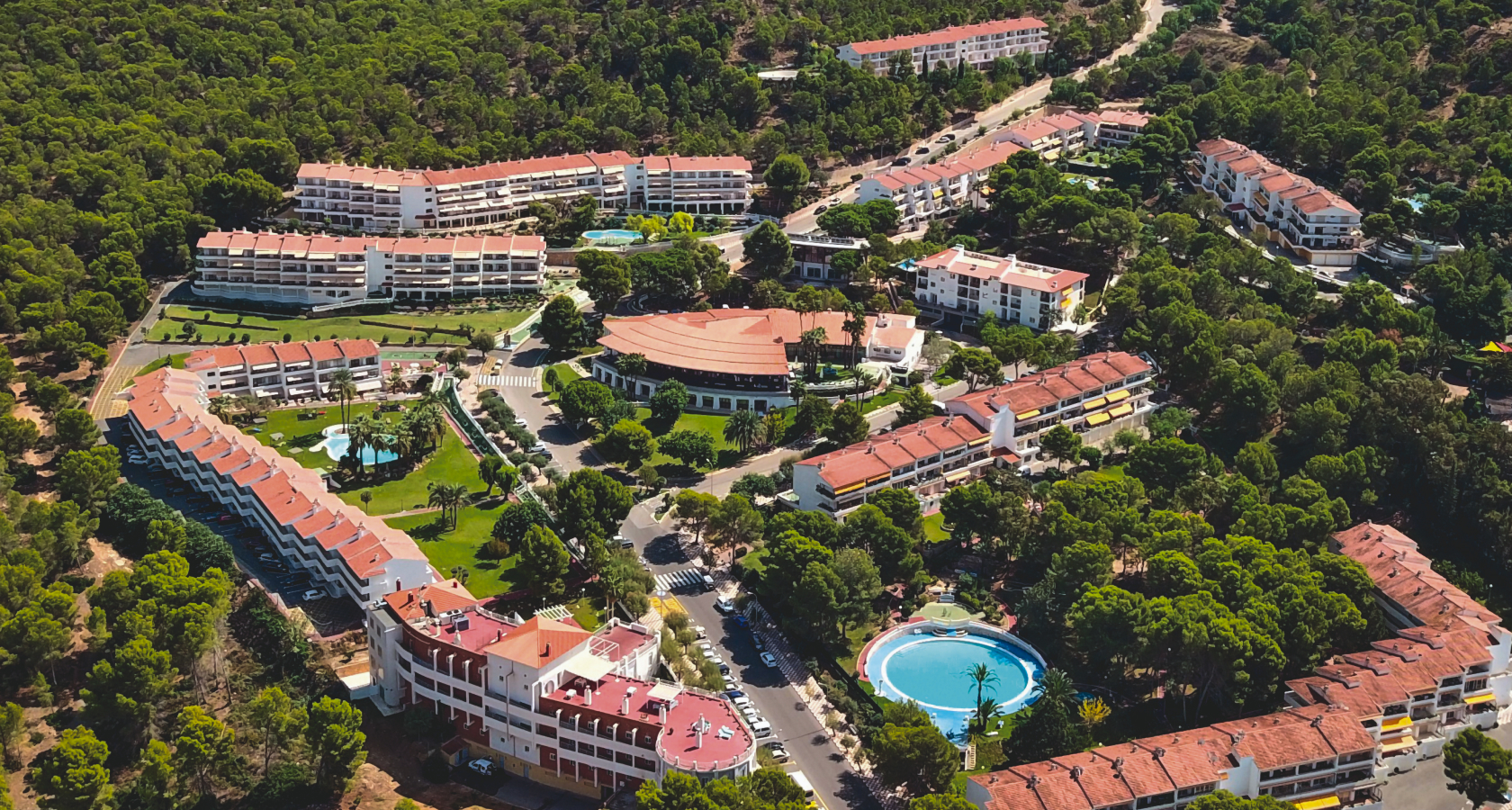


Central Building
Iris Building
Gardenia Building
Hortensia Building
Flora Building
Elisa Building
Heated Swimming Pool
Swimming pools
Swimming Pools
Restaurant
Indoor Pool
Reception

 Filters
Central Building
It is the core of community life at Ciudad Patricia. The reception area, restaurant, beauty centre, and some of our main services are located here.
Iris Building
Iris, completed in 2018, offers 15 apartments built to luxury quality standards. It is located just 50 metres from the Central Building.
Gardenia Building
Gardenia is located right across from the Central Building, allowing you to enjoy all the facilities that are just a stone’s throw away from your apartment.
Hortensia Building
At Hortensia, you can enjoy two worlds: the vibrant bustle of the city and the peaceful and relaxing atmosphere of the adjacent pine forest.
Flora Building
Flora, our tallest building, boasts stunning panoramic views of the valley, the mountains, and the resort.
Elisa Building
Elisa is located in a tranquil setting near the Central Building, indoor pool, fully equipped gym, and hobby room.
Heated Swimming Pool
We have an indoor swimming pool that you can enjoy all year round, whether you would like to exercise or have a moment of relaxation.
Swimming pools
We have several swimming pools at the resort where you can swim, cool off, or simply relax and enjoy the healthy climate of the Costa Blanca.
Swimming Pools
We have several swimming pools at the resort where you can swim, cool off, or simply relax and enjoy the healthy climate of the Costa Blanca.
Restaurant
Discover the delicious and healthy menu at the resort’s restaurant, and have an unforgettable time at its bar, in the dining area, or at its outdoor terrace.
Indoor Pool
We have several swimming pools in the complex, where you can swim, cool off, or simply relax and enjoy the healthy climate of the Costa Blanca.
Reception
In the Central Building, our staff are available to assist and help you with whatever you may need.
 Go back
Retiring in Spain Without Fluent Spanish: What Support Makes the Difference?

Retiring in Spain Without Fluent Spanish: What Support Makes the Difference?
Quick Summary
- You don't need fluent Spanish to enjoy retirement at Ciudad Patricia, plenty of residents don't speak it.
- English, Dutch, German, and Spanish are all supported languages.
- Translation, accompaniment to medical appointments and other practical help can take the pressure off managing things in Spanish, including when one partner usually handles every conversation.
- Picking up useful Spanish can make everyday life more rewarding, and it's good mental exercise too.
- Ciudad Patricia doesn't run its own Spanish classes, but options like EOI Benidorm are nearby.
You know where you like to buy your bread. You can order lunch, chat with the waiter, tell the gardener something needs cutting back. Then the phone rings. Someone's talking fast, mentions a document you don't recognise, and asks a question you didn't quite catch.
It's entirely possible to feel at home in Spain and still have moments like this.
You don't need fluent Spanish to enjoy retirement on the Costa Blanca. What matters is having workable arrangements for everyday life, and reliable help on hand when a conversation calls for more precision. Learning some useful Spanish can make things easier, but you don't have to wait for fluency to feel settled, whether you're moving from Northern Europe or considering a move from your current home in Spain.
Residents at Ciudad Patricia have a few advantages here, and newcomers to Spain tend to settle in faster as a result.
You may already have a life in Spain that works
For many Ciudad Patricia residents, moving to the community simply meant changing address within a country they already knew well. They had their routines, their favourite spots, their own ways of getting things done. Plenty of them don't speak fluent Spanish, but that's never stopped them from managing.
Familiarity helps. You know which businesses you can communicate with easily, who to call when an appliance breaks, which friend might know someone useful. A chat at the shop you visit every week feels nothing like walking into somewhere completely unfamiliar.
Around Benidorm and the Costa Blanca's international communities, those connections make daily life with limited Spanish much more manageable. That said, it depends on your neighbourhood, the people you deal with and what you're trying to get done. You might get by in English with friends and familiar shops, but an unexpected phone call or a trip to a public office can still demand real Spanish.
Maybe your current setup still works fine for you. Or maybe keeping the network of people needed to run a large property has become more of a chore than you'd like.
A couple can still love their villa while feeling less keen on arranging repairs, chasing up the gardener and following up appointments. Doing that in a language you find difficult just adds to the effort.
Could moving somewhere else make life easier, without giving up what you love about living in Spain?
Familiar routines are easier when help is close by
When you run your own home in Spain, even a simple repair can mean several conversations. You can point at what's wrong with the air conditioning, sure, but understanding the quote, booking a follow-up visit and checking what's actually included takes more effort. An unfamiliar letter or an appointment can raise the same kind of questions.
At Ciudad Patricia, practical support is close at hand for exactly these situations. The community offers translation, accompaniment to the doctor or hospital, and maintenance and repairs in your apartment, arranged around what you need.
All maintenance is handled by our own staff and can be arranged in your own language. So if the air conditioning stops working, you can explain what happened without hunting for technical vocabulary in Spanish.
That changes how an unfamiliar conversation feels. You have someone to ask, and a clear way to get help, instead of having to figure it out yourself every time. Explain what you need, and the team will talk you through what's available, how to arrange it, and any extra cost involved.
For residents who've already spent years juggling these things elsewhere on the Costa Blanca, that can be one of the biggest changes. You keep the life you know in Spain, with a lot less time spent worrying about how to explain a problem or who to call.
When one partner handles all the Spanish
In a lot of couples, one person ends up handling nearly every conversation in Spanish. They call the repair company, query the bill, sort out appointments. Their partner might be perfectly capable of dealing with these things in their own language, just not so comfortable doing it in Spanish.
Over time, that arrangement can wear thin for both of you. One person's always the one sorting things out; the other's always waiting on help for something they'd rather handle themselves.
It's also worth thinking about who else could step in if the Spanish-speaking partner fell ill, or if one of you ended up managing alone after losing the other. Having that support already in place is one less practical worry at an already hard time.
At Ciudad Patricia, practical support gives you another option. With translation and accompaniment services available, the more confident Spanish speaker doesn't have to be the default point of contact for every problem, their partner can ask for help directly too.
That can make a real difference to everyday life together. An appointment doesn't have to automatically become a two-person job, and being away for a few days doesn't mean leaving your partner wondering how they'd cope with a tricky conversation.
When you visit, talk through the situations each of you would like help with. The team can walk you through the arrangements, the languages available and any charges, so you both know how to get support when you need it.
English can connect people from different countries
Within an international community, the language people share isn't always their first language.
At Ciudad Patricia, many Dutch and German residents speak English, which lets friendships and conversations extend well beyond nationality. The community supports English, Dutch, German, French and Spanish, though it's worth checking which languages are available for a particular service or appointment.
Being able to express yourself comfortably matters. You might manage a purchase fine in Spanish but reach for another language when you want to tell a story, crack a joke or explain a concern properly.
Comfort shifts with the setting, too. Someone who's happy chatting in English with one neighbour might find a lively group conversation much harder to keep up with.
During a visit, pay attention to how communication feels. Can you ask questions easily? Can both of you take part? Is the conversation moving at a pace that suits you?
Our community page describes residents from different countries and the cultural activities they share. These give you chances to meet people, while your own apartment still gives you private space, you can enjoy company without turning every day into a packed social programme.
A translation service and accompaniment to the doctor or hospital are among the services that can be arranged around residents' needs. Explain the situation you need help with. Ask which languages are covered, how much notice is needed, what the assistance includes and whether there's an extra charge.
These distinctions also matter when you're comparing Ciudad Patricia with an ordinary apartment. Either way, you'll need workable arrangements, so it's worth finding out what's already in place and what you'd need to sort out yourself.
Learning a language gives your mind something new to do
Learning Spanish offers more than practical help with life on the Costa Blanca, it's also a genuinely absorbing form of mental exercise, pulling in memory, attention and the effort of making sense of something unfamiliar.
When you recall a word, follow a conversation or put a sentence together, you're drawing on several skills at once: listening carefully, connecting sounds to meaning, deciding how to respond. Research into language learning in older adults points to the role memory systems play in picking up and retaining new vocabulary.
The brain keeps a capacity to adapt later in life, known as neuroplasticity, put simply, its patterns of connection and activity can still change with experience and learning. One study of adults aged 59 to 79 found changes in communication between certain brain regions after a four-month language course, along with improvements on a general cognitive assessment. Encouraging findings, even if the research on language learning and the ageing brain is still developing.
There are more immediate rewards, too. Finally understanding a question that used to leave you stumped, remembering a useful phrase at just the right moment, enjoying a longer conversation than usual, these little wins make the effort worth it.
On the Costa Blanca, there's no shortage of chances to put that learning into practice. Start with something you'd like to be able to say, try it out in a relaxed setting, and build from there. You don't need to become fluent to enjoy the pleasure of learning something new.
Learning useful Spanish, even after years of living here
You can feel completely settled in Spain and still want to learn more of the language.
Maybe you'd like to chat more easily with a neighbour, follow a question in an unfamiliar shop, or stop rehearsing a sentence in your head five times before you say it. Those are worthwhile goals, even with practical support already in place.
A well known Spanish school suggests starting with everyday situations in its guide to building confidence in everyday Spanish. The idea is simple: practise short exchanges tied to things you actually do, rather than waiting until your Spanish feels perfect.
That approach works just as well for someone who's lived on the Costa Blanca for years as it does for someone who's just arrived. Pick a situation you run into regularly and learn a few complete phrases you can actually use.
At the market, you might ask:
- ¿Me pone medio kilo de tomates, por favor? Could I have half a kilo of tomatoes, please?
- ¿Están maduros para comer hoy? Are they ripe enough to eat today?
In a café or restaurant:
- ¿Podemos sentarnos en la terraza? Can we sit on the terrace?
- ¿Qué lleva este plato? What's in this dish?
When arranging something:
- ¿Podría ser por la mañana? Could it be in the morning?
- ¿Me puede confirmar la hora por mensaje? Can you confirm the time by message?
And when you haven't quite understood:
- ¿Puede hablar un poco más despacio? Can you speak a little slower?
- ¿Me lo puede escribir, por favor? Could you write that down for me, please?
You don't need to learn all of these at once, start with two or three that would actually come in handy this week. Repeating a familiar phrase in a real conversation makes the next one feel a little less daunting.
You can build on small wins, too. Once ordering a coffee feels easy, ask if there's a table outside. Once greeting a neighbour becomes automatic, try asking how their weekend went. There's no test at the end of the conversation.
Ciudad Patricia doesn't run its own Spanish classes, but there's structured learning nearby; the Escuela Oficial de Idiomas de Benidorm offers Spanish for foreigners (you can learn other languages there too, if you're curious, I'm learning Italian). Get in touch with the school about your level, enrolment, available places and current groups and timetables.
Having support close by means you can ask for help with the complicated stuff while still enjoying plenty of chances to practice on your own. Learn at whatever pace suits you, and focus on the conversations you actually want to have.
Bring your everyday questions to a visit
Whether you're already living on the Costa Blanca or thinking about a move from Northern Europe, come and visit Ciudad Patricia. Meet the team, ask your questions in your own language (!), and see how we could make everyday life easier for you.
- How would you report a maintenance problem?
- Who would you contact to arrange language assistance?
- What happens if your usual contact isn't available?
- Can you get important information in a form you're comfortable with?
You may find you need relatively little help, but a few dependable arrangements can go a long way toward making daily life more comfortable.
You can contact Ciudad Patricia to discuss your needs and arrange a visit. Wherever your Spanish is right now is a perfectly good place to start that conversation.
Frequently Asked Questions
Should I join a beginner's Spanish class if I've lived in Spain for years?
Time spent in Spain doesn't necessarily tell you much about your language level. You might have solid everyday vocabulary but struggle to form sentences, or understand far more than you can comfortably say. Describe your experience to the school and ask how they assess new students. Pick a class based on your current skills and goals, not the number of years you've lived here. Some schools will simply test your level for you.
What should I do if someone switches to English when I'm trying to practise Spanish?
If things are relaxed, explain that you'd like to practise and ask if they're happy to carry on in Spanish. Keep it brief if they're working or other people are waiting. For anything urgent or complicated, just use whatever language gets the message across clearly, you can always go back to practicing Spanish in a lower-stakes moment.
What information should I prepare when requesting language assistance?
Let them know your preferred language, the date and location, and whether you need help with a conversation, a written document, or both. Mention any deadline and ask what the service covers. For anything specialist, describe the subject so the provider can check whether they have the right expertise. Only share personal documents through an agreed, secure channel.
Key Takeaways
The real question is how comfortably you can manage the life you want in Spain, given the language skills and support you have right now. Established expats often already have arrangements that work well; people moving from abroad will need a bit of time to build them.
Take a close look at the situations that still cause friction, especially if one partner handles most of the conversations. Check who can help, in which language, with how much notice, and at what cost. Keep learning Spanish if it interests you, and set goals that are manageable enough to make everyday life more rewarding rather than more stressful.
Before deciding on a move, jot down a few real examples of the help you'd value, and bring those questions to a conversation with the Ciudad Patricia team.
Summary
This article looks at how people with limited Spanish can enjoy retirement on the Costa Blanca, covering both established expats and those moving from Northern Europe. It describes communication within Ciudad Patricia's multilingual community, where many residents don't speak Spanish and many Dutch residents get by in English. It covers the translation and appointment-accompaniment services available, with scope, languages and charges confirmed individually. It also looks at practical Spanish learning, external classes in Benidorm, and language learning as mental exercise — while acknowledging the evidence for broader cognitive benefits is still mixed. The main takeaway: combine the right support with manageable learning goals.
