







Fill out the form with your details, and we will attend to your request as soon as possible.


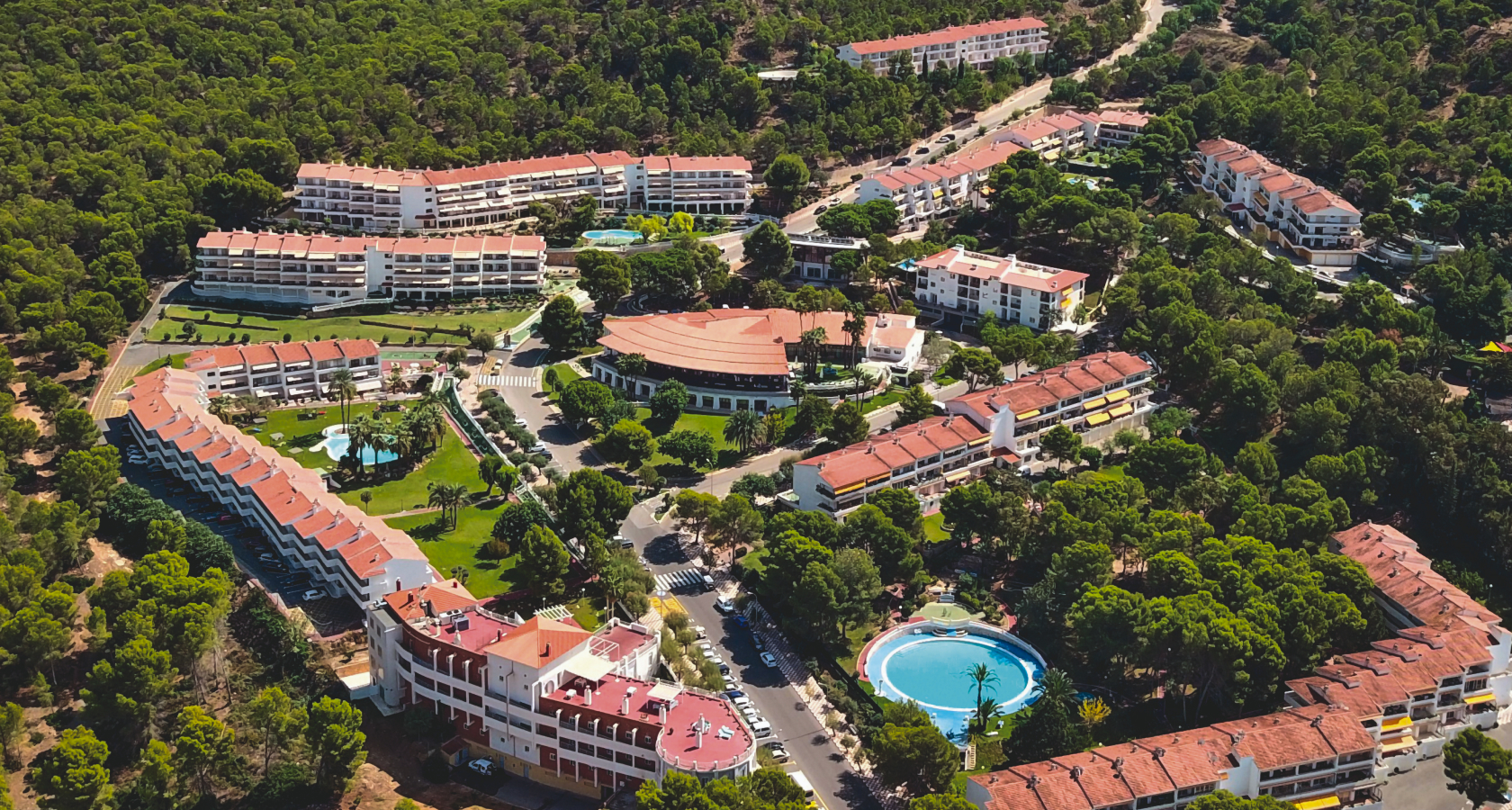


Central Building
Iris Building
Gardenia Building
Hortensia Building
Flora Building
Elisa Building
Heated Swimming Pool
Swimming pools
Swimming Pools
Restaurant
Indoor Pool
Reception

 Filters
Central Building
It is the core of community life at Ciudad Patricia. The reception area, restaurant, beauty centre, and some of our main services are located here.
Iris Building
Iris, completed in 2018, offers 15 apartments built to luxury quality standards. It is located just 50 metres from the Central Building.
Gardenia Building
Gardenia is located right across from the Central Building, allowing you to enjoy all the facilities that are just a stone’s throw away from your apartment.
Hortensia Building
At Hortensia, you can enjoy two worlds: the vibrant bustle of the city and the peaceful and relaxing atmosphere of the adjacent pine forest.
Flora Building
Flora, our tallest building, boasts stunning panoramic views of the valley, the mountains, and the resort.
Elisa Building
Elisa is located in a tranquil setting near the Central Building, indoor pool, fully equipped gym, and hobby room.
Heated Swimming Pool
We have an indoor swimming pool that you can enjoy all year round, whether you would like to exercise or have a moment of relaxation.
Swimming pools
We have several swimming pools at the resort where you can swim, cool off, or simply relax and enjoy the healthy climate of the Costa Blanca.
Swimming Pools
We have several swimming pools at the resort where you can swim, cool off, or simply relax and enjoy the healthy climate of the Costa Blanca.
Restaurant
Discover the delicious and healthy menu at the resort’s restaurant, and have an unforgettable time at its bar, in the dining area, or at its outdoor terrace.
Indoor Pool
We have several swimming pools in the complex, where you can swim, cool off, or simply relax and enjoy the healthy climate of the Costa Blanca.
Reception
In the Central Building, our staff are available to assist and help you with whatever you may need.
 Go back
Living Alone in Spain After 70: When Freedom Starts to Feel Fragile

Living alone in Spain can be a wonderful thing.
You wake when you like. You eat when you like. You choose your own television, your own friends, your own pace, your own furniture. No one asks why you are having a bacon sandwich at ten o’clock at night or why you have spent the afternoon reading on the terrace instead of “doing something useful”.
For many expats, especially those who came to Spain as couples and later found themselves single, this freedom matters deeply. It may even feel like the last great proof of independence. After a bereavement, divorce, separation, or simply a life lived outside the usual family pattern, staying in your own home can feel like a quiet declaration: I am still myself.
And yet, after 70, living alone can begin to change in ways that are difficult to admit.
Not suddenly. Not dramatically. More often, it happens through small adjustments.
You stop going out in the evening unless someone else is driving. You put off a minor medical appointment because explaining everything in Spanish feels tiring. You eat more simply, not because you cannot cook, but because cooking properly for one person starts to feel a little pointless. You keep your phone close when you shower. You avoid changing the lightbulb on the terrace because the steps are awkward. You laugh it off.
But you notice.
The strange fragility of small incidents
The problem with living alone is not always loneliness in the obvious sense. Some people enjoy their own company. Many have spent years building a life where solitude is not a problem, but a preference. The real issue is often practical vulnerability.
A small fall. A dizzy spell. A locked door. A phone left charging in another room. A sudden fever over a weekend. A car that will not start on the morning of a hospital appointment. None of these things sounds dramatic when listed on paper, but when you are alone, they can become disproportionately stressful and that is the part people often underestimate.
In your 50s or 60s, you may solve these problems without much thought. You drive yourself. You call a neighbour. You improvise. After 70, especially if your energy is less predictable, the same incident can take more out of you. Not because you are helpless, but because the margin for error is narrower. Living alone means you have to be the planner, the driver, the translator, the cook, the paperwork person, the emergency contact, and the calm voice in the room, every time. That can be exhausting, even for capable people.
The evening test
Mornings are often manageable. There are errands, appointments, coffee with friends, a walk, shopping, perhaps some gardening. Spain is good at mornings. The light helps. So does the rhythm of cafés, markets, and small daily routines.
Evenings can be different. This is when many solo expats feel the shift most sharply. The day slows down. Couples appear in restaurants. Families call, sometimes from another country, sometimes in a hurry. Friends may not want to drive at night. In winter, the darkness arrives earlier than expected. A simple invitation becomes a calculation: How far is it? Will I find parking? What if I feel tired halfway through dinner? Who will notice if I do not go?
So you stay in. Once, twice, then more often. There is nothing wrong with a quiet evening at home, but when quiet evenings stop being a choice and become the default because everything else feels like effort, independence starts to shrink, not vanish, shrink. That distinction matters.
Meals are about more than food
One of the most underestimated parts of living alone after 70 is food. Not nutrition in the abstract, although that matters too. The more human question is this: how often do you still make a proper meal when no one else is there?
Many people begin with good intentions. They buy fresh fish, vegetables, fruit, decent bread. Then gradually the pattern changes. A sandwich. Soup. Cheese and crackers. Something from the freezer. Leftovers stretched too far. A glass of wine and not much else.
Again, not a crisis. But meals give shape to the day. They create pauses. They bring people together. They stop life becoming a sequence of tasks and television. When eating becomes irregular, rushed, or slightly careless, it often reflects something bigger: the loss of everyday structure.
This is one reason shared meals, cafés, and informal social spaces matter in later life. Not because everyone wants organised activities all the time. Many people do not. But having somewhere nearby where you can eat well, see familiar faces, and decide at the last minute whether to join in can make a significant difference.
At Ciudad Patricia, the gastronomy options are part of that wider rhythm. They are not just about convenience. They help make eating a social possibility again, without forcing it.
When family are far away
Adult children often notice these changes before parents do. From the UK, Holland, Germany, France, or another part of Spain, they hear the hesitation in a phone call. They notice that their mother no longer drives after dark or they realise their father is relying heavily on one neighbour. They hear about a fall three days after it happened because “there was no point worrying you”.
This can create tension. Parents feel watched. Children feel helpless. Everyone is trying to be kind, but the conversation becomes loaded. The parent says, “I’m fine.” The child thinks, “Yes, but for how long, and what happens if something goes wrong?”
That is not an unreasonable fear. It is not a betrayal of independence either. It is simply what happens when distance, age, and practical responsibility start to collide.
The value of people nearby
There is a phrase people often use about later life: “I don’t want to be a burden.”
It is understandable, but it can also be misleading. Having people nearby does not mean becoming dependent. In many cases, it does the opposite. It allows you to remain independent for longer because small problems are caught before they become large ones.
A neighbour who notices you have not appeared for coffee. Staff who know your usual rhythm. Someone close enough to respond if there is a minor incident. A community where you can be private without being invisible. Privacy and isolation are not the same thing. Independence and aloneness are not the same thing either.
The best kind of later-life community understands this distinction. It does not smother people with attention. It does not treat residents as patients. It simply creates a safer, easier setting in which everyday life can continue with less friction.
Ciudad Patricia is built around independent living, with apartments, green space, services, social areas, and a wider community that residents can engage with at their own pace. The services are there to reduce the weight of practical tasks, not to take over your life.
Freedom may need a new structure
For many solo expats, the hardest step is psychological. Moving to a retirement community can sound like giving something up. The private home. The old routines. The image of oneself as completely self-sufficient. But that may be the wrong way to look at it. After 70, freedom often needs more structure, not less.
That structure might be a smaller, easier home. It might be people nearby. It might be help available in an emergency. It might be meals you do not always have to plan. It might be the confidence to go out because getting home is simple. It might be knowing that if you are unwell, you are not managing everything from behind a closed front door. In our opinion, none of this removes independence it merely protects it.
Living alone in Spain can still be beautiful. But if it has begun to feel fragile, that feeling deserves attention. The question is not whether you can manage today, you probably can. The better question is whether your current way of living gives you enough support for the next chapter, especially on the days when life is less predictable than usual.
For many people, the answer is not to return “home” to another country. It is to reshape life here in Spain, in a setting that keeps the good parts of independence and softens the risks of doing everything alone.
That is where a place like Ciudad Patricia may be worth considering. Not as an end to freedom and independence, but as a more secure way to continue it.
If you are living alone in Spain and beginning to wonder whether your current home still gives you the right balance of freedom and security, Ciudad Patricia may be worth exploring. Our independent apartments, services, green surroundings and established international community are designed for people who want to continue living life on their own terms, with practical support and familiar faces close by.
You can contact Ciudad Patricia to ask questions, arrange a visit, or talk through whether this kind of independent community living could be the right next step.
Easier still, just send an email to Alison a.eaves@ciudadpatricia.com to arrange a visit
