






Fill out the form with your details, and we will attend to your request as soon as possible.


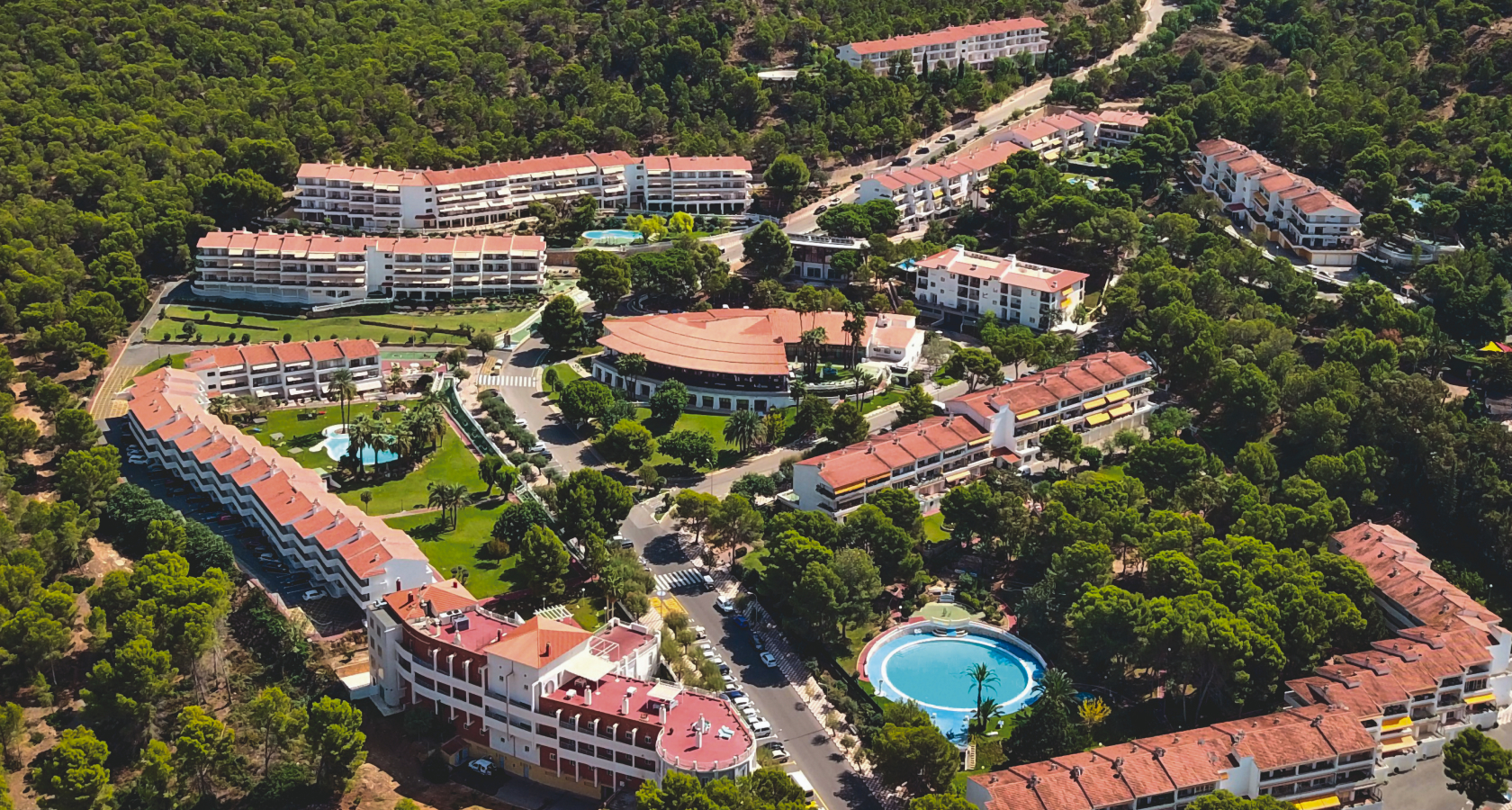


Central Building
Iris Building
Gardenia Building
Hortensia Building
Flora Building
Elisa Building
Heated Swimming Pool
Swimming pools
Swimming Pools
Restaurant
Indoor Pool
Reception

 Filters
Central Building
It is the core of community life at Ciudad Patricia. The reception area, restaurant, beauty centre, and some of our main services are located here.
Iris Building
Iris, completed in 2018, offers 15 apartments built to luxury quality standards. It is located just 50 metres from the Central Building.
Gardenia Building
Gardenia is located right across from the Central Building, allowing you to enjoy all the facilities that are just a stone’s throw away from your apartment.
Hortensia Building
At Hortensia, you can enjoy two worlds: the vibrant bustle of the city and the peaceful and relaxing atmosphere of the adjacent pine forest.
Flora Building
Flora, our tallest building, boasts stunning panoramic views of the valley, the mountains, and the resort.
Elisa Building
Elisa is located in a tranquil setting near the Central Building, indoor pool, fully equipped gym, and hobby room.
Heated Swimming Pool
We have an indoor swimming pool that you can enjoy all year round, whether you would like to exercise or have a moment of relaxation.
Swimming pools
We have several swimming pools at the resort where you can swim, cool off, or simply relax and enjoy the healthy climate of the Costa Blanca.
Swimming Pools
We have several swimming pools at the resort where you can swim, cool off, or simply relax and enjoy the healthy climate of the Costa Blanca.
Restaurant
Discover the delicious and healthy menu at the resort’s restaurant, and have an unforgettable time at its bar, in the dining area, or at its outdoor terrace.
Indoor Pool
We have several swimming pools in the complex, where you can swim, cool off, or simply relax and enjoy the healthy climate of the Costa Blanca.
Reception
In the Central Building, our staff are available to assist and help you with whatever you may need.
 Go back
How Support Works in Ciudad Patricia, an Independent Retirement Community in Spain

Quick Summary
- We are an independent senior living community, not a residential or nursing home. You continue to manage your own apartment and daily routine.
- For everyday questions, our reception team in the Central Building is a practical first point of contact. We can help directly or put you in touch with the appropriate person.
- Our resident coordinator acts as a point of contact for residents, while caretakers, maintenance staff and other members of our team deal with different practical aspects of community life.
- The service fee includes communal maintenance, caretakers, the coordinator, GP consultation hours and 24-hour medical emergency follow-up, among other community costs.
- If you later need personal or specialist care, that is a different level of support and can be discussed separately with the nearby Residence Ciudad Patricia.
You may be completely capable of managing your own life. You drive, shop, make your own appointments, organise repairs and deal with the occasional Spanish letter that arrives in the post. Perhaps you have been doing exactly that on the Costa Blanca for twenty years.
The question is not necessarily whether you actually need help.
It may simply be whether you still want every small problem to be yours to solve.
That is an important distinction when looking at independent retirement living in Spain. At Ciudad Patricia, you have your own apartment, your own front door and control over your daily life. We provide support around that independence, but this is not the same as moving into a residential or nursing care setting.
So what actually happens when you need something? Who do you contact? What is already included, and what has to be arranged separately?
Independent living with support nearby: what does that actually mean?
The phrase “independent living” can be misunderstood in two opposite ways. One person hears it and assumes there is almost no support at all. Another hears “retirement community” and imagines somewhere where meals, medical care and daily routines are organised for residents. But neither really describes how we work.
You live in your own apartment and decide how you spend your day. You can cook at home, drive, travel, visit friends, eat in our restaurant, use the pool, join an activity or ignore the activity programme completely.
But you are not living in isolation from practical help. We have a reception desk, caretakers, a resident coordinator and maintenance and transport options are available. There is also 24-hour medical emergency response. Other services, such as translation, shopping assistance, housekeeping or accompaniment to an appointment, can be organised when required.
You remain responsible for your life, but you do not necessarily have to solve every problem alone.
You can see the current services available at Ciudad Patricia.
Who do you actually contact when you need something?
This is probably the most practical question.
If you live in an ordinary apartment or villa, the answer may depend entirely on what has happened.
A leaking tap means finding a plumber. A letter you cannot understand means calling somebody who speaks better Spanish. A hospital appointment may mean asking a friend to come with you. A broken blind means looking through old WhatsApp messages to remember who repaired it last time.
Here, there are clearer starting points.
|
Situation |
Where to start |
What happens next |
|
General question or practical problem |
Our reception team |
We can help directly or put you in touch with the appropriate person |
|
Ongoing resident request, concern or community matter |
Our resident coordinator |
The coordinator acts as a point of contact between residents and the community |
|
Building or maintenance issue |
Reception / maintenance support |
We direct the issue to the person responsible |
|
Help understanding Spanish correspondence |
Reception |
We can direct you to someone who can help |
|
Medical emergency |
24/7 medical emergency service |
Emergency medical support is available at all times |
|
Shopping, translation, housekeeping or similar personal support |
Speak to our team |
We can help arrange the appropriate service according to your needs |
|
Need for more substantial or specialist personal care |
Speak to us / Residence Ciudad Patricia |
An individual care solution can be explored separately |
Our current FAQs also explains the role of the resident coordinator as a point of contact, while our reception team can assist and direct you to the appropriate person.
A simple example: the letter you cannot quite understand
Suppose an official-looking letter arrives in Spanish. You understand most everyday Spanish, but this one contains several paragraphs of administrative language and you are not completely certain what it is asking you to do.
Living independently does not mean you have to spend the afternoon translating it line by line or worrying that you have missed something important. We can help residents understand Spanish correspondence, and our reception team can direct you to the appropriate person. Translation is also one of the services that can be arranged according to individual needs.
You still make your own decision about the letter .All the support does is remove one unnecessary obstacle.
This can be particularly valuable during the first years after moving from Britain, the Netherlands, Germany or France, when Spanish bureaucracy and medical terminology may be less familiar.
It can also matter if you have lived in Spain for decades. Speaking Spanish in a restaurant and understanding a formal administrative document are not the same thing.
What support is already included in the service fee?
This is where it is important to separate community services from optional personal services.
Our current monthly service fee is €442.22 in 2026 and is reviewed annually according to the actual costs incurred. The fee currently covers maintenance of the buildings, facilities, gardens, pools and Central Building. It also includes collective and individual water consumption, communal electricity, lifts, caretakers, the coordinator and activities, home insurance, sewage and waste charges.
It also includes consultation hours with the general practitioners and 24-hour medical emergency follow-up.
So some support is already built into the normal operation of the community. You do not receive a separate bill because a caretaker works in your building or because there is a team dealing with resident matters.
Likewise, the upkeep of the communal environment is not something residents have to organise collectively through a conventional owners' association in the way they might in an ordinary apartment development.
What needs to be arranged separately?
Other services are available because you want or need them, rather than because every resident automatically receives them.
Depending on your circumstances, we can help arrange services including:
- Shopping assistance
- Translation
- Accompaniment to a doctor or hospital
- Housekeeping
- Airport transfers and taxis
- Maintenance and personal repairs within the apartment
- Hairdressing, manicure and pedicure services
Our current FAQs gives a useful example of how this distinction works. If you do not want to do your own shopping, we can arrange for staff to shop for you for a small fee. Alternatively, there is a weekly shopping bus to El Albir.
Cleaning is also available on request, and laundry services can be arranged. The exact arrangement and any additional charge therefore depend on the service concerned. That is worth asking about when you visit.
What happens if something goes wrong in the apartment?
This is one of the less glamorous advantages of a managed community. A blind stops working, the air conditioning needs attention or a tap develops an irritating drip. None of these things is a crisis.
But anyone who has owned a home in Spain knows the routine that can follow: finding somebody reliable, calling them, explaining the problem, arranging a time and then staying home waiting for them. We can arrange maintenance and personal repairs within residents' apartments. The communal buildings and facilities themselves are maintained as part of our normal service structure.
That does not mean that every private repair is automatically free but it means you already have somewhere to turn.
For someone leaving a villa, that can be more significant than it first appears. Perhaps you are perfectly capable of arranging the pool technician, gardener, electrician and air-conditioning engineer. The question is whether you want property maintenance to remain one of your recurring retirement hobbies.
We explore the broader effect of removing some of these small logistical jobs in Retirement in Spain Without the Usual Stress: What a Better Daily Routine Looks Like.
What does 24/7 medical emergency support mean?
This needs careful explanation because emergency support and ongoing care are not the same thing.
We provide medical emergency response 24 hours a day. GP consultation hours are also included within the service structure. That gives residents an established route for responding to an emergency.
It should not, however, be interpreted as meaning that every resident receives continuous medical supervision or personal nursing care. You continue to manage your normal healthcare in the same way as other people living independently in Spain.
If you have a medical condition, medication regime or treatment plan, those remain matters for your own healthcare professionals unless a separate care arrangement has specifically been made.
The value of the 24-hour service is more straightforward: there is a defined emergency response available within the community rather than leaving you to work out what to do from scratch.
Independent living is not assisted living
This distinction is central to how we work. You do not move into one of our independent apartments because somebody needs to decide when you eat, what you do during the day or whether you are capable of going out alone.
You have your own home which means independence includes the right to be private. Perhaps you want to spend the entire day reading or drive to Jávea to see friends or go away for three weeks. Perhaps you swim every morning but have no interest whatsoever in organised activities. That remains your choice.
The presence of support does not remove that independence, in fact, it can sometimes help preserve it.
We explore that balance between being around other people and retaining control of your own routine in Community Without Pressure: Why Good Retirement Living Should Never Feel Forced.
What if you need more help later?
This is often one of the reasons people investigate retirement communities while they are still active and independent.
You may not be looking for care today, you may simply be thinking about what happens if circumstances change.
More individualized support and care can be arranged. This may range from lighter household support to more intensive assistance, depending on individual circumstances. It can also be relevant in situations such as recovery after surgery, specialist wound care or the need for specific care equipment.
This should be understood as a separate care arrangement.
It is not something automatically provided to everyone living in one of our independent apartments, and individual circumstances need to be discussed with the appropriate team. You should not choose an independent retirement apartment on the assumption that it automatically includes unlimited future care.
But it can be useful to know that, if circumstances change, there is an existing care resource nearby and people who can help you investigate what is appropriate.
For adult children living in another country, that can be a particularly important question to ask during a visit.
Not: “Will my parent ever need help?” Nobody knows that, but; “If something changes, who do we speak to first?”
What if one partner needs more support than the other?
Couples do not always age, recover from illness or manage practical tasks in exactly the same way. One person may still drive everywhere and speak fluent Spanish. The other may dislike driving in town or find medical appointments stressful. That does not necessarily mean either partner needs formal care.
It may simply mean that certain support services become more useful to one person than the other.
Translation, transport, shopping assistance or accompaniment to an appointment can therefore be arranged around individual circumstances rather than turning the couple's entire life into a care routine.
This can also reduce an unspoken pressure within couples. If one person normally handles every Spanish phone call, drives to every appointment and organises every household repair, the other person's independence can become increasingly dependent on them.
What if you live alone?
Support can take on a slightly different value when there is no partner in the apartment. Again, this should not be confused with assuming that somebody living alone is incapable of managing, plenty of people actively prefer living alone.
The practical issue is simply that there is no automatic second person available when something unexpected happens. If you are unwell, need help with a Spanish document or want somebody to accompany you to an appointment, having an established point of contact can be useful.
There is a difference between being independent and having absolutely nobody you can ask and our structure provides the latter without requiring you to surrender the former.
What does support mean for family living abroad?
Adult children often look at retirement living from another angle. Their parent may be perfectly independent but what really concerns them is distance.
If they live in London, Amsterdam, Berlin or Paris, they cannot arrive within twenty minutes because something has gone wrong in the apartment.
They may therefore ask questions that the prospective resident has barely considered.
- Who would Mum call if she felt unwell at night?
- Who would Dad ask if he could no longer drive temporarily?
- What happens if the apartment needs a repair while we are abroad?
- Is there somebody who actually knows how the community works?
These are reasonable questions. The value is that there are defined people, services and procedures around an independent resident rather than every practical problem beginning with an internet search.
Support should remain in the background most of the time
For many residents, a good month may involve very little support at all and that is probably how it should be.
You use your apartment, see friends, swim, drive somewhere for lunch, travel, or you go shopping. Nothing goes wrong.
Our support infrastructure becomes important on the days when ordinary life becomes slightly more complicated. But those moments should not define retirement.
The purpose of support is to make them easier to deal with when they occur.
What should you ask when visiting an independent retirement community?
Facilities are easy to show. A swimming pool photographs well. So does a restaurant but support is less visible.
That means you need to ask more practical questions. When you visit us, try questions such as:
- If I have a practical problem in my apartment, who do I call?
- Who would be my normal point of contact?
- Which services are included in the monthly charge?
- Which services have to be arranged separately?
- What happens if I need help translating something?
- How does the medical emergency response service work?
- What help is available if I temporarily cannot drive?
- What happens if my partner and I begin to need different levels of support?
- If I later need personal care, who helps me arrange it?
The quality of the answers will tell you more about how an independent retirement community actually operates than a long list of amenities.
Come and ask us the practical questions
If you are considering Ciudad Patricia, do not spend your whole visit looking at the apartment, gardens and swimming pools.
Come to the Central Building and see where our reception team works.
Ask us who you would speak to if you needed a repair, translation, transport or help organising something practical. Make sure you understand what is included and what is optional and what would happen if your circumstances changed in future.
Independent retirement living should not be about receiving help you do not need.
It should be about knowing where to find the right support when you do.
Arrange a visit to Ciudad Patricia
Key Takeaways
Support in an independent retirement community should make ordinary problems easier to solve without taking control away from you.
At Ciudad Patricia, our reception team and resident coordinator provide clear points of contact, while the standard service structure includes communal maintenance, caretakers, GP consultation hours and 24-hour medical emergency response. Other personal services, such as translation, shopping help, housekeeping or accompaniment to appointments, can be arranged when needed and may involve separate charges.
More substantial personal or specialist care is different from independent living and requires an individual arrangement.
When you visit, ask us exactly who you would contact, what is included and what happens if your needs change. Then decide whether that level of support fits the independence you want to keep.
Frequently Asked Questions
Is Ciudad Patricia a care home?
No. Our apartments are designed for independent senior living. You have your own home and organise your own daily routine. We provide community services, emergency medical response and practical support, but these should not be confused with residential or nursing care. Where someone needs more substantial personal or specialist care, this requires a separate arrangement.
Who do I contact if I need practical help?
Our reception team in the Central Building is a practical starting point. We can help directly or put you in touch with the appropriate person. We also have a resident coordinator who acts as a point of contact for residents and deals with questions, requests and concerns concerning community life.
Is all support included in the monthly service fee?
No. The service fee includes items such as communal maintenance, caretakers, the coordinator, activities, GP consultation hours and 24-hour medical emergency follow-up. Other personal services can be arranged according to need. Some, such as having staff do your shopping, carry an additional fee. We recommend asking about the current arrangement and cost for any optional service you expect to use.
Can I get help if I do not speak much Spanish?
Yes. We can help residents understand Spanish correspondence, and translation is among the services that can be arranged. Accompaniment to a doctor or hospital can also be organised. This can be useful whether you are new to Spain or simply less confident with administrative or medical language.
Is 24-hour medical emergency response the same as ongoing medical care?
No. We provide a 24/7 medical emergency response and GP consultation hours are included within the service structure. This should not be interpreted as continuous nursing or personal medical supervision. You continue to manage your normal healthcare independently unless a separate care arrangement has been made.
What happens if I need more personal care in the future?
The nearby Residence Ciudad Patricia can provide customised support in situations requiring more substantial or specialist care, including help following surgery and other specific needs. This is separate from ordinary independent apartment living. We can discuss your circumstances with you and help identify the appropriate arrangements.
