







Fill out the form with your details, and we will attend to your request as soon as possible.


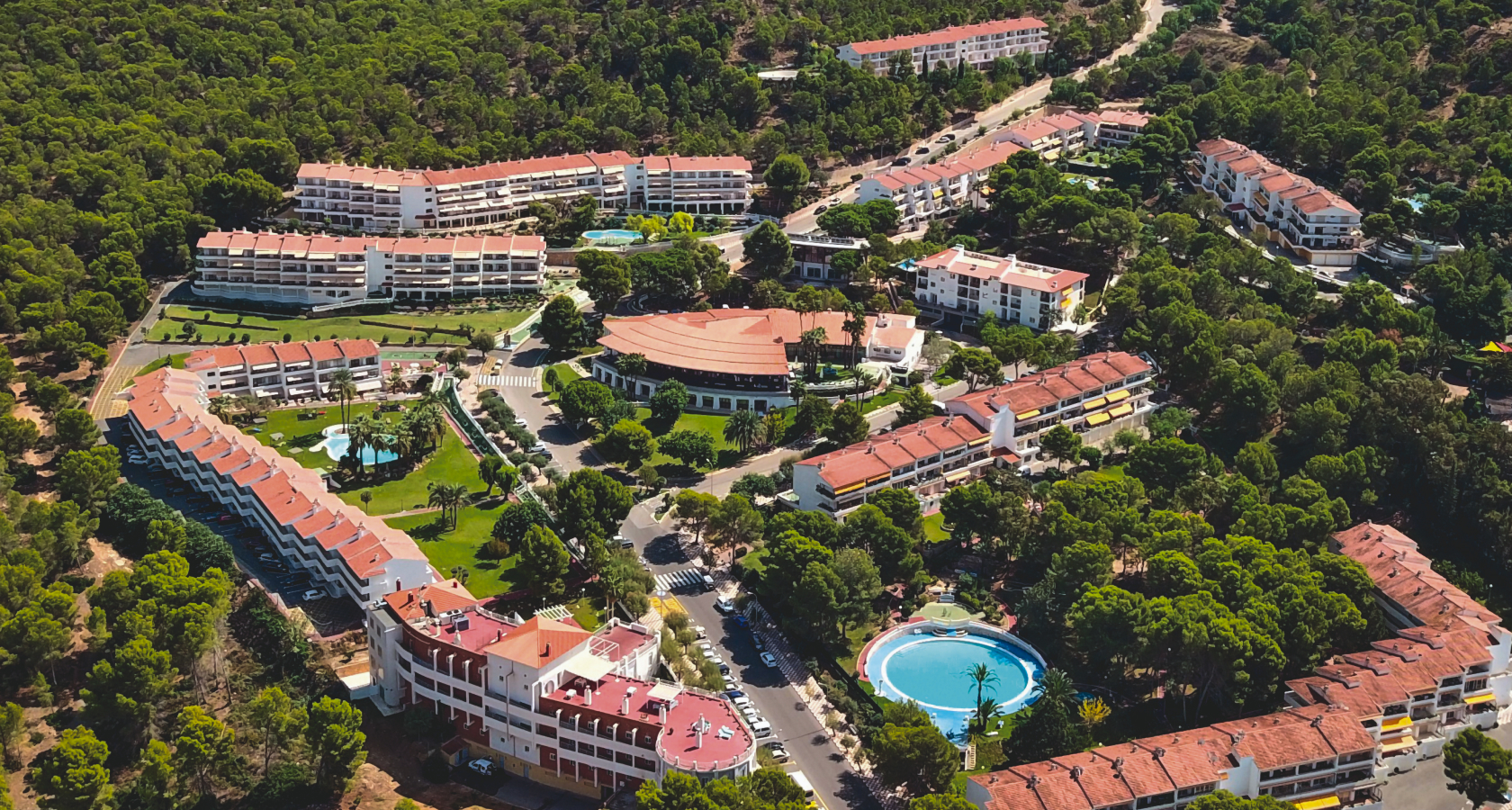


Central Building
Iris Building
Gardenia Building
Hortensia Building
Flora Building
Elisa Building
Heated Swimming Pool
Swimming pools
Swimming Pools
Restaurant
Indoor Pool
Reception

 Filters
Central Building
It is the core of community life at Ciudad Patricia. The reception area, restaurant, beauty centre, and some of our main services are located here.
Iris Building
Iris, completed in 2018, offers 15 apartments built to luxury quality standards. It is located just 50 metres from the Central Building.
Gardenia Building
Gardenia is located right across from the Central Building, allowing you to enjoy all the facilities that are just a stone’s throw away from your apartment.
Hortensia Building
At Hortensia, you can enjoy two worlds: the vibrant bustle of the city and the peaceful and relaxing atmosphere of the adjacent pine forest.
Flora Building
Flora, our tallest building, boasts stunning panoramic views of the valley, the mountains, and the resort.
Elisa Building
Elisa is located in a tranquil setting near the Central Building, indoor pool, fully equipped gym, and hobby room.
Heated Swimming Pool
We have an indoor swimming pool that you can enjoy all year round, whether you would like to exercise or have a moment of relaxation.
Swimming pools
We have several swimming pools at the resort where you can swim, cool off, or simply relax and enjoy the healthy climate of the Costa Blanca.
Swimming Pools
We have several swimming pools at the resort where you can swim, cool off, or simply relax and enjoy the healthy climate of the Costa Blanca.
Restaurant
Discover the delicious and healthy menu at the resort’s restaurant, and have an unforgettable time at its bar, in the dining area, or at its outdoor terrace.
Indoor Pool
We have several swimming pools in the complex, where you can swim, cool off, or simply relax and enjoy the healthy climate of the Costa Blanca.
Reception
In the Central Building, our staff are available to assist and help you with whatever you may need.
 Go back
What You Thought This Stage of Life Would Feel Like (And What It Actually Feels Like)

You had a picture of it. Most people do. Retirement abroad, sun on the Costa Blanca, mornings with nowhere to be, a coffee on the terrace, time finally on your side. You'd earned it. You knew roughly what it would look like.
And then it arrived. And some of it was exactly right. Some of it wasn't. And a few things caught you completely off guard.
That gap between the imagined version and the lived one is something worth talking about honestly, because too many people spend years quietly adjusting to a retirement that doesn't quite fit, assuming the problem is them rather than their circumstances. It isn't always. Sometimes it's just that the setup needs to change.
The things that turned out better than expected
The weather, yes. You knew about the weather. But what you probably didn't anticipate was how much it would change your body. Sleeping better. Moving more easily in the mornings. The low-level ache in your joints that you'd accepted as permanent quietly subsiding over your first winter. Residents who've spent years on the Costa Blanca often say this is the thing they wish they'd known sooner: that the warmth isn't just pleasant, it's genuinely physical.
The pace of life surprised people too, but not in the way they expected. It's not that Spain is slow. It's that the rhythm is different. Lunch matters. Sitting down matters. Nobody looks at you oddly for spending two hours over a meal. For many Northern Europeans who spent decades eating sandwiches at their desks, this takes genuine adjustment. But once it settles, most people find they wouldn't trade it.
And the friendships. That one catches people off guard more than almost anything else. Making real friends in your seventies is supposed to be hard. Conventional wisdom says social circles shrink, that it gets more difficult. What many people discover, when they land in the right community, is that it isn't hard at all. When you remove the social scaffolding of work and shared commutes and children's school pickups, what's left is just people choosing to spend time together because they want to. There's something liberating about that.
The things that turned out harder than expected
Managing a property. This is the one that nobody warns you about loudly enough. You pictured the apartment, the independence, the pride of ownership. What you didn't picture was the boiler that needs servicing, the neighbour dispute about parking, the maintenance company that doesn't speak your language, the anxiety every time something needs fixing and you're not sure where to start. For people who managed their own homes for thirty or forty years, this is often a shock. The house ran fine when you were younger because you had the energy and the network to deal with it. Both of those resources thin quietly over time.
The solitude. Not loneliness exactly, at least not always, but solitude. The long Sunday afternoons when the week stretches ahead with very little in it. The mornings when there's no particular reason to get up at any particular time and that freedom, which sounded wonderful in prospect, feels emptier than expected. People who had rich professional lives often feel this acutely. Identity is a strange thing. You don't realise how much of it was tied to what you did until the doing stops.
And the small indignities of depending on other people for things you used to handle yourself. Asking a neighbour to drive you somewhere. Waiting for someone else to fix something basic. The gradual realisation that the fierce independence you prided yourself on is becoming, by degrees, harder to maintain.
The gap between the imagined and the actual
None of this is cause for despair. Most people who are honest about it will tell you that the overall balance is positive. Life in the sun, with good people around you, at a pace that suits your body rather than fighting it, is genuinely better than the alternative. But the version you get to depends enormously on the choices you make about how to structure your daily life.
The people who seem to find the most contentment are, broadly, those who stopped trying to replicate their previous life in a warmer climate, and started designing something suited to where they actually are now. That's a different project. It requires honesty about what you need versus what you imagined you needed.
What many find, eventually, is that the practical infrastructure of daily life matters far more than they thought. Not in a limiting way. In a freeing way. When the maintenance is handled, when there's a restaurant you can walk to, when the pool is heated and open in January, when there are people to share a morning coffee with without any particular effort, the mental overhead drops significantly. The space that frees up is the space where the better version of this chapter actually lives.
What a different setup actually changes
A community like Ciudad Patricia is worth thinking about in this context, not as a concession but as a considered positive choice. The buildings, each with its own character, whether it's the quiet of Elisa near the indoor pool and gym, or Flora's panoramic views across the valley, are designed around the reality of this stage of life rather than around an idealised version of it. The services handle the things that erode your peace of mind when you're managing everything yourself: the maintenance, the reception, the practical daily infrastructure that, when it works invisibly, you barely notice.
What you do notice is what fills the space instead. The lifestyle at Ciudad Patricia is built around the social and physical things that actually sustain people: the sport, the outdoor life, the gastronomy, the community that forms when the right mix of people share a well-designed space. Not organised fun for its own sake. Just the conditions that make spontaneous, genuine connection more likely.
The indoor heated pool is a small but good example of this. It's open all winter. In January, when you might otherwise spend the morning indoors wondering what to do with yourself, you can swim. That's not a trivial thing. Consistent movement, particularly in warm water, is one of the most evidence-backed contributors to both physical and cognitive wellbeing in your seventies. The infrastructure enables the habit. The habit changes the day. Changed days add up.
What this stage of life actually requires
Probably less than you feared in some ways, and different things than you expected in others. It requires honesty about what's working and what isn't. It requires a willingness to make changes before a crisis forces you to, because changes made from a position of choice are almost always better than changes made from necessity.
And it requires, perhaps most of all, finding the right setting. Not the setting you imagined. The setting that actually fits the person you are now, at this stage, with this life.
Come and see for yourself
Reading about a place only gets you so far. The feel of it, the people, the rhythm of an ordinary morning, none of that comes through on a screen. If any of this resonates with where you are right now, the most useful thing you can do is come and spend some time here. Walk around. Have lunch. Talk to people who actually live here. There's no pressure and no sales pitch. Just a chance to see whether the reality matches what you're looking for. Get in touch and we'll arrange a visit at a time that works for you.
