







Fill out the form with your details, and we will attend to your request as soon as possible.


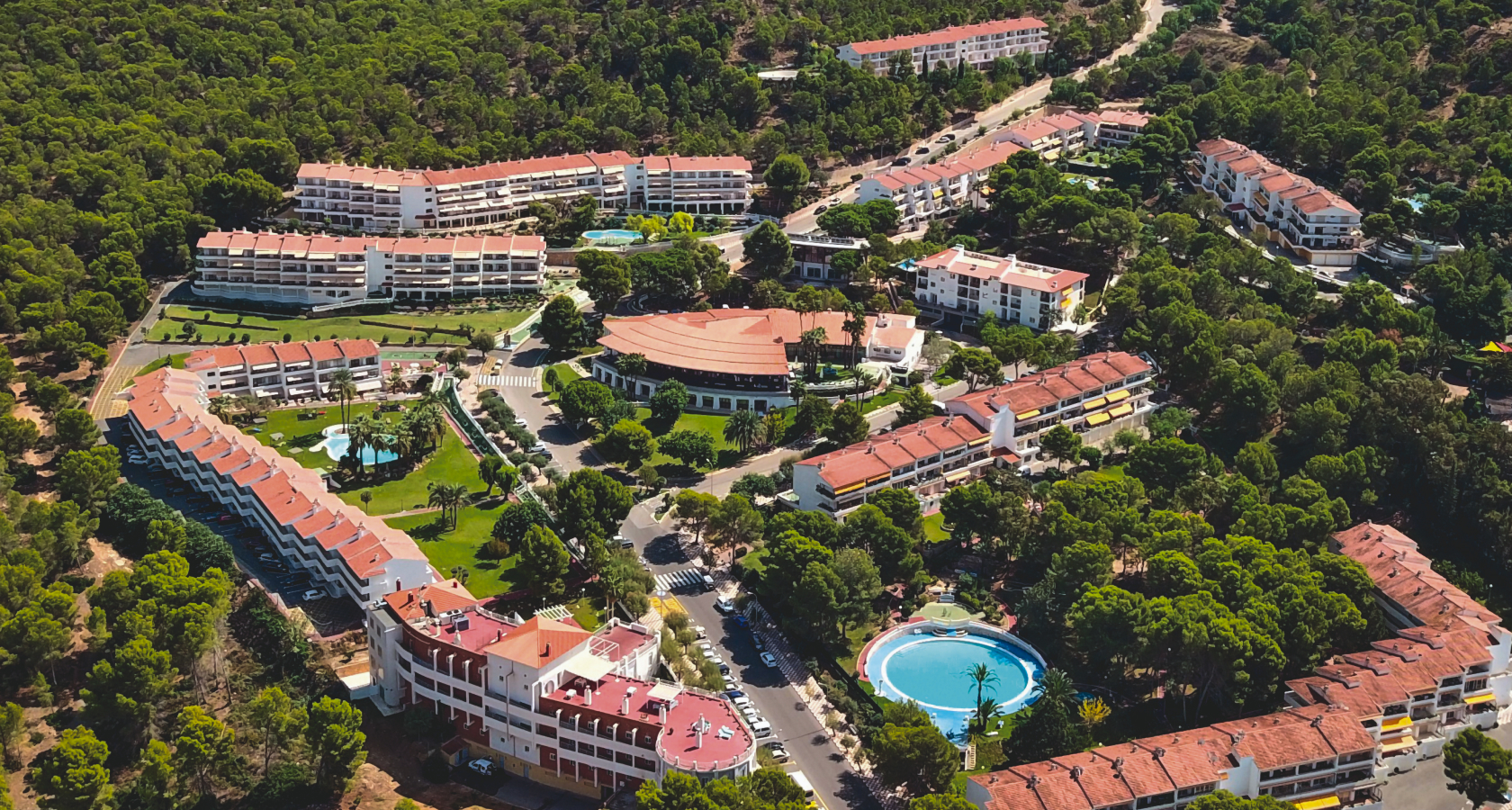


Central Building
Iris Building
Gardenia Building
Hortensia Building
Flora Building
Elisa Building
Heated Swimming Pool
Swimming pools
Swimming Pools
Restaurant
Indoor Pool
Reception

 Filters
Central Building
It is the core of community life at Ciudad Patricia. The reception area, restaurant, beauty centre, and some of our main services are located here.
Iris Building
Iris, completed in 2018, offers 15 apartments built to luxury quality standards. It is located just 50 metres from the Central Building.
Gardenia Building
Gardenia is located right across from the Central Building, allowing you to enjoy all the facilities that are just a stone’s throw away from your apartment.
Hortensia Building
At Hortensia, you can enjoy two worlds: the vibrant bustle of the city and the peaceful and relaxing atmosphere of the adjacent pine forest.
Flora Building
Flora, our tallest building, boasts stunning panoramic views of the valley, the mountains, and the resort.
Elisa Building
Elisa is located in a tranquil setting near the Central Building, indoor pool, fully equipped gym, and hobby room.
Heated Swimming Pool
We have an indoor swimming pool that you can enjoy all year round, whether you would like to exercise or have a moment of relaxation.
Swimming pools
We have several swimming pools at the resort where you can swim, cool off, or simply relax and enjoy the healthy climate of the Costa Blanca.
Swimming Pools
We have several swimming pools at the resort where you can swim, cool off, or simply relax and enjoy the healthy climate of the Costa Blanca.
Restaurant
Discover the delicious and healthy menu at the resort’s restaurant, and have an unforgettable time at its bar, in the dining area, or at its outdoor terrace.
Indoor Pool
We have several swimming pools in the complex, where you can swim, cool off, or simply relax and enjoy the healthy climate of the Costa Blanca.
Reception
In the Central Building, our staff are available to assist and help you with whatever you may need.
 Go back
Why Feeling Part of Something Matters More Than Being Busy

The Quiet Gap Between a Full Day and a Connected Life
Spain has a way of filling your time without much effort on your part. Morning coffee, a walk through familiar streets, a little browsing in the shops, and then lunch that stretches pleasantly beyond what you intended. The sun does what it always does, and by the time the light softens in the evening, another day has passed without any real friction.
For a while, that feels like exactly what you were looking for.
But something changes eventually, not all at once and not in any way that announces itself, but gradually enough that it can take months before you put your finger on it. You begin to notice that being occupied and feeling genuinely connected to the people around you are two quite different experiences, and that having more of one does not automatically produce more of the other.
That distinction turns out to be where most of the interesting questions live.
When a Structured Day Is No Longer Enough
People who move to Spain after decades of working tend to be quite capable of organising their own time. That freedom was, for many of them, a large part of the appeal. And so routines take shape naturally: a café where you know the staff, a walking route that feels like yours, a supermarket where someone occasionally asks how you are.
These small anchors work well enough, and there is real comfort in familiarity. But familiarity and belonging, though they sometimes overlap, are not the same condition. It is entirely possible to move through a day feeling at home in your surroundings while still feeling slightly removed from the life happening around you. Most people do not anticipate this, and many find it difficult to name when it finally arrives.
Why Staying Busy Tends to Run Out of Road
In your sixties, or even the early seventies, keeping active carries its own momentum. You are still close enough to a working life that motion feels natural, purposeful, self-sustaining. Activity generates more activity, and the days feel full in a way that still satisfies.
That equation shifts as time goes on. Energy becomes something you think about more carefully, and the appetite for constant movement, pursued simply for its own sake, begins to fade. What replaces it is rarely more activity. In the longer term, that approach tends not to address what has actually changed.
What begins to matter more is the texture of daily interaction: who you see, how regularly it happens, and whether those encounters require planning or whether they simply occur as part of ordinary life. For people living in more isolated settings, whether a villa on the edge of a village or a property that requires a car to reach much of anything, this is often where the gap first becomes apparent.
The Difference Between Taking Part and Feeling Part of Something
There are practical responses to this, and most people try them. Joining a club, signing up for a class, attending local events. All of these can help, and none of them should be dismissed. But there is a distinction worth understanding between participating in something and actually belonging to it, and you tend to feel that distinction quite quickly.
Belonging tends to reveal itself in moments that were never arranged. Someone mentioning that they had not seen you around for a few days. A conversation that started from nothing in particular. Walking into a shared space and recognising most of the faces without having to think about it. These things cannot really be scheduled into a calendar, and that is precisely what makes them valuable.
Why This Becomes More Pressing at a Particular Stage of Life
Earlier on, social connection is often built into the structure of your days without any deliberate effort on your part. Work provides it. Family life produces it. Even the routine obligations of an earlier era, school runs, regular commitments, repeated shared experiences with the same people over years, keep you embedded in a network that largely maintains itself.
When those structures are no longer present, everything becomes a matter of choice. That can feel like freedom, and in many ways it genuinely is. But it also means that connection requires intention, and intention requires energy, and energy is something most people are inclined to spend thoughtfully rather than freely as the years progress. The practical question, then, is how to stay genuinely connected without turning that pursuit into another item requiring organisation and effort.
What the Environment Around You Actually Does
This is where the nature of your surroundings begins to matter in ways that go beyond the obvious. Not in terms of facilities or amenities, but in terms of how a place is structured through the ordinary hours of the day.
When interaction is built into the rhythm of where you live, not manufactured or scheduled or dependent on you making a particular effort, the whole character of daily life changes. You do not need to go somewhere in order to see people. You do not need to arrange a conversation. Things happen because you are present, and presence alone is sufficient.
This might take the form of a comfortable shared space where people gather without any particular reason to do so. It might be a layout that allows you to cross paths with neighbours without that contact feeling forced or intrusive. It might simply be the difference between a place designed around private retreat and one designed around a certain kind of shared, everyday rhythm. The details are subtle, but over weeks and months they become the thing that defines how a place actually feels to live in.
Why Keeping Your Independence Matters More, Not Less
Choosing to live somewhere that makes connection easier is not the same as choosing to give up independence. In many respects it is the opposite. When the social texture of daily life does not require constant effort, you are less dependent on structured arrangements, less reliant on visits being organised in advance, less vulnerable to the extended periods of isolation that can quietly accumulate when everything requires planning.
You remain in control of your time and your space, but you are not cut off from ordinary human contact in the way that some living arrangements, however beautiful or private, can inadvertently produce. That balance tends to feel more sustainable over time, and it is one reason why environments that combine genuinely private living with a naturally social everyday rhythm often suit people at this stage of life rather better than they expected.
A Distinction Worth Sitting With
When people describe wanting to stay active as they get older, what they are usually describing, if you press them a little, is something closer to staying engaged. The two things are related but not identical. Activity fills the hours of a day. Engagement gives those hours a quality that makes them feel worthwhile, and engagement almost always involves other people, even if only in small and apparently inconsequential ways.
A brief exchange that nobody planned. A familiar face that requires no introduction. A sense of being woven into something ongoing rather than observing it from a comfortable distance. Once those things are present in daily life, much else tends to follow from them without any particular effort.
An Honest Question to Consider
If any of this feels recognisable, it may be worth setting aside the usual questions about property specifications, locations and features, and asking yourself something more direct instead.
In a typical week, how often do you have genuine human contact that nobody organised in advance? Not a scheduled call, not an arranged visit, but simple unplanned interaction with someone who is simply there.
If the answer is that it happens rarely, the issue is probably not that you need more to do. It is more likely that the environment you are living in does not make that kind of contact easy, and that is a more fundamental problem than it might initially appear.
How Ciudad Patricia Supports Daily Life, in Practical Terms
Ciudad Patricia is designed around precisely the kind of everyday rhythm this article has been describing.
The community is structured so that natural, unplanned interaction is a feature of ordinary life rather than something that requires organising: shared spaces where people gather without any particular agenda, familiar faces that accumulate over time, conversations that begin from nothing more than proximity. Your apartment is your own, your routine is your own, and nobody is asking you to surrender either, but you are also not living in a way that depends entirely on your own initiative to stay connected.
The practical side of daily life is taken care of as well, with maintenance, security and general logistics handled in the background so that the small frictions that tend to build up quietly when managing a larger independent property simply do not arise here.
What Ciudad Patricia offers, in the end, is not a managed lifestyle but a supported one: a place where independence is easier to sustain because the environment around you is working with you rather than placing the full weight of daily life on your shoulders alone.
On the Idea of a Different Rhythm
What most people are really looking for, when they think carefully about it, is not a change of scenery so much as a change in how their days feel to move through. Less effort expended on maintaining connection, less planning required to see familiar faces, less of the low-grade effort that accumulates when ordinary social life depends on your constant initiative.
When that shifts, daily life tends to feel lighter and more naturally paced. The days do not necessarily look different from the outside, but they feel different from within them, and that turns out to matter rather more than most property searches allow room for.
If you would like to understand what that kind of rhythm actually feels like to live within, the most useful thing is simply to come and visit. There is no better way to know whether it is what you have been looking for.
