







Fill out the form with your details, and we will attend to your request as soon as possible.


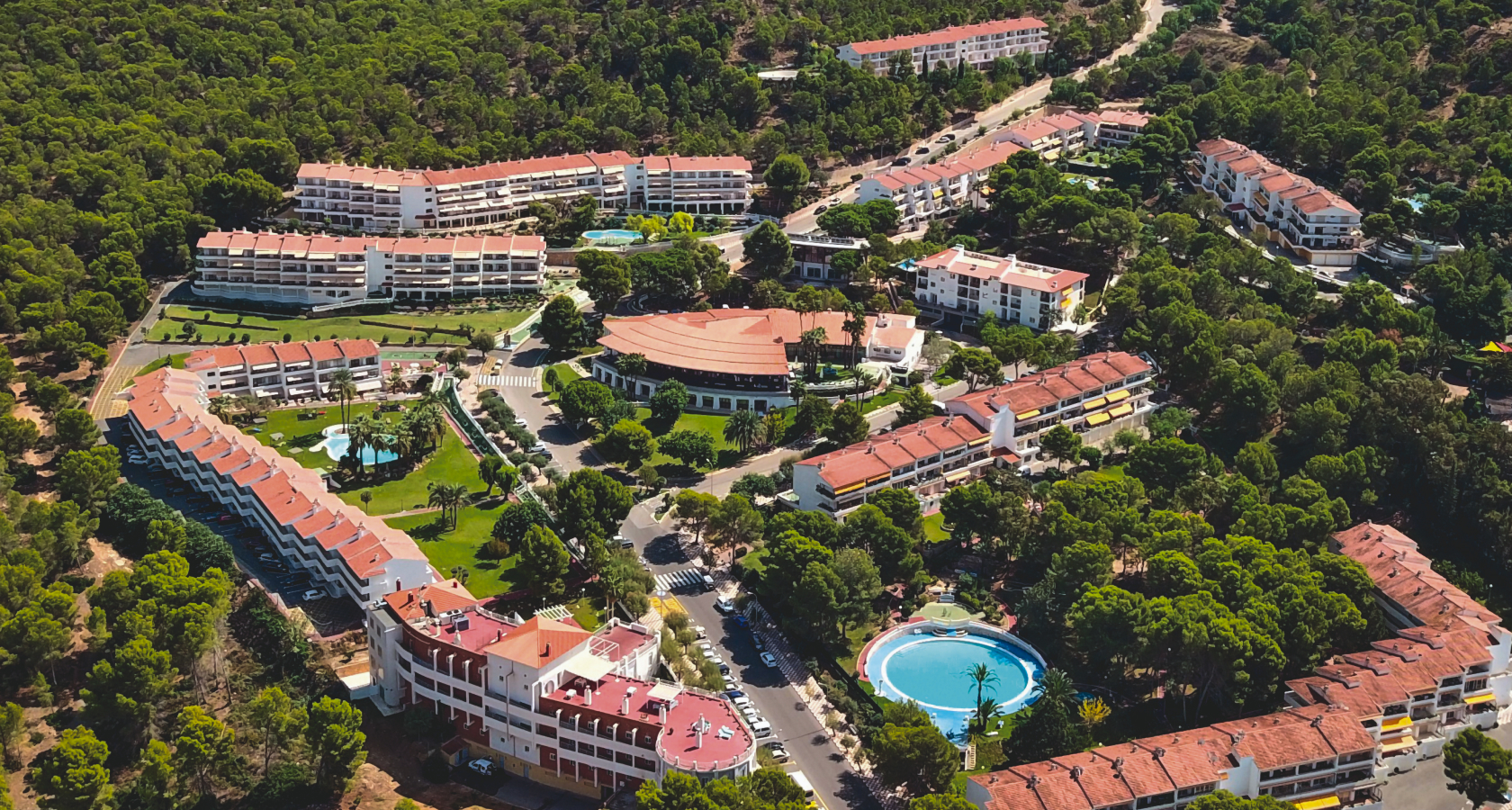


Central Building
Iris Building
Gardenia Building
Hortensia Building
Flora Building
Elisa Building
Heated Swimming Pool
Swimming pools
Swimming Pools
Restaurant
Indoor Pool
Reception

 Filters
Central Building
It is the core of community life at Ciudad Patricia. The reception area, restaurant, beauty centre, and some of our main services are located here.
Iris Building
Iris, completed in 2018, offers 15 apartments built to luxury quality standards. It is located just 50 metres from the Central Building.
Gardenia Building
Gardenia is located right across from the Central Building, allowing you to enjoy all the facilities that are just a stone’s throw away from your apartment.
Hortensia Building
At Hortensia, you can enjoy two worlds: the vibrant bustle of the city and the peaceful and relaxing atmosphere of the adjacent pine forest.
Flora Building
Flora, our tallest building, boasts stunning panoramic views of the valley, the mountains, and the resort.
Elisa Building
Elisa is located in a tranquil setting near the Central Building, indoor pool, fully equipped gym, and hobby room.
Heated Swimming Pool
We have an indoor swimming pool that you can enjoy all year round, whether you would like to exercise or have a moment of relaxation.
Swimming pools
We have several swimming pools at the resort where you can swim, cool off, or simply relax and enjoy the healthy climate of the Costa Blanca.
Swimming Pools
We have several swimming pools at the resort where you can swim, cool off, or simply relax and enjoy the healthy climate of the Costa Blanca.
Restaurant
Discover the delicious and healthy menu at the resort’s restaurant, and have an unforgettable time at its bar, in the dining area, or at its outdoor terrace.
Indoor Pool
We have several swimming pools in the complex, where you can swim, cool off, or simply relax and enjoy the healthy climate of the Costa Blanca.
Reception
In the Central Building, our staff are available to assist and help you with whatever you may need.
 Go back
Why We Delay Changes That Would Make Life Easier

At some point, usually without much drama, daily life starts to feel slightly more effortful than it used to. Nothing is wrong in any obvious sense. The house is still the same, the routines are familiar, and most things continue as they always have. But small details begin to shift. Tasks take a little longer. Decisions require a bit more thought. Things you once did automatically now involve a pause.
Most people notice this. They are not unaware of it but very often, nothing changes.
It’s Not About a Lack of Information
It’s tempting to assume that people delay decisions like moving because they don’t have enough information. That they need more time to research, to compare options, to feel confident about what comes next.
That explanation sounds reasonable, but in reality it rarely tells the full story.
By the time the idea of change appears, most people already have a fairly clear sense of what would make life easier. They know that a smaller, more manageable home would reduce effort. They know that a different environment, perhaps with better weather or more accessible services, would improve day-to-day comfort. They may even have looked at places like Ciudad Patricia and recognised something appealing in the balance it offers.
So the delay is not usually about understanding the options.
It’s about something else entirely.
Familiarity Has Its Own Weight
The place you’ve lived in for years, or decades, carries more than practical value. It holds routines, memories, habits, and a strong sense of predictability. You know how everything works, even the parts that no longer work particularly well.
That familiarity creates a kind of stability that is difficult to measure but very easy to feel.
Changing it, even for something objectively simpler, introduces a degree of uncertainty. Not necessarily risk, but a sense of stepping into something that hasn’t yet become normal.
And that hesitation, even when mild, is often enough to slow everything down.
The Effort of Change Feels Larger Than the Reality
When people think about moving, especially later in life, they tend to picture the entire process all at once. Packing, sorting, making decisions about what to keep and what to let go of, organising logistics, dealing with paperwork.
It sounds like a lot, because it is a lot when you frame it that way. So it becomes something to deal with later. There is always a reason to postpone. Another year. Another season. A slightly better moment that feels more convenient, even if it never quite arrives.
Meanwhile, the current situation continues, largely unchanged, even if it requires more effort than it used to.
Small Frictions Change Behaviour Over Time
What often goes unnoticed is how small inconveniences begin to shape daily behaviour.
You might decide to go out less often because the drive feels less appealing in the evening. You might use fewer rooms in your home because they require more upkeep. You might simplify your routine, not because you want to, but because it feels easier.
None of this happens suddenly, and none of it feels serious on its own.
But taken together, these small adjustments gradually narrow how you live.
Life becomes more contained, more managed, and in some cases, more limited than it need be.
Change Is Often Misinterpreted as Loss
There is also a subtle assumption that making a change means giving something up. Losing independence, losing control, or losing a connection to what has been familiar for so long.
In practice, the opposite is often true, but that’s not how it feels at the beginning.
At that stage, the focus tends to be on what might be left behind rather than what might be gained. A new environment is still abstract. The benefits are imagined rather than experienced. So the current situation, even with its limitations, continues to feel like the safer option.
Waiting for the “Right Moment”
Many people, without quite realising it, wait for a clear signal that it’s time to act.
A practical issue that can’t be ignored. A change in health. A situation that forces a decision rather than invites one. When that moment arrives, it does simplify things in one sense. The choice becomes more obvious.
But it also changes the tone of the decision.
Instead of being thoughtful and measured, it becomes reactive. Instead of choosing from a position of comfort, the decision is made under pressure.
That difference can affect how the entire experience unfolds.
Moving Before You Have To Feels Very Different
When people decide to move earlier, while they still feel in control and capable, the experience tends to be noticeably different.
They arrive with more energy. They have the time and space to explore their new environment, to settle gradually, and to shape their routines in a way that suits them.
They are not solving a problem. They are improving a situation that already works, but could work better.
At Ciudad Patricia, this often shows in how people integrate into the community. They don’t feel the need to “adapt” quickly. They simply begin living there, and over time, the place becomes familiar in its own way.
Independence, Reconsidered
There is a long-standing idea that independence means handling everything yourself. Maintaining a home, managing repairs, organising daily life without relying on anyone else.
That idea holds up to a point. But it can also lead to unnecessary effort.
In environments where support is available but not intrusive, independence can actually increase. When practical concerns are reduced, there is more time and energy for the parts of life that matter.
The services at Ciudad Patricia are structured in a way that supports this balance. You remain fully in control of your day, but you are not carrying the weight of everything behind the scenes.
The Role of Environment in Making Life Easier
The environment itself plays a larger role than people often expect.
Within the community at Ciudad Patricia, the layout, scale, and proximity of spaces reduce the need for planning. You can step outside without needing to organise anything. You can interact with others naturally, or not at all, depending on how you feel.
That flexibility is important.
It removes pressure while keeping options open.
Combined with the climate and pace of the Costa Blanca, daily life tends to feel more fluid. You spend more time outdoors without making a deliberate effort to do so. You move more, often without noticing.
Again, nothing dramatic.
Just a steady reduction in effort.
Why Waiting Often Feels Safer Than It Is
Delaying a decision can feel like the cautious approach. Staying where things are known, avoiding disruption, keeping everything stable.
But there is a quieter cost to that decision.
Over time, flexibility reduces. Energy changes. The ability to make a calm, well-considered move becomes more limited.
The opportunity doesn’t disappear, but it does become more constrained.
That shift is gradual, which makes it easy to overlook.
A Question Worth Sitting With
There is a simple question that tends to sit just below the surface.
Would life be easier somewhere else?
Not in a dramatic sense. Not as a complete reinvention.
Just easier.
If the answer leans towards yes, even slightly, then the next step is not necessarily to act immediately. It is simply to take that thought seriously while the decision is still yours to shape.
If you are considering a change, it helps to experience what that change actually feels like in practice.
Spend some time at Ciudad Patricia. Walk through the gardens, sit for a while, and notice how the environment supports your day without asking much from you.
FAQs
Why do people delay moving even when it would make life easier?
Because the effort of change feels larger than the reality, and familiar environments offer a sense of stability that is difficult to leave behind, even when they no longer suit daily life as well as they once did.
Is it better to wait until change becomes necessary?
Waiting often turns a considered decision into a reactive one. Moving earlier allows more control, more flexibility, and a more gradual, comfortable adjustment.
Does moving reduce independence?
In the right setting, it often increases independence by removing the practical burdens that take time and energy, allowing more freedom in how daily life is structured.
