







Fill out the form with your details, and we will attend to your request as soon as possible.


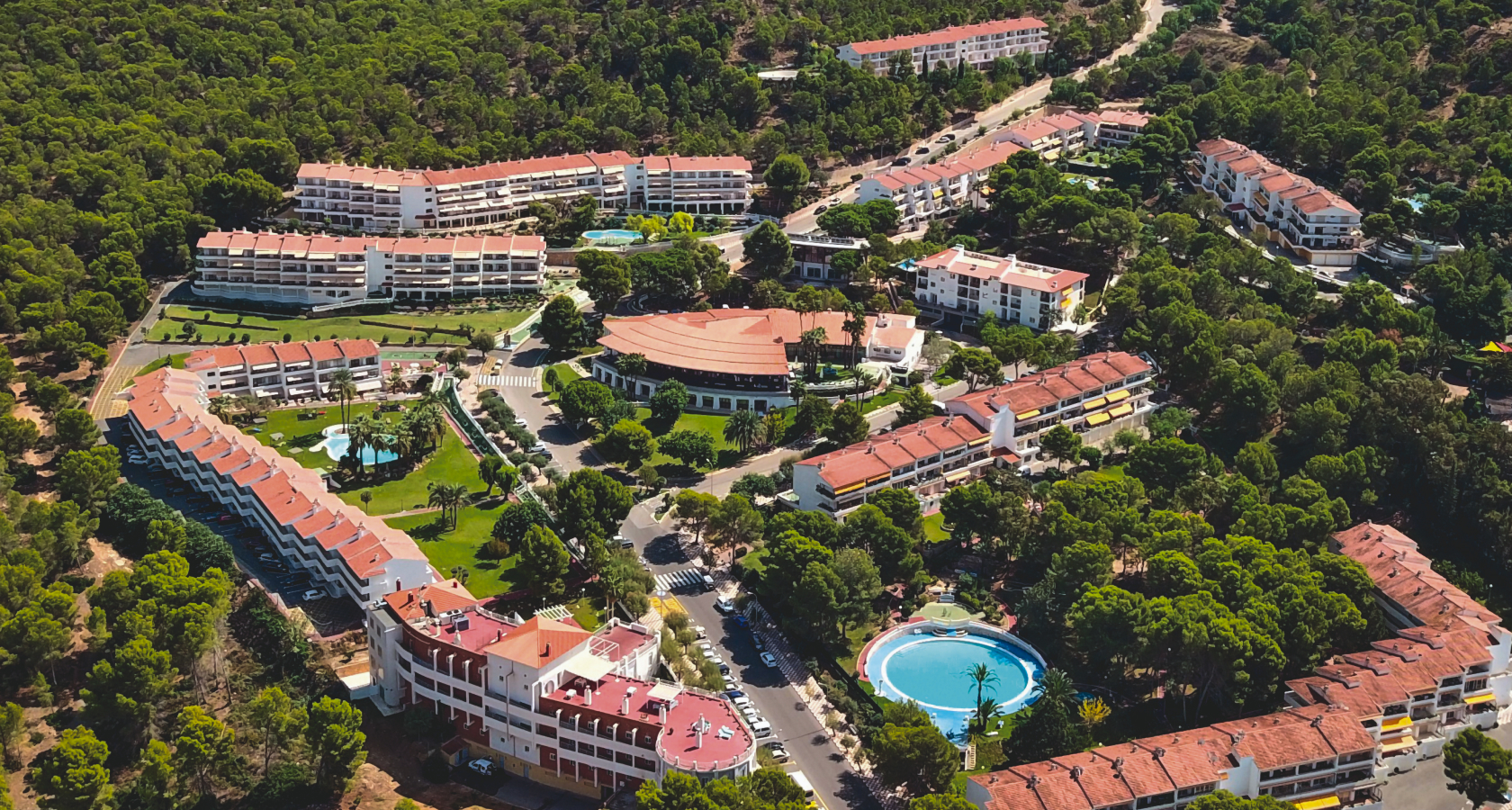


Central Building
Iris Building
Gardenia Building
Hortensia Building
Flora Building
Elisa Building
Heated Swimming Pool
Swimming pools
Swimming Pools
Restaurant
Indoor Pool
Reception

 Filters
Central Building
It is the core of community life at Ciudad Patricia. The reception area, restaurant, beauty centre, and some of our main services are located here.
Iris Building
Iris, completed in 2018, offers 15 apartments built to luxury quality standards. It is located just 50 metres from the Central Building.
Gardenia Building
Gardenia is located right across from the Central Building, allowing you to enjoy all the facilities that are just a stone’s throw away from your apartment.
Hortensia Building
At Hortensia, you can enjoy two worlds: the vibrant bustle of the city and the peaceful and relaxing atmosphere of the adjacent pine forest.
Flora Building
Flora, our tallest building, boasts stunning panoramic views of the valley, the mountains, and the resort.
Elisa Building
Elisa is located in a tranquil setting near the Central Building, indoor pool, fully equipped gym, and hobby room.
Heated Swimming Pool
We have an indoor swimming pool that you can enjoy all year round, whether you would like to exercise or have a moment of relaxation.
Swimming pools
We have several swimming pools at the resort where you can swim, cool off, or simply relax and enjoy the healthy climate of the Costa Blanca.
Swimming Pools
We have several swimming pools at the resort where you can swim, cool off, or simply relax and enjoy the healthy climate of the Costa Blanca.
Restaurant
Discover the delicious and healthy menu at the resort’s restaurant, and have an unforgettable time at its bar, in the dining area, or at its outdoor terrace.
Indoor Pool
We have several swimming pools in the complex, where you can swim, cool off, or simply relax and enjoy the healthy climate of the Costa Blanca.
Reception
In the Central Building, our staff are available to assist and help you with whatever you may need.
 Go back
Retirement Communities in Spain: What Most People Get Wrong

A lot of people start looking for retirement communities in Spain with the wrong picture in their head. They imagine a place where life becomes smaller. A place where routines are decided for you. A place where moving in means admitting something has gone wrong. That is usually the first mistake.
For many people, especially expats already living in Spain or thinking about moving here from the UK, the Netherlands, Germany or France, the real question is not “Am I ready for care?” It is much more practical than that. It is: “Can I keep living independently, but with fewer worries around me?” And frankly, those are very different questions.
A retirement community in Spain, at its best, is not about taking over your life. It is about making everyday life feel less exposed. WhatsApping a technician in Spanish when something breaks and they doesn’t reply for two days. Working out which appointment needs which document. Living in an urbanisation where half the neighbours disappear for months at a time. Realising that your Spanish life still works, but only because you are constantly managing the small gaps yourself.
Ciudad Patricia, in Benidorm on the Costa Blanca, is built around this more realistic version of later life. Private apartments, independent routines, outdoor space, community when you want it, privacy when you do not. That distinction matters immensely.
Misconception 1: A retirement community is the same as a care home
This is probably the biggest misunderstanding that we have to explain to people that come and visit us. In everyday conversation, people often mix together terms like retirement community, care home, nursing home, assisted living and senior residence. But a retirement community – or as we say: a Senior Living Community - is not automatically a care home.
A care home usually implies a higher level of daily personal care. A retirement community, by contrast, can be designed for people who are still independent and want to remain that way. They may want a more manageable home, a safer environment, easier access to services, and a social setting that does not require endless effort to maintain.
At Ciudad Patricia, the focus is independent senior living. Residents have their own homes, their own front doors, their own rhythms. The apartments are absolutely not hospital rooms or institutional units. They are homes designed for people who want comfort, practicality and privacy, with the added reassurance of living in a community where help is closer if it is needed.
This point is particularly important for expats. Many people living on the Costa Blanca have spent years building a life here. They may have bought a villa, made friends, learned enough Spanish to manage, found their favourite café, beach, market or walking route. They are not looking to be “placed” somewhere. They are looking for a more workable version of the life they already chose.
Misconception 2: Moving means giving up independence
For many people, independence is tied to the home they currently live in. The villa, the apartment, the garden, the car, the keys, the familiar view from the terrace. So when someone suggests moving to a retirement community, it can sound like the first step towards losing control.
It is about reducing the number of small decisions that make ordinary days feel heavier than they should. Do you cook properly tonight, or just make toast because it is hardly worth the effort for one? Do you go to the concert, or skip it because no one else is going? Do you try a new activity, or avoid the awkwardness of arriving alone? Do you spend another morning sorting the house, or do something that actually feels like retirement? These are not dramatic problems. That is precisely why people ignore them for so long.
On paper, you are independent but in daily life, the margins are narrowing.
An independence-first retirement community works the other way round. It asks: what needs to be easier so that you can keep living as you choose?
That might mean living in a home that is easier to maintain. It might mean having services on site or nearby. It might mean being able to join other people for coffee without arranging a week in advance. It might mean having green space for a walk without getting in the car. It might mean knowing that if something unexpected happens, you are not completely isolated.
Misconception 3: Retirement communities are institutional
Many people hear “community” and imagine corridors, schedules, fixed meal times and organised activities that feel slightly forced. And frankly that fear is understandable, nobody wants to feel managed or wants to swap a real life for a timetable.
A good retirement community should not feel institutional. It should feel comfortable and human. You should be able to understand how daily life works without feeling that someone else is directing it.
That includes the small things. Where do people naturally meet? Can you have lunch when it suits you? Can you cook what you want when you want it in your own apartment? Are there places to sit outside alone with a book? Can you take part in activities without feeling obliged to join everything? Is there enough going on to avoid loneliness, but not so much that life starts to feel programmed?
That is the balance many people are really looking for. Not constant sociability or managed entertainment. Just a setting where life offers more openings. A conversation over lunch. A familiar face on the way back from a walk. A class, a concert, a game, a swim, a shared meal, a terrace where people naturally pause. These things are small, but they change the texture of the week. They make community feel available rather than imposed.
A good retirement community should not feel institutional. It should feel like a small, functioning community where everyday life has more natural points of contact. You might have coffee without needing to make an appointment three days in advance. You might use the Restaurant and Café options when you feel like company, but still cook privately when you prefer your own routine. You might join leisure activities because they genuinely interest you, not because someone is trying to keep you occupied. You might go for a walk, sit outside, swim, read, talk, disappear for the afternoon, or have family visit without feeling that your day belongs to anyone else.
That is the balance many people are really looking for. Not constant sociability. Not managed entertainment. Just a setting where life offers more openings. A conversation over lunch. A familiar face on the way back from a walk. A class, a concert, a game, a swim, a shared meal, a terrace where people naturally pause. These things are small, but they change the texture of the week. They make community feel available rather than imposed. The value is in having possibilities close at hand, without having to build every social moment from scratch.
We often say it takes a village to raise a child. Later in life, the same idea returns in a different form: it can take a thoughtful community to help people remain independent, connected and fully themselves.
Misconception 4: Retirement living is only for people who are lonely
Loneliness is part of the conversation, of course it is, let’s not fool ourselves. It would be dishonest to pretend otherwise. Many expats in Spain discover, especially after 70, that social life changes. Friends return to their home countries. Partners become ill or sadly even die. The casual network that once felt easy starts to thin out.
But retirement communities are not only for people who are lonely they are also for people who are realistic.
Not every move follows the same logic. A couple may want to spare their adult children the worry of watching from abroad. A single person, perhaps, is tired of the effort it takes just to see people: the arrangements, the planning, the apologising for cancelled plans. And someone living in a beautiful villa may simply reach the point where most of the week is spent managing (or failing to) the place rather than enjoying it.
None of that is defeat, it is an adjustment.
For expats, this can be especially relevant. Living abroad is wonderful when life is flowing well, but when small complications build up, they can feel heavier in a second language and a different system. Medical appointments, paperwork, home repairs, transport, emergencies, insurance, community administration. None of these things may be dramatic on their own. Together, they can make life feel more brittle than it needs to.
The right services do not take independence away; they protect it, by making everyday life easier before small complications start to dominate the week.
Misconception 5: You have to be very old to consider it
Some people wait until a move becomes unavoidable. Most of us delay difficult decisions, especially when the current arrangement is still just about working. But the best time to consider a retirement community is often before there is a crisis.
If you move while you still have energy, curiosity and confidence, you are more likely to shape the next stage of life on your own terms. You can choose the apartment that suits you. You can get to know people gradually. You can keep your existing interests and routines. You can decide what to join, what to ignore and how much of the wider Costa Blanca you still want in your life.
Waiting too long can reduce choice. It can also make the move feel like something done under pressure, perhaps after a fall, an illness, a bereavement, or a difficult phone call with family.
For many people searching for retirement communities in Spain, the decision begins long before they arrange a visit. It may start with a feeling that the current arrangement still works, but only just. Life on the Costa Blanca can be wonderful, but it can also become more complicated with age when every social plan, every appointment and every practical problem depends entirely on your own energy.
That does not mean leaving the region you love. For many expats, the Costa Blanca is already home. The climate, the familiar towns, the international mix, the nearby airports, the cafés, the markets, the coastal walks, even the small routines of Spanish life, these are not things people want to give up lightly. A move to a retirement community can be a way of staying close to that life, but with a more supportive structure around it.
At Ciudad Patricia, that connection to the Costa Blanca matters. You are not moving into a sealed-off environment. You are still in Benidorm, still within reach of the coast and the cit-, still part of the wider rhythm of the area. The difference is that daily life becomes easier to manage, and the practical side of living well in Spain is less dependent on doing everything alone.
Misconception 6: Community means losing privacy
The word "community" can sound intrusive. Neighbours constantly knocking, meals where everyone knows your business, a level of sociability that feels exhausting rather than reassuring.
A good retirement community works differently. Your door is yours to close. You choose when to join in and when to disappear. Friends and family visit on your terms, your routines stay intact, and nobody is keeping score of how often you show up to things.
Community should sit around your private life, not replace it.
In Spain, much of daily life happens outside anyway - a walk after breakfast, a quiet spot in the sun, a chat that happens naturally rather than by arrangement. At Ciudad Patricia, that rhythm is part of how the place is designed. The outdoor areas and broader lifestyle give you somewhere to be when you want company, and somewhere to retreat when you don't. The two can coexist without one crowding out the other.
Misconception 7: It is only about facilities
Facilities are easy to list. The pools, restaurant, café, gardens, activities, services, sport, communal areas. They have their place, and they help people compare options. But facilities alone do not make a good retirement community.
The deeper question is whether the place makes daily life feel easier, safer and more connected without making it feel smaller. Does it reduce friction? Does it allow you to keep your identity? Does it make ordinary days work better?
Someone who has lived abroad for years will notice the difference. They are not just buying a list of amenities. They are choosing an environment. They are asking whether they can see themselves living there on a Tuesday morning in February, not just during a sunny visit in May.
Activity matters, but it should never feel like a performance. Some people want swimming, fitness or organised sport. Others just want to keep moving in a way that feels normal: a walk, a stretch, a light class, a few more reasons to be out and about during the day. At Ciudad Patricia, sport and movement are available as part of daily life, without the assumption that everyone wants the same pace.
What a good retirement community in Spain should really offer
A good retirement community should give you more control over the things that matter and less responsibility for the things that have become a nuisance.
That means a private home that feels like yours. A setting where you can meet people without forcing friendships. Services that support daily life without making you feel dependent. Outdoor space. Sensible access to activities. A clear location. A feeling of being among adults who have made a considered choice, not people who have been pushed into a corner.
For expats, it should also reduce the stress of being slightly exposed in a foreign country. Even confident Spanish residents can feel vulnerable when something goes wrong alone. That does not mean they need care. It means they just need a better framework.
Ciudad Patricia is relevant because it sits in that middle ground: independent senior living on the Costa Blanca, with homes, services, community and space arranged around people who still want to live their own lives.
If you are comparing retirement communities in Spain, try not to start with the fear of what you might lose. Start with a more practical question. What parts of your current life do you want to keep, and what parts would you be relieved to stop managing?
That answer will tell you far more than any brochure.
To understand the setting, homes and daily life in more detail, you can explore Ciudad Patricia, look at the available apartments, or contact the team to ask the questions that matter for your own situation.
FAQs
Is a retirement community the same as a care home?
No. A care home provides daily personal care for people who need it. A retirement community like Ciudad Patricia is designed for independent living: your own home, your own routine, with services and community around you rather than instead of you.
Do I have to give up my independence by moving in?
The opposite is usually true. The aim is to reduce the small daily frictions, maintenance, isolation, logistics, that quietly erode independence over time. You keep your own front door, your own rhythm, and your own choices.
What if I find community living too sociable or intrusive?
A well-designed retirement community lets you choose your level of involvement. You can join activities, use shared spaces, and meet neighbours or simply close your door. Community should sit around your private life, not replace it.
When is the right time to consider making a move?
Earlier than most people think. Moving while you still have energy and confidence means you make the choice on your own terms, get to know people gradually, and shape the next stage of life rather than responding to a crisis.
Does moving to a retirement community mean leaving the Costa Blanca lifestyle behind?
Not at Ciudad Patricia. You remain in Benidorm, close to the coast, the towns, the climate and the routines that brought you here. The difference is that daily life becomes easier to manage, the life you chose, with less of the friction.
This article challenges seven common misconceptions about retirement communities in Spain, arguing that the best versions are built around independent living rather than care. Aimed at expats on the Costa Blanca, it reframes the decision not as an admission of decline but as a practical choice, reducing daily friction, protecting independence, and staying connected to the lifestyle you already chose.
