







Fill out the form with your details, and we will attend to your request as soon as possible.


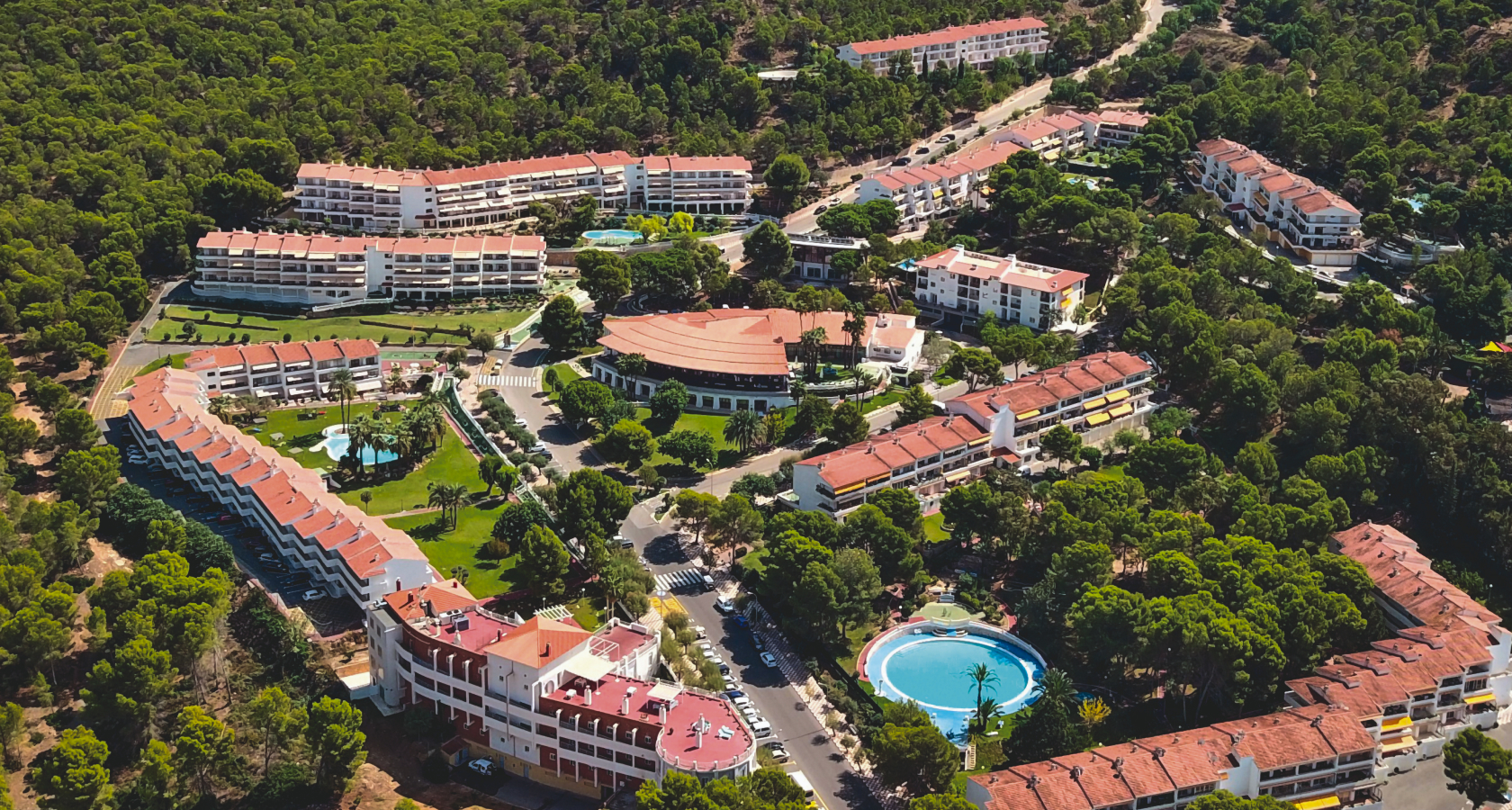


Central Building
Iris Building
Gardenia Building
Hortensia Building
Flora Building
Elisa Building
Heated Swimming Pool
Swimming pools
Swimming Pools
Restaurant
Indoor Pool
Reception

 Filters
Central Building
It is the core of community life at Ciudad Patricia. The reception area, restaurant, beauty centre, and some of our main services are located here.
Iris Building
Iris, completed in 2018, offers 15 apartments built to luxury quality standards. It is located just 50 metres from the Central Building.
Gardenia Building
Gardenia is located right across from the Central Building, allowing you to enjoy all the facilities that are just a stone’s throw away from your apartment.
Hortensia Building
At Hortensia, you can enjoy two worlds: the vibrant bustle of the city and the peaceful and relaxing atmosphere of the adjacent pine forest.
Flora Building
Flora, our tallest building, boasts stunning panoramic views of the valley, the mountains, and the resort.
Elisa Building
Elisa is located in a tranquil setting near the Central Building, indoor pool, fully equipped gym, and hobby room.
Heated Swimming Pool
We have an indoor swimming pool that you can enjoy all year round, whether you would like to exercise or have a moment of relaxation.
Swimming pools
We have several swimming pools at the resort where you can swim, cool off, or simply relax and enjoy the healthy climate of the Costa Blanca.
Swimming Pools
We have several swimming pools at the resort where you can swim, cool off, or simply relax and enjoy the healthy climate of the Costa Blanca.
Restaurant
Discover the delicious and healthy menu at the resort’s restaurant, and have an unforgettable time at its bar, in the dining area, or at its outdoor terrace.
Indoor Pool
We have several swimming pools in the complex, where you can swim, cool off, or simply relax and enjoy the healthy climate of the Costa Blanca.
Reception
In the Central Building, our staff are available to assist and help you with whatever you may need.
 Go back
The Difference Between Peaceful Silence and Feeling Alone

Most people, if they're being specific, want a particular kind of stillness.
A calm morning. No urgency, no background noise, nothing demanding attention before you're ready to give it. Room to think, and time that belongs to you. As one person I spoke to recently said, “All I want is to not to hurry”.
For many people who move abroad later in life, that's part of what drew them there. And often, they find it.
But something slightly unexpected can happen over time, and it doesn’t arrive all at once. It appears gradually, in a way that’s easy to overlook at first. The same quiet that once felt like freedom begins, on certain days, to feel different. Not unpleasant exactly, just heavier. Less like a choice and more like a default.
That’s when you should ask the more specific question. Am I enjoying the silence, or am I simply getting used to being alone?
Silence isn’t the problem
It helps to be clear about this, because silence itself is not something to fix. Most people actively seek it out, particularly after years of working, commuting, raising families, or simply managing busy lives. The absence of constant noise, both literal and social, can feel like a relief.
You notice things again. You move at your own pace. You decide how your day unfolds and, frankly, there’s nothing wrong with that. In fact, in the right context, it’s one of the best parts of this stage of life.
The difficulty comes when silence stops feeling chosen. When every day is silent.
What makes this difficult to recognise is how gradual the shift tends to be. It doesn’t feel like a clear change from one state to another. It’s more like a slow drift.
You still enjoy your own company. You still value your independence. But you may find yourself hesitating before going out, or deciding not to make plans because it feels like more effort than it used to. Conversations become less frequent, not because you don’t want them, but because they no longer happen naturally.
Days pass comfortably enough, but with fewer moments that feel shared and because nothing feels wrong in a dramatic sense, it’s easy to assume that this is simply how life is now.
There’s a version of independence that looks strong from the outside but feels slightly different from within. You manage everything yourself. You organise your day, your home, your routine. You don’t rely on others, and in many ways that feels like a success.
When interactions require effort rather than happening naturally, they tend to happen less often. When they happen less often, it becomes easier to continue without them and gradually, the range of your daily life becomes a little narrower, even if it still feels comfortable.
The difference is about choice
This is where the distinction between peaceful silence and feeling alone becomes clearer. Silence feels good when you know you could step out of it at any time. When there are people nearby, opportunities to connect, and a sense that interaction is available without being imposed.
Feeling alone is different.
It tends to come with a sense that connection requires planning, effort, or a change of routine. That it’s something you have to arrange rather than something that exists around you and that difference matters more than most people expect.
Proximity changes everything
One of the simplest ways to understand this is through proximity. Not forced socialising, not organised events, but simply the presence of other like-minded people living their lives nearby.
In an environment like the community at Ciudad Patricia, interaction isn’t something you have to schedule or commit to. It happens in passing, in shared spaces, in small, unplanned moments that don’t require energy or preparation.
You might have a conversation, or you might not. You might join something, or simply observe it. The key is that the option exists, and it exists close to you.
That changes how silence feels. You stop feeling alone.
The role of environment
The physical environment plays a larger role in this than many people realise.
If your surroundings require effort every time you want to leave your home, then staying in becomes the easier option. If social interaction involves driving, organising, or committing to a fixed plan, it naturally becomes less frequent.
On the other hand, when the environment supports casual movement and light interaction, the balance shifts.
At Ciudad Patricia, the layout, scale, and daily rhythm make it easier to step outside without a reason, to encounter people without planning to, and to return to your own space just as easily.
This flexibility allows silence to remain something you choose, rather than something that happens by default.
Social energy changes over time
Another factor that often goes unspoken is that social energy changes. It’s the way they want to engage tends to shift. Large gatherings may feel less appealing. Structured social events can feel like too much effort.
What many people prefer is something lighter. Short conversations - a quick chat. Familiar faces. A sense of being around others without needing to perform or participate in a particular way.
That kind of interaction is harder to create deliberately, but easier to experience when it’s built into the environment.
The balance most people are actually looking for
If you ask people what they want, they rarely say they want to be constantly surrounded by others. They want space and calm. They want the ability to spend time alone without feeling isolated. But, at the same time, they don’t want to feel cut off.
The balance is somewhere in between.
Enough connection to feel part of something, but enough independence to step back whenever they choose. That balance is difficult to create in isolation, but much easier when it’s supported by the setting itself.
This is not something that needs to be decided immediately or dramatically. It’s more a question of noticing. On most days, does your silence feel comfortable and chosen, or does it feel like the easiest option available?
When you think about interacting with others, does it feel natural, or does it feel like something that requires effort?
There’s no right or wrong answer.
But the answers themselves tend to be quite clear once you ask the question.
FAQs
How do I know if I’m enjoying solitude or becoming isolated?
- If interaction feels available and easy when you want it, you’re choosing solitude. If it feels like effort or requires planning, you may be experiencing isolation rather than simply enjoying quiet time.
Is it normal to want less social interaction later in life?
- Yes, but the type of interaction often changes. Many people prefer smaller, more natural encounters rather than structured or demanding social situations.
Can environment really affect how connected I feel?
Yes. Proximity to others, shared spaces, and ease of movement all influence how often and how naturally social interaction occurs, even without deliberate effort
