







Fill out the form with your details, and we will attend to your request as soon as possible.


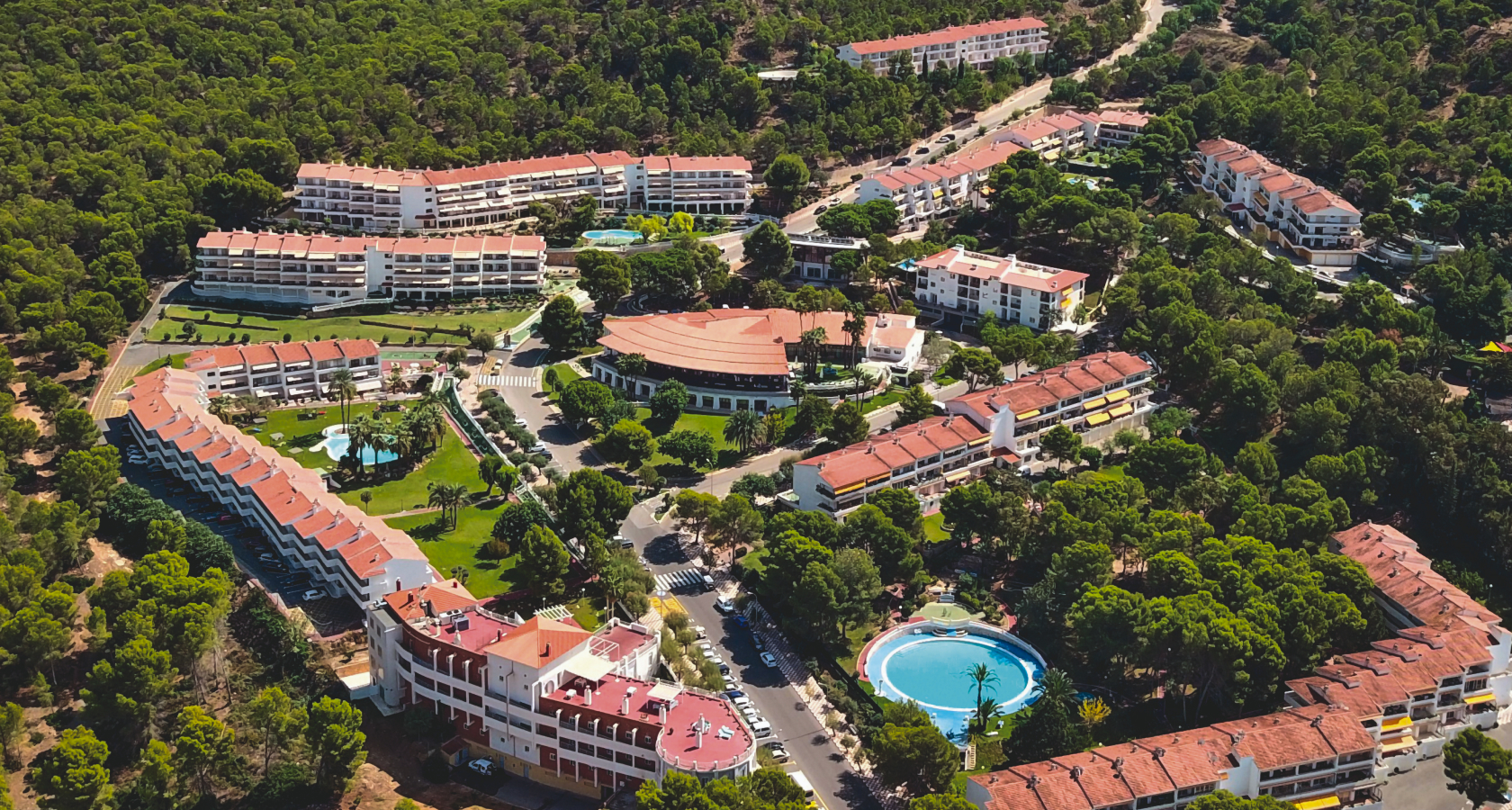


Central Building
Iris Building
Gardenia Building
Hortensia Building
Flora Building
Elisa Building
Heated Swimming Pool
Swimming pools
Swimming Pools
Restaurant
Indoor Pool
Reception

 Filters
Central Building
It is the core of community life at Ciudad Patricia. The reception area, restaurant, beauty centre, and some of our main services are located here.
Iris Building
Iris, completed in 2018, offers 15 apartments built to luxury quality standards. It is located just 50 metres from the Central Building.
Gardenia Building
Gardenia is located right across from the Central Building, allowing you to enjoy all the facilities that are just a stone’s throw away from your apartment.
Hortensia Building
At Hortensia, you can enjoy two worlds: the vibrant bustle of the city and the peaceful and relaxing atmosphere of the adjacent pine forest.
Flora Building
Flora, our tallest building, boasts stunning panoramic views of the valley, the mountains, and the resort.
Elisa Building
Elisa is located in a tranquil setting near the Central Building, indoor pool, fully equipped gym, and hobby room.
Heated Swimming Pool
We have an indoor swimming pool that you can enjoy all year round, whether you would like to exercise or have a moment of relaxation.
Swimming pools
We have several swimming pools at the resort where you can swim, cool off, or simply relax and enjoy the healthy climate of the Costa Blanca.
Swimming Pools
We have several swimming pools at the resort where you can swim, cool off, or simply relax and enjoy the healthy climate of the Costa Blanca.
Restaurant
Discover the delicious and healthy menu at the resort’s restaurant, and have an unforgettable time at its bar, in the dining area, or at its outdoor terrace.
Indoor Pool
We have several swimming pools in the complex, where you can swim, cool off, or simply relax and enjoy the healthy climate of the Costa Blanca.
Reception
In the Central Building, our staff are available to assist and help you with whatever you may need.
 Go back
Winter on the Costa Blanca: What Is It Like When You Live Here?

Quick Summary
- Winter daytime temperatures around Alicante typically reach 16 to 17°C, although mornings and evenings can be much cooler.
- The bigger difference for many Northern Europeans is the sunshine and ability to spend time outdoors throughout winter, rather than simply warmer temperatures.
- Indoor comfort matters. Some older Spanish properties can feel surprisingly cold despite the mild climate outside.
- Benidorm remains active throughout winter, while Ciudad Patricia offers year-round facilities including an indoor swimming pool, fitness facilities and communal spaces.
- If you are seriously considering moving to the Costa Blanca, visiting during winter can be more informative than another summer holiday.
If you have only ever visited the Costa Blanca between June and September, winter can be difficult to imagine.
It is certainly not summer all year round. January mornings are cold enough for a jacket, evenings can feel chilly, there are rainy days, and you will use the heating.
But winter here is also very different from winter in Britain, the Netherlands, Germany or northern France. The difference is not simply that the temperature is higher. There is considerably more sunshine, more usable outdoor time and, on many days, very little reason to spend the whole day indoors.
How warm is the Costa Blanca in winter?
Official climate figures give a more useful picture than the familiar claims about endless sunshine.
At Alicante-Elche Airport, AEMET (The Spanish Weather Service) records an average daytime maximum of 16.7°C in January and 17.4°C in February. Average night-time minimums are 6.5°C and 7.1°C respectively. January averages around 184 hours of sunshine. AEMET
That is mild, but it is not beach weather every day.
On a calm January afternoon, 17°C in direct sunshine can feel extremely pleasant. You may be sitting outside for coffee or lunch without thinking much about the fact that it is winter.
Come back to the same terrace after sunset and the situation is quite different. You will probably want a jumper or jacket and some heating once you are indoors.
This is one of the first things people who move from Northern Europe discover: the winter day has several different temperatures in it. The morning may feel crisp but midday can be warm in the sun and by early evening, it is winter again.
The bigger difference is often the light
Temperature only tells part of the story.
Alicante-Elche's climate normally records 184 hours of sunshine in January and 179 in February.
For context, the UK's 1991 to 2020 January average is just 47.45 hours of sunshine, while De Bilt in the Netherlands records a 1991 to 2020 January normal of 66.6 hours. Met Office
But the practical difference is obvious once you live here. You won’t necessarily be wearing shorts in January but it may mean looking outside at 11am, seeing blue sky and deciding to go for a walk or having lunch on a terrace or simply sit outside with a book during the afternoon.
For many people moving from Northern Europe, that is the lifestyle change they are looking for.
But Spanish winters do have an indoor side
There is one aspect of retiring to Spain that deserves more attention than it normally gets: a mild outdoor climate does not automatically mean a warm house. Anyone who has spent a winter in an older Spanish property may recognise this.
Tiled floors, large windows, limited insulation and heating systems designed for relatively short periods of use can make some homes surprisingly chilly. It is perfectly possible to feel comfortable outside in the sunshine at lunchtime and cold inside the same evening.
Someone moving from Germany or the Netherlands may find this particularly surprising. A house constructed for a much colder Northern European winter can be exceptionally well insulated. An older Mediterranean property may not be.
So when looking for a permanent home on the Costa Blanca, do not only stand on the terrace and admire the view.
Think about the property at eight in the morning in January.
- Where does the winter sun enter?
- How is the apartment heated?
- How well insulated is it?
- Are there rooms that receive very little winter sunshine?
What happens to Benidorm when summer finishes?
Benidorm is quieter in winter, but it does not close. The beaches are less crowded, however you may be surprised, especially at the weekends. Roads can feel calmer and walking along the seafront in January is very different from doing the same in July or August!
But Benidorm is also a substantial town and a year-round destination. People live here, shops remain open, restaurants continue serving customers and everyday life carries on.
For permanent residents, that can make winter one of the more pleasant periods of the year. You still have the coast, cafés, restaurants, shops and everyday services, but with fewer visitors competing for them.
This is worth considering when choosing where to settle because some smaller coastal resorts can feel very different once their main holiday season ends. Even isolated.
A place that is delightful during August may feel rather different on a Tuesday afternoon in January.
What do you do when the beach is no longer the centre of the day?
What’s left if you take the beach away from a Mediterranean resort? On the Costa Blanca, quite a lot, as it turns out. Winter is particularly well suited to walking, hiking in the surrounding hills and mountains, cycling, markets, restaurants and exploring towns and villages that can feel too hot or crowded during summer.
It is also when the facilities available where you live start to matter more. The point is not that you need to fill every day with organised activity but a good winter routine may simply mean having several options available and deciding on the day whether you want to use any of them.
Winter can tell you more about a home than summer does
There is a good argument for saying that someone planning a permanent move can learn more from visiting in January than in August. Summer can disguise quite a lot, really.
You naturally spend more time outside and the beach or swimming pool provides an obvious focus. You will have more friends and family visiting and the terraces and bars are busy and the days are long.
Winter asks different questions.
- Is the apartment comfortable in the evening?
- Can you walk somewhere easily?
- Are shops and restaurants still open?
- Is there somewhere to exercise or swim indoors?
- Does the neighbourhood still feel alive?
- If you want company, are there opportunities to find it nearby?
- If it rains for an afternoon, does the place still work?
That is when you discover whether somewhere is simply a pleasant holiday destination or whether it functions as a year-round home.
What is winter like at Ciudad Patricia?
Winter also changes how you see some of the practical advantages of living in a community.
Ciudad Patricia has its year-round indoor swimming pool, fitness facilities and Central Building with shared spaces. It also operates an internal shuttle service and a weekly shopping bus, while the local public bus stops at the resort and connects with Benidorm - all the services you need to make winter enjoyable.
However, none of this means structuring your life around community activities. You still have your own apartment and your own routine. You could spend the morning quietly at home, take a walk through the grounds before lunch and use the indoor pool in the afternoon.
Equally, you might meet somebody for coffee or take part in an activity. And on another day, you may do none of those things.
For many people, the point of living in a community is not constant company. It is having facilities, neighbours and practical support nearby when you want them.
Winter can make that difference more noticeable than summer does.
What about rainy days?
Yes, it rains, even here! The Costa Blanca is relatively dry, but the Mediterranean winter does not guarantee a blue sky from December until March. At Alicante-Elche Airport, AEMET records an average of 3.6 days in January and 2.9 in February with at least 1 mm of precipitation. (AEMET) And when rain arrives, it can sometimes be heavy. There are also windy days when the thermometer says 16°C but it feels considerably cooler.
This is another reason not to base a retirement decision entirely on climate statistics. What matters is whether ordinary life still works when the weather is not perfect. If you have a comfortable apartment, somewhere to exercise or swim indoors, somewhere to have coffee and other people nearby if you want company, one wet afternoon is not particularly significant.
If your entire Costa Blanca lifestyle depends on sitting next to an outdoor pool, it may feel rather different.
The biggest adjustment may not be what you expect. You will probably still own coats and use the heating. But winter is less likely to dictate the whole day.
For someone used to the winters in Britain, the Netherlands, Germany or northern France, there is a significant difference between several weeks of persistent winter weather and a cool morning followed by a bright 17°C afternoon. The Costa Blanca does not remove winter. What it often changes is how much winter restricts what you can do.
What if you already live on the Costa Blanca?
You may already know exactly what the climate is like. But winter can still change how you feel about your current home. A large villa can be wonderful in summer. In winter, you may find yourself using only two or three rooms while continuing to maintain the entire house, garden and pool as well as paying a whopping heating bill because the insulation was put in 40 years ago.
An isolated location that felt wonderfully peaceful in July may feel rather quieter when neighbouring properties are empty for several months. Winter is a useful time to ask which parts of your present home you genuinely use throughout the year and how much work you want the property to require in future.
Come and See What Winter at Ciudad Patricia Feels Like
If you are seriously considering retirement on the Costa Blanca, winter is one of the best times to visit Ciudad Patricia.
You can see how the apartments feel at a quieter time of year, walk through the gardens, visit the Central Building, look at the indoor pool and fitness facilities, and get a much more realistic sense of everyday life than you would during a summer holiday.
You will also experience something that statistics cannot really show: how much difference winter sunshine, a year-round community and having practical services close by can make to the rhythm of an ordinary day.
If Ciudad Patricia is on your shortlist, come and see it for yourself during the winter months.
Arrange a visit to Ciudad Patricia
Frequently Asked Questions
Does it get cold on the Costa Blanca in winter?
Yes, particularly early in the morning and after sunset. At Alicante-Elche Airport, January's average daytime maximum is 16.7°C and the average minimum is 6.5°C. Sunny afternoons can feel pleasantly warm, but winter clothing and heating are still useful.
Do you need heating in winter?
Usually, yes. The amount depends heavily on the property, its orientation, insulation and heating system. A sunny modern apartment may require relatively little daytime heating, while an older or poorly insulated property can feel surprisingly cold indoors even when outside temperatures are mild.
Can you swim during winter at Ciudad Patricia?
Yes. Ciudad Patricia has an indoor swimming pool intended for year-round use. There are also several outdoor pools within the resort, although the indoor pool is naturally the more practical option during cooler winter weather.
Is Benidorm open in winter?
Benidorm remains a year-round town and tourism destination rather than closing after summer. Winter is quieter, but shops, restaurants and everyday services continue operating. Individual seasonal businesses may, of course, alter their opening hours.
Is winter a good time to visit before deciding to move?
Yes. A winter visit lets you assess aspects of a potential home that are difficult to judge in summer, including indoor temperature, heating, winter sunlight, evening atmosphere and how active the surrounding area remains outside the peak season.
