







Fill out the form with your details, and we will attend to your request as soon as possible.


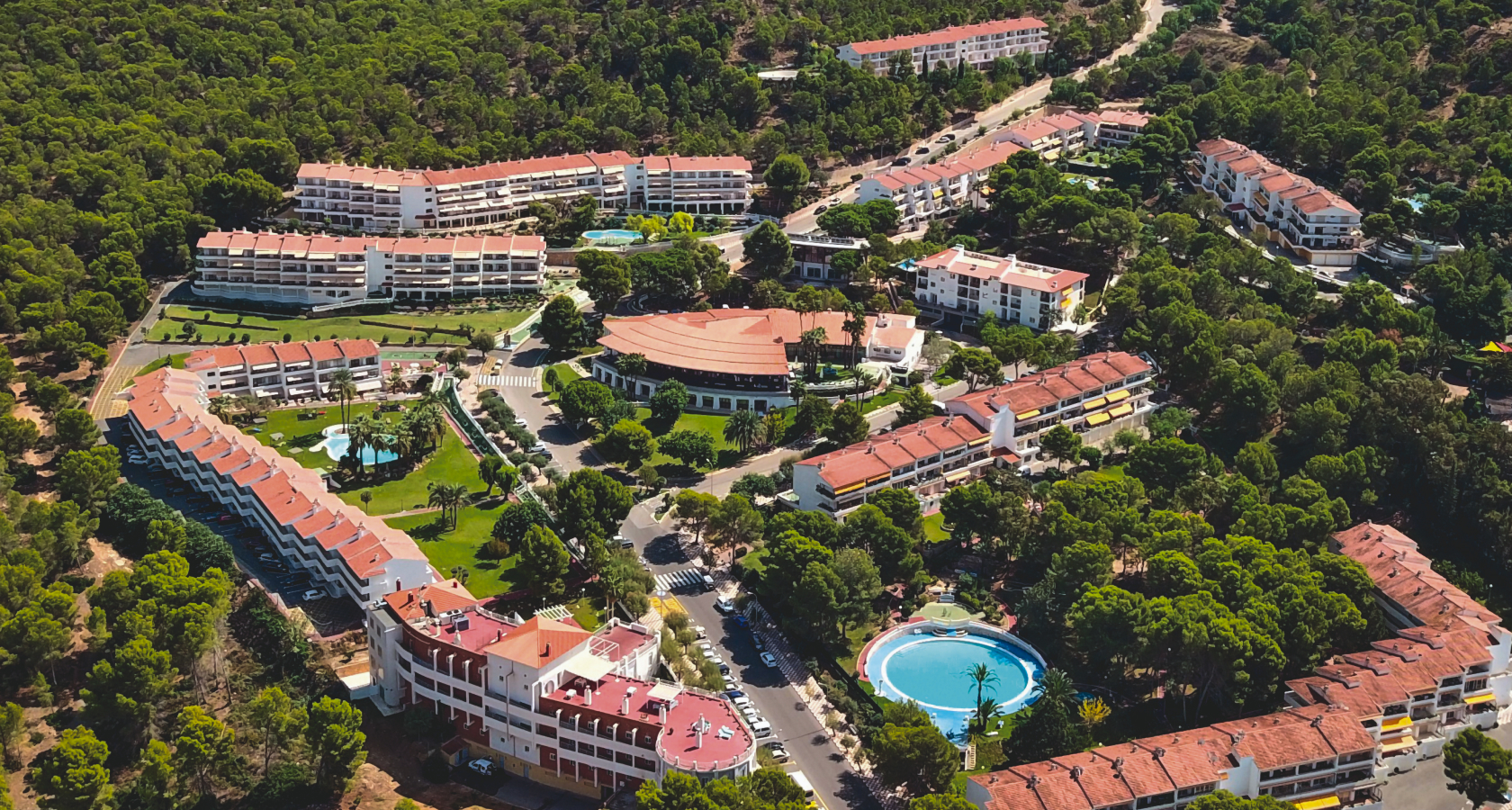


Central Building
Iris Building
Gardenia Building
Hortensia Building
Flora Building
Elisa Building
Heated Swimming Pool
Swimming pools
Swimming Pools
Restaurant
Indoor Pool
Reception

 Filters
Central Building
It is the core of community life at Ciudad Patricia. The reception area, restaurant, beauty centre, and some of our main services are located here.
Iris Building
Iris, completed in 2018, offers 15 apartments built to luxury quality standards. It is located just 50 metres from the Central Building.
Gardenia Building
Gardenia is located right across from the Central Building, allowing you to enjoy all the facilities that are just a stone’s throw away from your apartment.
Hortensia Building
At Hortensia, you can enjoy two worlds: the vibrant bustle of the city and the peaceful and relaxing atmosphere of the adjacent pine forest.
Flora Building
Flora, our tallest building, boasts stunning panoramic views of the valley, the mountains, and the resort.
Elisa Building
Elisa is located in a tranquil setting near the Central Building, indoor pool, fully equipped gym, and hobby room.
Heated Swimming Pool
We have an indoor swimming pool that you can enjoy all year round, whether you would like to exercise or have a moment of relaxation.
Swimming pools
We have several swimming pools at the resort where you can swim, cool off, or simply relax and enjoy the healthy climate of the Costa Blanca.
Swimming Pools
We have several swimming pools at the resort where you can swim, cool off, or simply relax and enjoy the healthy climate of the Costa Blanca.
Restaurant
Discover the delicious and healthy menu at the resort’s restaurant, and have an unforgettable time at its bar, in the dining area, or at its outdoor terrace.
Indoor Pool
We have several swimming pools in the complex, where you can swim, cool off, or simply relax and enjoy the healthy climate of the Costa Blanca.
Reception
In the Central Building, our staff are available to assist and help you with whatever you may need.
 Go back
When Your World Shrinks Slightly: How to Respond Without Panicking or Withdrawing

Noticing the radius of your life has changed
It often starts quietly.
Evenings out become more selective. You still enjoy seeing people, just not every time, not everywhere. Certain journeys feel longer than they used to. Not physically harder, just heavier somehow.
Nothing is wrong. But something has shifted.
For many expats living on the Costa Blanca or elsewhere in Spain, this moment arrives after the big decisions are already behind them. The move abroad has been done. The house has been furnished. The routines are established. Life is good.
And yet the radius of daily life, the distance you comfortably move through the world, starts to narrow slightly.
That change can be unsettling if you are not expecting it. It can feel like a warning sign. A loss. The beginning of something you would rather avoid thinking about.
But it does not have to be.
Why a smaller world is not the same as a worse one
We tend to associate “smaller” with “less”. Less freedom. Less energy. Less life.
That assumption comes largely from cultural habit, particularly in Northern Europe, where staying busy is often treated as proof that everything is fine. Full calendars become a kind of insurance policy against ageing.
But a smaller world is not the same thing as a diminished one.
In fact, many people discover that as their radius narrows, their attention sharpens. They become more selective, not withdrawn. More intentional, not passive. They still enjoy conversation, company, activity. They simply enjoy it closer to home, and on their own terms.
This is not retreat. It is refinement.
The problem arises when people interpret this natural shift as something that needs to be fought at all costs. Or worse, something to be endured in silence.
What triggers the feeling that life has become smaller
The causes are usually practical, not dramatic.
Friends move away, back to their home countries or to be closer to family. Driving at night becomes less appealing, especially on unfamiliar roads. You stop saying yes automatically and start checking how you actually feel. Heat, traffic, parking, timing. It all adds up.
Seasonal rhythms play a role too. Winters are quieter. Summers are busy. Over time, you adjust.
For expats from the UK, the Netherlands, Germany, France, Norway, or Sweden, there is also the subtle awareness that Spain is not where you grew up. You have built a life here, but it requires a bit more effort to maintain socially. When that effort starts to feel heavier, the temptation is either to push through it, or to pull back completely.
Neither response works particularly well.
The two unhelpful reactions, and why they backfire
When people notice their world shrinking, they often fall into one of two patterns.
The first is panic. They try to expand everything again, all at once. More activities. More commitments. More travel. A full calendar, even if half of it feels forced. The idea is to prove, to themselves more than anyone else, that nothing has changed.
This usually leads to exhaustion and quiet resentment.
The second reaction is withdrawal. Cancelling plans becomes easier. Days slip by without much structure. Social contact reduces, not because it is unwanted, but because it now requires too much organisation. Over time, this can slide into isolation, even for people who never considered themselves lonely.
Both reactions miss the point.
The issue is not that life has become smaller. It is that the environment no longer fits the scale at which you want to live.
A better response: designing a smaller but richer world
A more sustainable response is to design life so that a smaller radius feels sufficient, not limiting.
This means fewer long transitions and more meaningful moments. Less effort to connect, not more willpower. It means living in a place where daily life happens within easy reach, where social contact does not require planning weeks ahead, and where independence is supported by proximity rather than services.
This is where environment matters more than attitude.
You can be optimistic and resilient, but if your surroundings require constant effort to stay engaged, eventually you will tire. On the other hand, when connection is built into the layout of daily life, engagement becomes natural again.
Why environment matters more as your world becomes smaller
Research consistently shows that wellbeing in later life is closely linked to social contact, routine, and a sense of belonging. Not large social networks, but regular, meaningful interaction.
The Copenhagen Centre for Healthy Aging, for example, highlights how environments that encourage everyday encounters, shared spaces, and informal interaction help people remain mentally and emotionally engaged as they age. It is not about organised activities. It is about design that makes connection likely.
This is why the difference between isolation and independence is often architectural, not personal.
When paths cross naturally, when shared spaces invite casual use, when people can choose to be alone or together without effort, life feels fuller even at a smaller scale.
What many expats notice when they change their environment
People who move from large, isolated homes into more compact, well designed communities often report something unexpected.
They go out more, not less.
Not because they are busier, but because everything is easier. A short walk instead of a drive. A familiar face instead of a planned meeting. A coffee that turns into a conversation, without obligation.
At places like Ciudad Patricia, this happens quietly. Through the shared gardens that encourage a pause rather than a destination. Through the café and gastronomy spaces where residents naturally cross paths. Through the community areas that offer presence without pressure.
The apartments themselves are designed to be manageable, allowing residents to live independently without being tied to maintenance or logistics. Daily life becomes simpler, but not emptier.
Importantly, privacy is preserved. Shared spaces are there to be used, not enforced. Participation remains a choice.
Ciudad Patricia as a response to scale, not to age
It is important to say this clearly.
Ciudad Patricia is not a response to ageing. It is a response to scale.
It exists for people who want to live independently, but not in isolation. For those who value calm, connection, and ease overreach. For people whose world has become slightly smaller, and who want that smaller world to feel complete.
Located on the Costa Blanca, the setting supports this balance. Close enough to Benidorm and the coast to remain connected, but elevated and green enough to feel calm. The environment does the work, quietly.
If you want to understand this better, spending time in the community itself, walking through the shared spaces or sitting in the café, often explains more than any description.
Staying engaged without overextending yourself
One of the most common fears people express is this: if I accept that my world is smaller, will it keep shrinking?
In practice, the opposite is often true.
When people stop forcing themselves to live larger than they want, their energy returns. They engage more deeply with fewer things. Relationships improve. Days feel more structured, not less.
Staying engaged does not require a full calendar. It requires rhythm. Familiarity. Ease. A sense that you belong somewhere, without having to prove it.
That kind of engagement is sustainable.
Responding with confidence, not fear
If you have noticed your world shrinking slightly, the most important thing is not to panic.
Ask instead whether your environment still supports the way you want to live now. Not how you lived ten years ago, and not how you think you should live, but how you actually want to move through your days.
For some, the answer is a small adjustment. For others, it leads to a bigger rethink.
If you are curious about how a well designed, human scale environment feels, visiting Ciudad Patricia can be a useful starting point. Not as a commitment, but as a reference. Seeing what daily life looks like when connection is close at hand often clarifies things quickly.
You can arrange a visit or a conversation through the contact page. Sometimes, seeing what is possible is enough to respond calmly, confidently, and without withdrawing.
Because a smaller world does not have to feel like a smaller life.
