







Fill out the form with your details, and we will attend to your request as soon as possible.


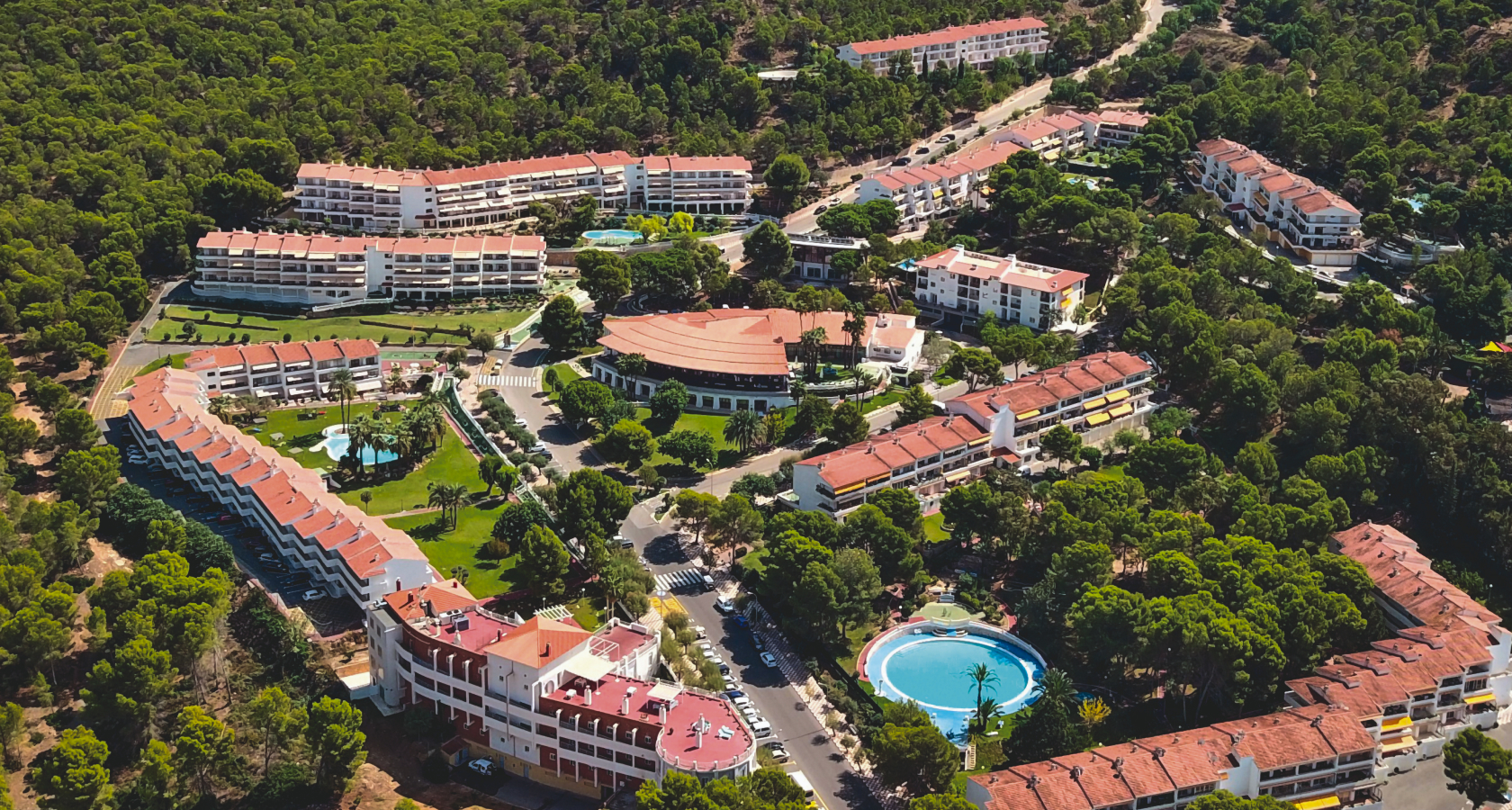


Central Building
Iris Building
Gardenia Building
Hortensia Building
Flora Building
Elisa Building
Heated Swimming Pool
Swimming pools
Swimming Pools
Restaurant
Indoor Pool
Reception

 Filters
Central Building
It is the core of community life at Ciudad Patricia. The reception area, restaurant, beauty centre, and some of our main services are located here.
Iris Building
Iris, completed in 2018, offers 15 apartments built to luxury quality standards. It is located just 50 metres from the Central Building.
Gardenia Building
Gardenia is located right across from the Central Building, allowing you to enjoy all the facilities that are just a stone’s throw away from your apartment.
Hortensia Building
At Hortensia, you can enjoy two worlds: the vibrant bustle of the city and the peaceful and relaxing atmosphere of the adjacent pine forest.
Flora Building
Flora, our tallest building, boasts stunning panoramic views of the valley, the mountains, and the resort.
Elisa Building
Elisa is located in a tranquil setting near the Central Building, indoor pool, fully equipped gym, and hobby room.
Heated Swimming Pool
We have an indoor swimming pool that you can enjoy all year round, whether you would like to exercise or have a moment of relaxation.
Swimming pools
We have several swimming pools at the resort where you can swim, cool off, or simply relax and enjoy the healthy climate of the Costa Blanca.
Swimming Pools
We have several swimming pools at the resort where you can swim, cool off, or simply relax and enjoy the healthy climate of the Costa Blanca.
Restaurant
Discover the delicious and healthy menu at the resort’s restaurant, and have an unforgettable time at its bar, in the dining area, or at its outdoor terrace.
Indoor Pool
We have several swimming pools in the complex, where you can swim, cool off, or simply relax and enjoy the healthy climate of the Costa Blanca.
Reception
In the Central Building, our staff are available to assist and help you with whatever you may need.
 Go back

It often starts with a small comment
“Are you sure you’re all right on your own?”
Or, “What would happen if you fell?”
Or the one that sounds casual but is not casual at all: “Have you thought about moving somewhere with a bit more support?”
If you are living in Spain, or planning to retire here, your adult children may see the situation rather differently from you. You may see freedom, sunshine, a familiar town, friends, routines, favourite cafés, good food, independence and the pleasure of not being treated as old before your time. They may see distance, risk, language barriers, medical uncertainty and the uncomfortable fact that they cannot get to you quickly if something goes wrong.
That is why the conversation matters. Not the dramatic family meeting where everyone arrives with opinions already formed. Not the rushed phone call after a minor incident. A proper conversation. Calm, practical, adult to adult.
Why adult children worry from a distance
For many expats in Spain, this is one of the more delicate parts of later life abroad. You may have spent years building a life here or perhaps you moved after retirement. Perhaps you came decades ago and Spain is now home in every meaningful sense.
Either way, being questioned, or is that interrogated, by your children can feel intrusive. As though they are taking charge too early. As though they have forgotten you managed houses, careers, them, illnesses, money, bureaucracy and probably several crises they never even knew about.
Adult children who raise these subjects are rarely doing so because they want to take control; more often, they are trying to manage an anxiety that distance makes difficult to contain. Sitting in London, Amsterdam, Hamburg or Lyon, they piece together a picture from fragments: a delayed reply, a passing mention of dizziness, a neighbour who helped with something, a hospital appointment described in terms vague enough to leave room for concern. What feels like nothing to you can become, from that distance, a silence they feel compelled to fill with worry.
The worst mistake is to dismiss it. “I’m fine” may be true, but it is not enough. It gives them no information, no structure, no confidence. If you want to remain independent, it helps to show that your independence has a plan behind it.
Start with facts, not reassurance
Start with facts, not emotions. Tell them who your doctor is. Explain how you get to appointments. Let them know whether you can manage in Spanish, or whether you need help with medical conversations. Share emergency contacts. Tell them which neighbour, friend or local service could be called if you did not answer the phone. If you live in an apartment building, explain whether there is anyone nearby who knows you well enough to notice a problem.
There is also the question of housing. Adult children often worry about the house before parents do. They see steps, long drives, isolated villas, difficult bathrooms, gardens that need attention, or homes that worked beautifully at 62 but are less forgiving at 78. Parents often see memory, comfort and identity. They see the terrace where they have breakfast, the view, the bookshelves, the furniture chosen over time, the room where grandchildren stay.
So do not begin with the abstract question, “Should I move?” It is too big. It becomes loaded immediately.
Honestly answer the questions that they are already thinking of:
- Can I manage the stairs if I am tired?
- Could I live here for two weeks without driving?
- What happens if I cannot shop for a few days?
- Is the bathroom safe?
- Do I have enough social contact in the evenings, not just in the mornings?
- If I had a minor fall, who would know?
- If I needed help with paperwork, transport or medical coordination, who would actually do it?
Those questions are harder to avoid because they are not emotional accusations. They are practical tests.
Talk about independence in a more useful way
This is where communities such as Ciudad Patricia can become part of a sensible discussion, not as a symbol of decline, but as one possible answer to a real problem: how to keep independence while reducing unnecessary vulnerability. For many people, the appeal is not simply having an apartment in Spain. It is having private space within a setting where services, people and daily rhythm are closer at hand.
A good retirement community should not make you feel managed – it should make ordinary life easier to sustain. Your own front door, your own routines, your own pace, but with reception, restaurant facilities, social contact, staff presence, outdoor space and neighbours close by. For adult children watching from abroad, that combination can make an enormous difference: not an end to independent living, but a more resilient version of it.
Use that word if it helps. Resilient.
Because independence is not the same as doing everything alone. In fact, doing everything alone can become the thing that weakens independence. People start avoiding appointments because transport is awkward. They stop going out at night because driving back feels stressful. They eat badly because cooking for one has lost its pleasure. They hide small problems because they do not want to worry the family. Bit by bit, life narrows.
Make your own wishes part of the conversation
The conversation with your children should also include what you want, not only what they fear. Be explicit. Say what matters to you. Perhaps it is staying in Spain, or keeping your own apartment ot having outdoor space, a pool, walking routes, a restaurant nearby, or people around without being forced into organised activities every hour of the day. Perhaps you are willing to move, but not into anything that feels institutional. Say that clearly.
Adult children sometimes need educating too. They may imagine only two options: the family home or a care home. Spain has more nuanced possibilities than that, particularly for people who are still active, social and mentally sharp, but want a more supported environment. Ciudad Patricia, for example, sits purposefully in that middle ground: independent living, but with community and services around it. That may be exactly the kind of compromise families struggle to picture until they see it.
It is often worth inviting your children into the process early. Not to let them decide for you, but to let them understand. Show them the location. Walk them through the practicalities. Discuss costs. Talk about what would happen if your health changed later. Ask them what worries them most, then answer the worry rather than reacting to the tone.
Turn the worry into a practical plan
Sometimes the fear beneath the question is simple: “I don’t know what I would do if something happened to you.” and that deserves a serious answer.
You can say, “Here is the plan.” You can say, “These are the people who would be contacted.” You can say, “This is why I am looking at a place where I can still live independently but not be completely on my own.” That changes the whole conversation. It moves it away from panic and towards preparation.
And preparation is not the enemy of freedom. Quite the opposite.
The right conversation does not end with everyone agreeing immediately. Families rarely work like that. There may be resistance, defensiveness, guilt, old habits, even a bit of role reversal that nobody enjoys. But if you keep returning to the practical questions, the emotional pressure usually drops.
- What kind of life do you want in Spain over the next ten years?
- What would make your children feel less anxious without making you feel supervised?
- What support would be useful now, before anything urgent happens?
Those are decent questions. They deserve time.
A better later life in Spain needs structure
For many expats, the answer is not to leave Spain. It is to make life in Spain easier to continue, with fewer weak points and more support built into the ordinary rhythm of the week. That is where Ciudad Patricia deserves serious consideration. It offers a way to remain independent on the Costa Blanca while living in a community designed around the realities of later life: private apartments, outdoor space, services nearby, people around you, and the reassurance that daily life does not depend entirely on doing everything alone.
This is also why it can help to involve your children in the conversation early. A visit to Ciudad Patricia can turn a vague family worry into something more practical. They can see that the question is not whether you are “coping” or not. It is whether your home, surroundings and support network are right for the next stage of life. For many families, that changes the tone completely. The conversation becomes less about giving something up and more about choosing well, before pressure or urgency takes the decision out of your hands.
Independence tends to last longer when it has the right structure around it. Ciudad Patricia is not about stepping away from life in Spain. It is about making that life more secure, more sociable and easier to enjoy, while the decision is still fully yours.
