







Fill out the form with your details, and we will attend to your request as soon as possible.


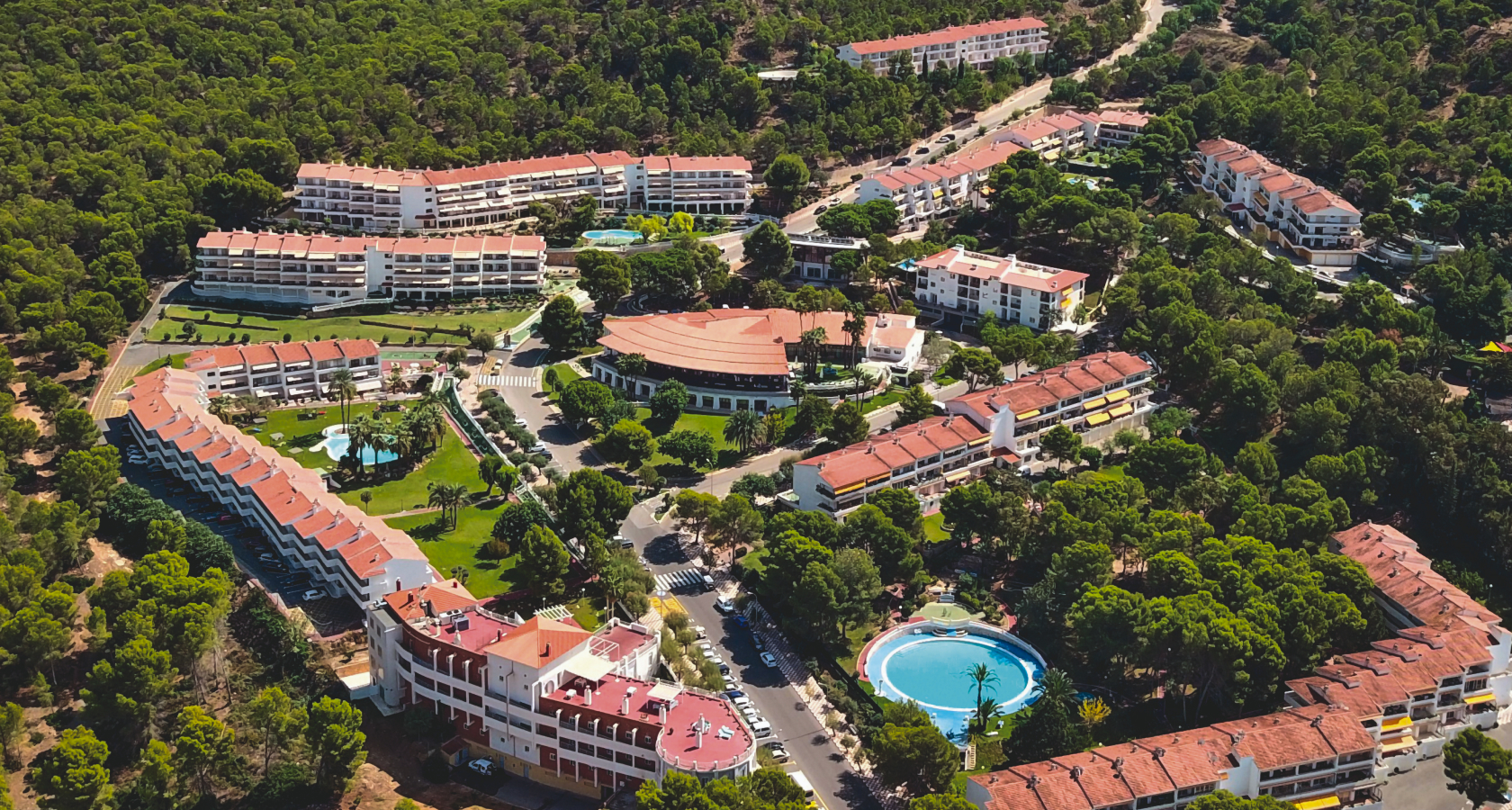


Central Building
Iris Building
Gardenia Building
Hortensia Building
Flora Building
Elisa Building
Heated Swimming Pool
Swimming pools
Swimming Pools
Restaurant
Indoor Pool
Reception

 Filters
Central Building
It is the core of community life at Ciudad Patricia. The reception area, restaurant, beauty centre, and some of our main services are located here.
Iris Building
Iris, completed in 2018, offers 15 apartments built to luxury quality standards. It is located just 50 metres from the Central Building.
Gardenia Building
Gardenia is located right across from the Central Building, allowing you to enjoy all the facilities that are just a stone’s throw away from your apartment.
Hortensia Building
At Hortensia, you can enjoy two worlds: the vibrant bustle of the city and the peaceful and relaxing atmosphere of the adjacent pine forest.
Flora Building
Flora, our tallest building, boasts stunning panoramic views of the valley, the mountains, and the resort.
Elisa Building
Elisa is located in a tranquil setting near the Central Building, indoor pool, fully equipped gym, and hobby room.
Heated Swimming Pool
We have an indoor swimming pool that you can enjoy all year round, whether you would like to exercise or have a moment of relaxation.
Swimming pools
We have several swimming pools at the resort where you can swim, cool off, or simply relax and enjoy the healthy climate of the Costa Blanca.
Swimming Pools
We have several swimming pools at the resort where you can swim, cool off, or simply relax and enjoy the healthy climate of the Costa Blanca.
Restaurant
Discover the delicious and healthy menu at the resort’s restaurant, and have an unforgettable time at its bar, in the dining area, or at its outdoor terrace.
Indoor Pool
We have several swimming pools in the complex, where you can swim, cool off, or simply relax and enjoy the healthy climate of the Costa Blanca.
Reception
In the Central Building, our staff are available to assist and help you with whatever you may need.
 Go back
Knowing When It’s Time to Change Without Waiting for a Crisis

Most people imagine that big life changes come with a clear trigger.
An illness. A fall. A partner’s death. A moment where something breaks and forces a decision. That is the story we tend to tell ourselves, partly because it feels safer. If change only happens after a crisis, then as long as everything is “fine”, there is nothing to think about.
But for many expats living in Spain, especially those now in their 70s (and beyond), change rarely arrives with drama. It arrives quietly. Gradually. Almost politely.
And that is precisely why it is so easy to ignore.
When “fine” becomes a holding pattern
Life can be perfectly fine and still not quite right.
You may still enjoy your home. You may still feel independent. You may still manage day to day without difficulty. Nothing is wrong enough to demand action.
Yet something feels heavier than it used to.
Small decisions require more thought. Everyday logistics take more energy. You notice that you plan your days more carefully, not because you have to, but because you want to avoid unnecessary effort.
You tell yourself this is normal. And it is.
The problem is that “normal” can quietly become a holding pattern. A place where nothing changes, not because it is ideal, but because there is no obvious reason to move.
This is where many people stay longer than they intend.
Why waiting for a crisis is a risky strategy
Waiting for a crisis to make a decision feels rational. It postpones disruption. It avoids uncomfortable conversations. It allows life to continue as it is.
But crises narrow options.
When a decision is made under pressure, choice becomes limited. Moves are rushed. Compromises are made that would not have been necessary earlier. What could have been a considered transition becomes a reactive one.
Many older expats admit this in hindsight. They say things like, “If I had done it two or three years earlier, it would have been easier.” Not because life was bad, but because life was manageable enough to delay.
The irony is that the best time to rethink how you live is often when nothing is forcing you to.
The subtle signals people tend to overlook
The signs that it may be time to change rarely look dramatic.
You start to avoid parts of your home that require effort. Stairs. Gardens. Maintenance tasks that used to feel satisfying now feel like obligations.
You drive less, not because you cannot, but because you would rather not. Long distances feel unnecessary. Night driving feels tiring.
Social plans shrink in radius. You still enjoy company, but you prefer it closer to home, more spontaneous, less planned.
None of this means you are losing independence. It means your priorities are shifting.
These signals are easy to dismiss because they do not hurt. But they matter because they tell you how you want to live now, not how you lived before.
Independence changes meaning over time
One of the biggest obstacles to timely change is how independence is defined.
Earlier in life, independence often means doing everything yourself. Managing a large home. Handling every task. Proving, quietly or loudly, that you do not need help.
Later in life, independence tends to mean something else. Choice. Control. The ability to decide how much effort you want to invest in daily life.
True independence is not about maximum effort. It is about flexibility.
Being able to go out when you want, and stay in when you want. To socialise easily without having to organise. To live without constant background worry about upkeep, security, or isolation.
Recognising this shift is not a loss of pride. It is an adjustment to reality.
Why many expats stay put longer than they intend
There are practical reasons people delay change.
Selling a property in Spain can feel daunting. There is paperwork. Tax considerations. Emotional attachment. Memories built over years.
There are also psychological reasons.
A home often represents success. Especially for expats, it symbolises the courage to move abroad, to build a new life. Letting go can feel like undoing that achievement.
And then there is inertia. Life works well enough. Habits are established. The effort required to change feels greater than the effort required to continue.
Until it isn’t.
The danger is not staying too long. The danger is staying until the decision is no longer yours.
What changes when you act earlier
People who choose to change before a crisis often describe the experience very differently.
They talk about relief. About how much mental space opened up once daily responsibilities were reduced. About how social life became easier rather than harder.
They did not move because they had to. They moved because they wanted life to feel lighter.
Importantly, they made the move while they still had energy to adapt. To choose. To settle in without pressure.
This is not about anticipating decline. It is about responding to the present honestly.
The role of environment in shaping daily life
How you live day to day is shaped less by intention than by environment.
A large, private home on the outskirts of town encourages independence, but also isolation over time. Everything requires planning. Every interaction requires effort.
A more compact, well designed environment changes that equation. Proximity replaces planning. Familiarity replaces organisation.
This is where Ciudad Patricia come into the conversation, not as a solution to a problem, but as a response to a shift in priorities.
Independent apartments allow residents to live on their own terms, while shared gardens, a café, a library, and communal spaces make everyday contact easy. Not obligatory. Simply available.
The difference is subtle but profound.
Why timing matters more than age
There is no perfect age to make a change. But there is a right moment.
For many people, that moment arrives when daily life still works, but requires more effort than they want to give. When they begin to value ease over space, and connection over distance.
Moving too early can feel unnecessary. Moving too late can feel rushed.
The sweet spot is often when you are asking questions, not when you are answering emergencies.
Seeing change as continuity, not rupture
One of the reasons people fear change is the assumption that it will disrupt everything.
In reality, well timed change often preserves what matters most.
Independence. Routine. Familiarity. A sense of self.
The goal is not to start over. It is to continue, but in a way that fits who you are now.
When people visit communities designed for this stage of life, they often recognise something immediately. Not excitement. Not urgency. Recognition.
“This feels manageable.”
“This feels calm.”
“This feels like it could work.”
That feeling matters more than logic.
Choosing without pressure
The most important thing to remember is this.
You do not need a crisis to justify a decision. You do not need permission to want life to feel easier. And you do not need to wait until change is unavoidable.
Choosing to explore alternatives while you still have options is a sign of confidence, not fear.
If you find yourself thinking about timing, about effort, about how you want your days to feel over the next five or ten years, that is already information worth listening to.
Visiting Ciudad Patricia does not commit you to anything. It simply gives you a reference point. A way to see how life can function when it is designed around ease, proximity, and independence.
Sometimes, the most responsible choice is not to wait for a crisis, but to act while choice is still yours.
And often, that choice begins not with a decision, but with a conversation.
FAQs
Do I need a specific reason, like health or mobility issues, to consider changing how I live?
No. Many people begin rethinking their living situation simply because daily life requires more effort than it used to. Wanting greater ease, proximity, or social connection is a valid reason on its own, even when everything still works reasonably well.
How do I know if I’m acting too early rather than being sensible?
If you still feel in control of the decision, have time to explore options, and are choosing to change rather than being forced into it, you are likely acting at the right moment. Moving earlier often allows for more choice and a calmer transition.
Will moving to a community like Ciudad Patricia mean giving up my independence?
No. Independence in this context means choice, not isolation. Residents live in their own apartments and decide how and when to engage with others. The environment simply makes everyday life and social contact easier, without obligation or pressure.
