







Fill out the form with your details, and we will attend to your request as soon as possible.


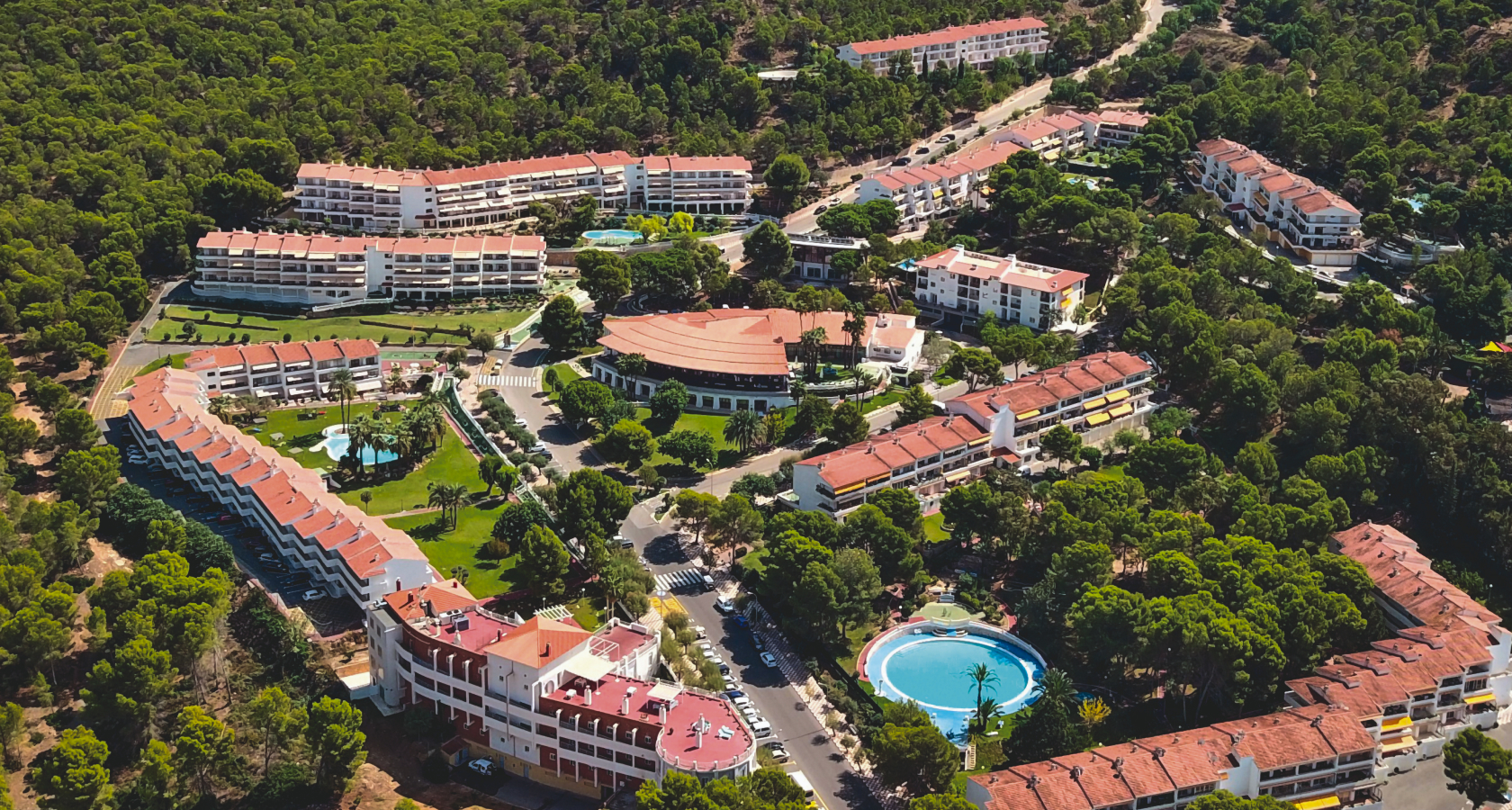


Central Building
Iris Building
Gardenia Building
Hortensia Building
Flora Building
Elisa Building
Heated Swimming Pool
Swimming pools
Swimming Pools
Restaurant
Indoor Pool
Reception

 Filters
Central Building
It is the core of community life at Ciudad Patricia. The reception area, restaurant, beauty centre, and some of our main services are located here.
Iris Building
Iris, completed in 2018, offers 15 apartments built to luxury quality standards. It is located just 50 metres from the Central Building.
Gardenia Building
Gardenia is located right across from the Central Building, allowing you to enjoy all the facilities that are just a stone’s throw away from your apartment.
Hortensia Building
At Hortensia, you can enjoy two worlds: the vibrant bustle of the city and the peaceful and relaxing atmosphere of the adjacent pine forest.
Flora Building
Flora, our tallest building, boasts stunning panoramic views of the valley, the mountains, and the resort.
Elisa Building
Elisa is located in a tranquil setting near the Central Building, indoor pool, fully equipped gym, and hobby room.
Heated Swimming Pool
We have an indoor swimming pool that you can enjoy all year round, whether you would like to exercise or have a moment of relaxation.
Swimming pools
We have several swimming pools at the resort where you can swim, cool off, or simply relax and enjoy the healthy climate of the Costa Blanca.
Swimming Pools
We have several swimming pools at the resort where you can swim, cool off, or simply relax and enjoy the healthy climate of the Costa Blanca.
Restaurant
Discover the delicious and healthy menu at the resort’s restaurant, and have an unforgettable time at its bar, in the dining area, or at its outdoor terrace.
Indoor Pool
We have several swimming pools in the complex, where you can swim, cool off, or simply relax and enjoy the healthy climate of the Costa Blanca.
Reception
In the Central Building, our staff are available to assist and help you with whatever you may need.
 Go back
Friendship at Your Own Pace: Finding Community Without Losing Yourself on the Costa Blanca

You can feel it almost immediately.
You’re living in Spain. The sun still rises over the Mediterranean, the café still serves your morning coffee just the way you like it. And yet something has shifted. The circle is smaller than it used to be. A neighbour has moved back to their home country. A long-time friend now spends more time in the UK with grandchildren.
Life hasn’t fallen apart. It has simply, well … narrowed a little.
For many people in their later years, especially those from Holland, Great Britain, Germany, France and Scandanavia who have built a life on the Costa Blanca, this is a quiet turning point. Not dramatic. Not alarming. Just noticeable.
The question is not “How do I become more social?” It’s subtler than that.
How do you stay connected without feeling pushed?
How do you meet people without feeling obliged?
How do you belong, but still choose your own rhythm?
That’s where the idea of community, done well, matters.
Why Friendship Feels Different Later in Life
Making friends at twenty is accidental. At forty, it’s practical. At this stage of life, it’s intentional.
You’re no longer collecting acquaintances. You are choosing energy. You are deciding who you want around you, and how often. You might enjoy a lively lunch one day and complete quiet the next. You value depth over noise.
And here’s the part people rarely say out loud: social confidence changes too. Even the most outgoing person can feel slightly hesitant starting again. Language barriers, cultural differences, health changes, the simple reality that people already have their circles.
Research across Europe consistently shows that structured but flexible social environments help older adults maintain both wellbeing and autonomy. The key word is flexible.
Too little contact and isolation creeps in. Too much pressure and people withdraw.
So what does balance look like in real life?
The Problem With All-or-Nothing Socialising
Many expats in Spain find themselves in one of two extremes.
Either they live in a private villa or apartment complex where social life depends entirely on personal initiative. If you don’t organise it, it doesn’t happen.
Or they consider environments that feel overly scheduled and rigid, where daily life seems structured around constant group activity.
Neither extreme suits everyone.
You might want a coffee with someone, but not a compulsory morning class. You might enjoy a quiz, but not feel like attending every week. You want options, not obligations.
That distinction is often overlooked when people look at retirement communities.
What Community Looks Like When It Works
A healthy community does three things quietly:
- It creates proximity
- It lowers social friction
- (and above all) it protects privacy.
At Ciudad Patricia, the physical layout supports this without shouting about it. Residents have their own private apartments. You close your door, and the space is yours. Silence if you want it. Independence, absolutely.
But step outside, and there are natural meeting points. The gardens. The walking paths. The shared lounges. The on-site café. Conversations happen because it’s easy, not because it’s enforced.
You might sit in the café and end up talking to someone from Sweden who moved down ten years ago. Or a Dutch couple who know the best local fruit stall in Benidorm. Or a Spanish neighbour who has lived in the region all their life and is happy to explain the quirks of local fiestas.
It’s informal. That’s the point.
If you’d like to see how the setting itself encourages that kind of relaxed interaction, you can explore the community spaces at Ciudad Patricia directly through the Community section of our website.
Friendship Without Pressure
Here’s something worth saying clearly: you are not expected to become “more social” than you already are.
Some residents attend group activities regularly. Others join occasionally. Some prefer one-to-one connections and small gatherings. Some simply enjoy knowing that people are nearby.
That quiet reassurance matters more than people expect.
If you’ve ever worried about what would happen if you felt unwell in the evening, or if you stopped driving at night, or if your usual circle slowly thinned out, then you understand this instinctively.
Community at your own pace means:
You choose when to engage. You decide how often and you can step back without explanation.
It is surprisingly liberating.
Shared Spaces That Lower the Barrier
Shared spaces work best when they are normal parts of daily life rather than organised events.
At Ciudad Patricia, the café is a good example. You go because you want coffee or lunch, not because you have signed up to a social commitment. Yet it becomes one of the easiest places to strike up conversation. You can read more about the gastronomy and café facilities on the Gastronomy page.
The same applies to the wider facilities on site. A gentle exercise class. A cultural talk. A film evening. You are free to join or not.
Notice the pattern. Nothing is compulsory. Nothing is overwhelming. But nothing is absent either.
That middle ground is where many people find their footing.
For Those Already Living in Spain
If you already live on the Costa Blanca, you might be thinking, “But I have friends here already.”
Of course you do.
The question is not whether you have a circle now. It’s whether that circle is expanding, contracting, or staying stable.
Many long-term expats quietly admit that their network becomes more fragile over time. Friends return north. Health changes. You might find yourself saying no more often than yes.
Living in a setting where social life is geographically close can reduce that subtle friction. You no longer need to coordinate across towns. You no longer depend entirely on driving at night. The opportunity to connect is built into daily life.
And that changes behaviour more than we realise.
For Those Considering a Move to Spain
If you are still in the UK, the Netherlands, Germany, France, Norway or Sweden and researching what life could look like here, social life should be part of your consideration.
It is easy to focus on climate, property prices, tax residency and healthcare access. Those matter. But ask a different question as well.
When the novelty fades, who will you see on a Tuesday morning?
Relocating later in life works best when the social infrastructure is visible from the start. That is one reason many people explore dedicated communities rather than isolated properties.
You can get a broader picture of the Costa Blanca setting itself through the Costa Blanca overview on the Ciudad Patricia website. Benidorm often surprises people. Beyond the well-known skyline are quieter residential areas, green spaces and long-established international communities.
It is not about noise. It is about access.
Belonging Without Losing Yourself
Perhaps the biggest fear people have about community living is losing individuality.
Will I feel watched or obligated? Will I still feel like myself?
Those are reasonable questions.
In practice, belonging tends to enhance identity rather than diminish it. When daily logistics are simplified and social contact is nearby, you often rediscover interests that had been quietly shelved. Reading groups. Language exchange. Cultural discussions. Walking partners.
The goal is not to be busier. It is to feel connected enough.
And sometimes that simply means knowing that if you want company for lunch, you do not need to plan it a week in advance.
The Pace Is Yours
There is something quietly powerful about choosing your social tempo.
One week you might attend several activities. The next you might prefer long mornings in your own apartment with a book and a balcony view. Both are valid. Both are normal.
The mistake many people make is thinking that community equals constant activity. It does not.
Done well, it equals choice.
And that, perhaps, is the most reassuring part.
If you are curious about how this balance works in practice, the best step is not to imagine it from afar. It is to experience it. Visit. Have coffee. Walk the grounds. Speak to residents directly. See whether the rhythm feels natural to you.
Because in the end, friendship later in life is not about numbers. It is about ease.
And ease grows where connection is possible, but never forced.
