







Fill out the form with your details, and we will attend to your request as soon as possible.


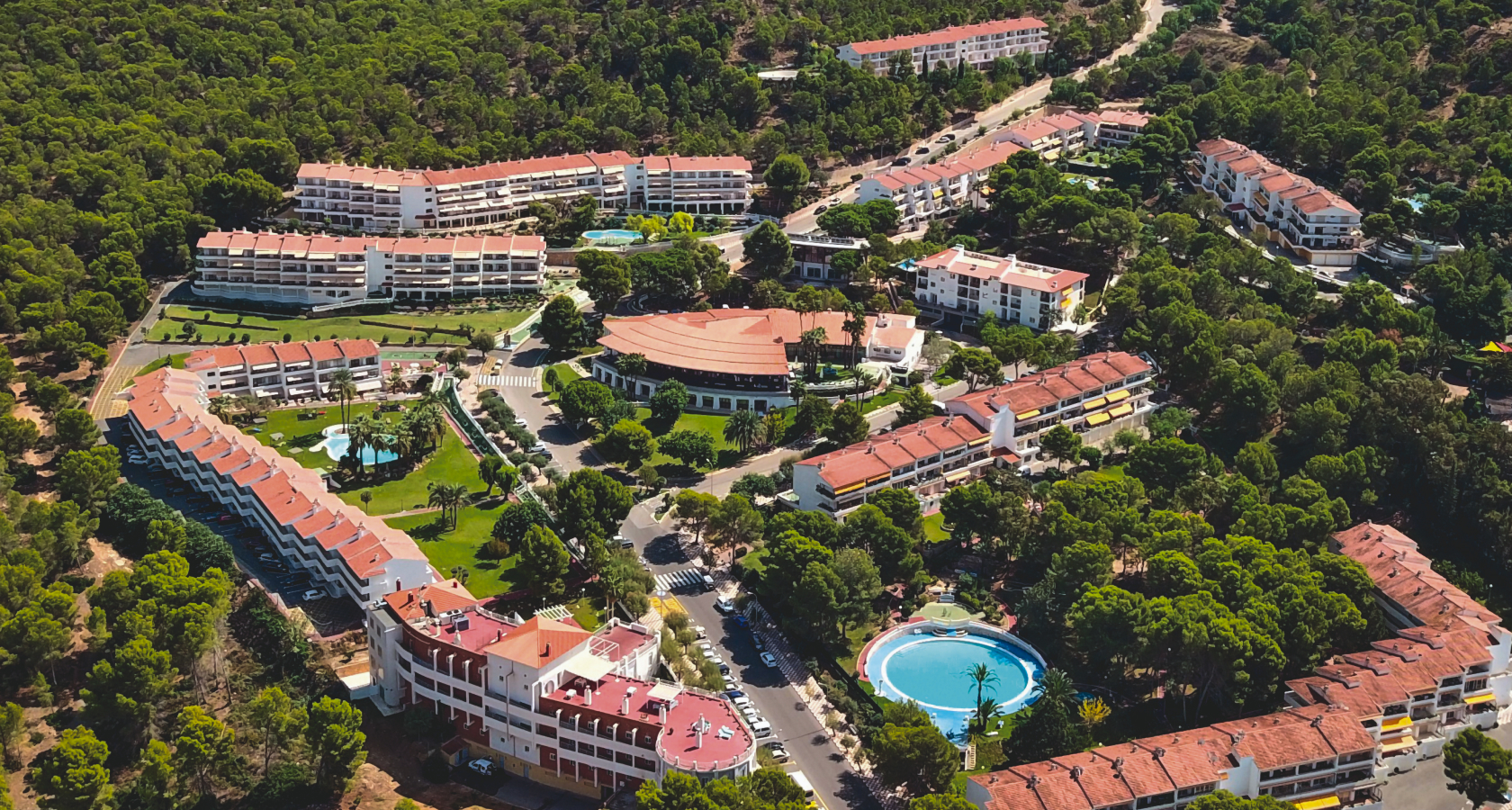


Central Building
Iris Building
Gardenia Building
Hortensia Building
Flora Building
Elisa Building
Heated Swimming Pool
Swimming pools
Swimming Pools
Restaurant
Indoor Pool
Reception

 Filters
Central Building
It is the core of community life at Ciudad Patricia. The reception area, restaurant, beauty centre, and some of our main services are located here.
Iris Building
Iris, completed in 2018, offers 15 apartments built to luxury quality standards. It is located just 50 metres from the Central Building.
Gardenia Building
Gardenia is located right across from the Central Building, allowing you to enjoy all the facilities that are just a stone’s throw away from your apartment.
Hortensia Building
At Hortensia, you can enjoy two worlds: the vibrant bustle of the city and the peaceful and relaxing atmosphere of the adjacent pine forest.
Flora Building
Flora, our tallest building, boasts stunning panoramic views of the valley, the mountains, and the resort.
Elisa Building
Elisa is located in a tranquil setting near the Central Building, indoor pool, fully equipped gym, and hobby room.
Heated Swimming Pool
We have an indoor swimming pool that you can enjoy all year round, whether you would like to exercise or have a moment of relaxation.
Swimming pools
We have several swimming pools at the resort where you can swim, cool off, or simply relax and enjoy the healthy climate of the Costa Blanca.
Swimming Pools
We have several swimming pools at the resort where you can swim, cool off, or simply relax and enjoy the healthy climate of the Costa Blanca.
Restaurant
Discover the delicious and healthy menu at the resort’s restaurant, and have an unforgettable time at its bar, in the dining area, or at its outdoor terrace.
Indoor Pool
We have several swimming pools in the complex, where you can swim, cool off, or simply relax and enjoy the healthy climate of the Costa Blanca.
Reception
In the Central Building, our staff are available to assist and help you with whatever you may need.
 Go back
A Life With Fewer Moving Parts

You wake up, make coffee, and glance at the kitchen counter. There’s a note. Nobody remembers writing it, but it says “call insurance.” Next to it is another reminder: “plumber?” With a question mark, which suggests uncertainty. The phone pings with a message from the gardener. The car service light has come on again. Something outside is dripping. Possibly water. Possibly not.
None of this is a disaster. You are perfectly capable of handling it. In fact, that’s the point. You have always handled things. Work, family, moves between countries, complicated lives that required organisation and calm judgement.
But there is a quiet moment when you realise something slightly absurd.
You are essentially running what seems like a small country!
The plumbing department, the maintenance department, the transport authority, the scheduling office, the finance ministry. All of it appears to be you.
It creeps up gradually. No single task feels overwhelming. Yet together they create a constant background hum of responsibility. The house needs oversight. The car needs attention. The insurance policy needs reviewing. The community fees need checking.
You are retired. Technically. But the operational workload has not received the memo.
How Life Quietly Fills With Systems
Homes accumulate systems over time. First a garden irrigation setup. Then a pool filter. Then a water heater with its own peculiar temperament. There are utility accounts, maintenance contracts, insurance renewals, service visits, security arrangements.
Each one exists for a good reason. None of them is dramatic. But they form a web of small obligations that require your constant attention.
Many expats on the Costa Blanca recognise this pattern. The villa that once symbolised freedom now has its own administrative life. The apartment you bought for simplicity still comes with coordination, deliveries, repairs, appointments.
You are still managing fine. Of course you are. But “fine” is an interesting word. Fine often means you are coping rather than enjoying the process.
That is the part most people overlook.
The Hidden Fatigue of Competence
When people talk about ageing, they often focus on health or mobility. Far less attention is given to cognitive load. The constant mental effort required to keep everything running.
Research from institutions such as the Copenhagen Centre for Healthy Aging highlights something simple but powerful. Reducing unnecessary complexity improves wellbeing. When daily life becomes easier to manage, people sleep better, feel calmer, and participate more in social life.
The goal is not inactivity. It is clarity.
You still want autonomy. You still want to make your own decisions. But perhaps you no longer want to organise every repair, coordinate every service appointment, or remember which company manages the air conditioning maintenance.
There comes a point when competence itself becomes tiring.
Independence Is Not the Same as Doing Everything Yourself
Many expats moved to Spain precisely because they value independence. You chose where to live. You arranged your home. You built a life that suited you.
That independence does not disappear simply because you decide that certain practical burdens are no longer worth carrying.
There is a difference between independence and sole responsibility.
At Ciudad Patricia, residents live in their own apartments. Your front door closes, and the space is entirely yours. You decide how you spend your day, when you go out, when you travel, when you see friends.
What changes is the infrastructure around you.
Gardens are maintained. Maintenance issues are handled by people who know the building. Reception staff are present. Shared areas are organised without you needing to coordinate them. If something needs fixing, you are not starting from zero.
It is not about surrendering control.
It is about not needing to run every department of the republic.
The Moment When Simpler Starts to Sound Sensible
There is a curious shift that happens after a certain stage of life.
The dream stops being “more space.” The dream becomes fewer passwords, not having to remember Plumber?Again!_47#X, or even where you wrote it down!. Fewer maintenance calls. Fewer logistics standing between you and an enjoyable afternoon.
Energy changes subtly. Recovering from interruptions takes longer. Spending half a day waiting for a repair appointment feels like a disproportionate loss of time.
None of this means life is shrinking. It means priorities are becoming clearer.
You begin to ask a different question.
How much of my time do I want to spend managing systems?
And what might life feel like if those systems ran quietly in the background instead?
A Morning With Fewer Practical Thoughts Attached
Imagine a typical morning that looks like this...
You wake up. The coffee tastes good. You step outside and walk through the gardens. Someone you recognise passes by and you exchange a few words. Not a scheduled meeting. Just a brief moment of connection.
You are not waiting for a delivery window. You are not trying to coordinate two contractors who both promised to arrive sometime “before lunch.” You are not scanning your phone for messages about repairs.
The day belongs to you.
That shift may sound small. In practice it changes the atmosphere of life.
At Ciudad Patricia, the physical layout encourages exactly this rhythm. Independent apartments sit within landscaped gardens and shared spaces. The café is close enough to walk to. Neighbours are nearby, but privacy remains intact.
If you want to see how this environment works, it helps to explore the community spaces and services available on the Costa Blanca site.
The design is simple. Daily life should run smoothly without requiring constant supervision from residents.
Couples Notice This Too
This is not only relevant for people living alone.
In many couples, one partner quietly manages the administrative side of life. They deal with repairs, appointments, documents, bills, maintenance schedules. The other partner contributes in different ways, but the organisational load rests unevenly.
If that person becomes unwell, tired, or simply overwhelmed, the system suddenly feels fragile.
Living in an environment where the infrastructure is shared removes that fragility. Maintenance does not depend on one person’s energy. Support does not rely on neighbours doing favours.
Instead, the structure of the Ciudad Patricia itself absorbs many of the practical demands.
That stability benefits both partners.
The Real Luxury Is Mental Space
Luxury is often described in terms of size or location. But many people discover that the most valuable luxury later in life is quieter.
Mental space.
Knowing that if you travel for a week, the property will be fine. Knowing that if something breaks, there is a clear path to fixing it. Knowing that the daily environment does not constantly ask for your supervision.
When those small worries disappear, something interesting happens.
People become more social. They take walks more often. They travel more spontaneously. The world becomes easier to engage with because fewer internal alarms are ringing.
The life itself has fewer moving parts.
Who Finds This Most Appealing
This kind of environment tends to resonate with people who recognise themselves in at least one of these situations.
- You are capable but increasingly tired of coordinating everything.
- You sadly, recently lost a partner and the entire practical structure of the household now sits with you.
- Your children live abroad and you would prefer not to involve them in day to day logistical issues.
- You enjoy the Costa Blanca lifestyle but no longer want to spend time managing property systems.
- You want independence. Just not the full administrative workload that sometimes comes with it.
None of these situations requires urgency. But they do invite reflection.
A Strategic Choice Rather Than a Forced One
Many people only consider simplifying their living situation after something goes wrong. A health scare. A complicated repair problem. A moment of sudden stress.
There is another approach.
You make the change while you still feel strong. While you can evaluate calmly. While you can choose the environment that suits you, rather than reacting to a crisis.
That is not giving up control. It is exercising it.
Sometimes the most intelligent decision is not adding something new to life. It is removing unnecessary complexity.
A life with fewer moving parts does not mean a smaller life.
Quite often it means a calmer one.
And calm has a way of opening space for everything else.
