







Fill out the form with your details, and we will attend to your request as soon as possible.


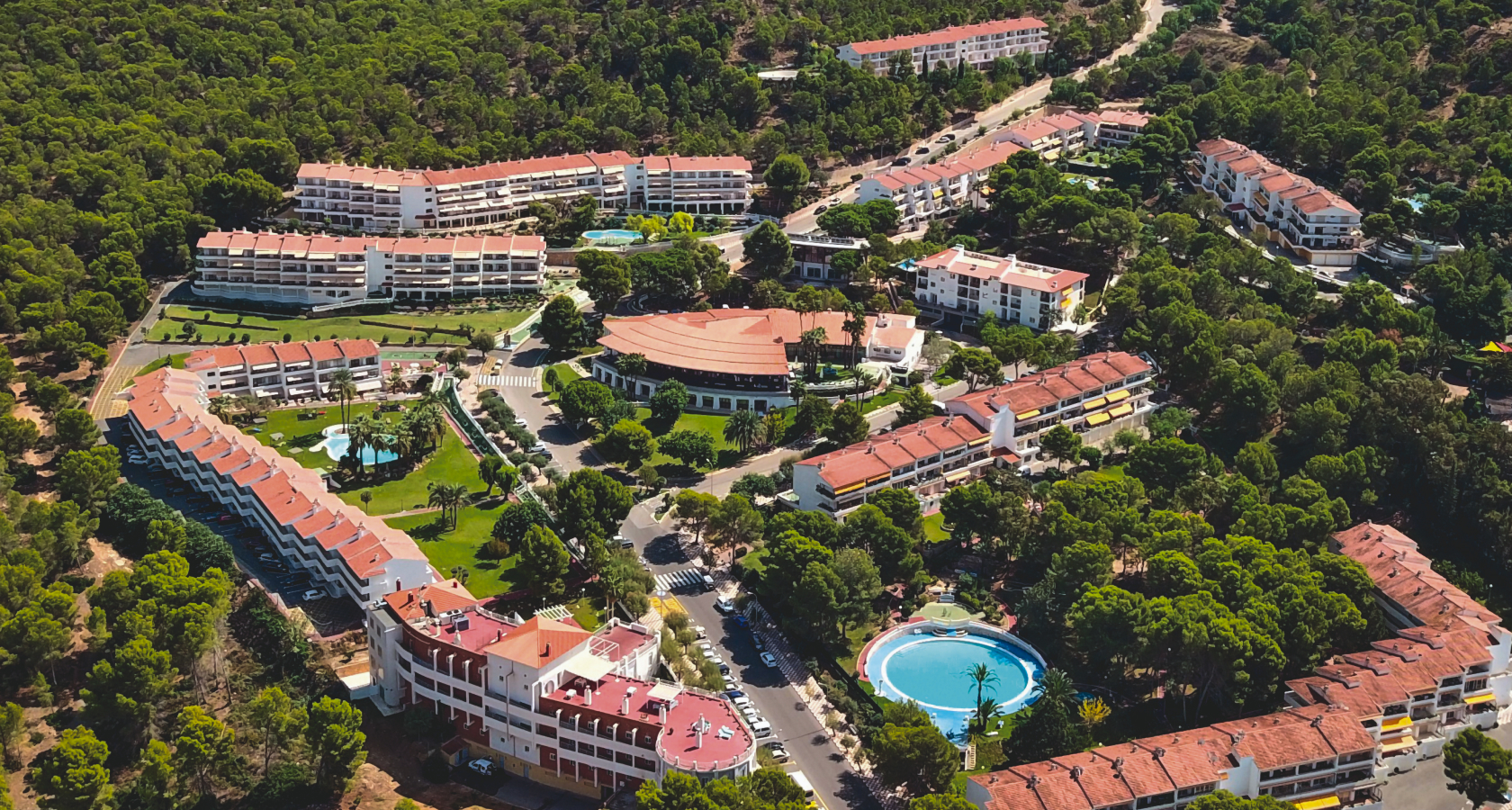


Central Building
Iris Building
Gardenia Building
Hortensia Building
Flora Building
Elisa Building
Heated Swimming Pool
Swimming pools
Swimming Pools
Restaurant
Indoor Pool
Reception

 Filters
Central Building
It is the core of community life at Ciudad Patricia. The reception area, restaurant, beauty centre, and some of our main services are located here.
Iris Building
Iris, completed in 2018, offers 15 apartments built to luxury quality standards. It is located just 50 metres from the Central Building.
Gardenia Building
Gardenia is located right across from the Central Building, allowing you to enjoy all the facilities that are just a stone’s throw away from your apartment.
Hortensia Building
At Hortensia, you can enjoy two worlds: the vibrant bustle of the city and the peaceful and relaxing atmosphere of the adjacent pine forest.
Flora Building
Flora, our tallest building, boasts stunning panoramic views of the valley, the mountains, and the resort.
Elisa Building
Elisa is located in a tranquil setting near the Central Building, indoor pool, fully equipped gym, and hobby room.
Heated Swimming Pool
We have an indoor swimming pool that you can enjoy all year round, whether you would like to exercise or have a moment of relaxation.
Swimming pools
We have several swimming pools at the resort where you can swim, cool off, or simply relax and enjoy the healthy climate of the Costa Blanca.
Swimming Pools
We have several swimming pools at the resort where you can swim, cool off, or simply relax and enjoy the healthy climate of the Costa Blanca.
Restaurant
Discover the delicious and healthy menu at the resort’s restaurant, and have an unforgettable time at its bar, in the dining area, or at its outdoor terrace.
Indoor Pool
We have several swimming pools in the complex, where you can swim, cool off, or simply relax and enjoy the healthy climate of the Costa Blanca.
Reception
In the Central Building, our staff are available to assist and help you with whatever you may need.
 Go back
Why More Expats in Spain Are Downsizing in Their 70s

The house slowly becomes a responsibility rather than a reward
After seventy on the Costa Blanca, certain afternoons begin to acquire a particular texture. You return from somewhere mildly inconvenient, a medical appointment in Alicante perhaps, or Leroy Merlin because the outdoor lights have failed again, and by the time you arrive home the house already carries a faint air of demand before you have even opened the front door. The bougainvillea needs cutting back. The pool level looks low. A terrace tile has lifted after the winter rain. Someone has wedged a delivery note into the gate.
None of this is serious, which is precisely why people ignore it for so long.
The life many expats built in Spain during their fifties and sixties often worked brilliantly at the time. Large villas made complete sense in those years. Visitors came frequently, energy levels were different, driving everywhere felt natural, and managing tradespeople still carried a faint sense of competence and control rather than administrative weariness. A steep driveway was an inconvenience you barely registered, not a calculation you made consciously each morning.
For years, and sometimes for decades, the arrangement held together perfectly well.
But eventually many people begin to notice that more and more of daily life revolves around supporting the property itself, that the house has become the main project. Not through any conscious decision. Gradually, almost invisibly. You spend mornings waiting for technicians. You plan travel around irrigation systems. You carry a running mental list of things needing attention. You realise that certain rooms are no longer used except when relatives arrive at Easter.
What changes is not capability, but tolerance for friction
The practical side of ageing rarely arrives with dramatic force. Most people in their seventies living abroad are still entirely themselves, still travelling, reading, arguing about politics over a long lunch, complaining about taxes in two languages, and recognising perfectly well when someone is speaking to them with unnecessary condescension. The notion that they require any form of care often strikes them as faintly absurd if not down right rude.
What changes, quietly and without announcement, is their tolerance for friction.
That is the real story behind downsizing in Spain among older expats. Not fragility, not surrender, but friction. A staircase that once disappeared into the background of daily life begins to register as something worth thinking about when you carry laundry. Driving into Benidorm in the evening no longer feels sufficiently spontaneous to justify dinner plans on the other side of town. Small maintenance jobs get postponed because coordinating them has started to feel disproportionately irritating. Friends who once lived nearby have moved away, become widowed, or settled into narrower routines of their own.
The emotional texture of daily life shifts in small ways. Nothing dramatic enough to alarm anyone, but enough to alter how effort feels and whether it seems worth the expenditure.
This catches many people off guard because they had always assumed that independence would disappear suddenly, arriving with the force of illness or injury. In reality, independence tends to narrow through accumulation rather than collapse. Small resistances, minor inefficiencies, and tiny calculations repeated every day begin to add up quietly over time.
How far is the car park from the restaurant? Can the house be left unattended for three weeks? Who would notice if something went wrong? Is another summer organising repairs really how this time should be spent?
Questions of this kind begin entering the background of ordinary decisions without anyone particularly inviting them in.
Many expats are living in homes designed for a previous version of life
The Costa Blanca is full of expats who still occupy houses that were designed, both practically and emotionally, for lives they no longer actually live. Four-bedroom villas shared by one person and a Labrador. Terraces prepared for entertaining that now sit empty most evenings. Pools maintained throughout the year for grandchildren who come twice each summer. Entire upper floors cleaned weekly despite being used for little more than storage.
Because these homes so often represented achievement, freedom, or genuine reinvention when first purchased, people find it difficult to acknowledge the obvious: that the property has become heavier than the life being lived inside it.
There is also a meaningful practical difference between ageing in your home country and ageing abroad, one that younger retirees frequently underestimate. When something goes wrong in Britain, the Netherlands, Germany, or Scandinavia, most people still have deep layers of familiarity beneath the difficulty. Native systems, native language, long-established social reflexes. In Spain, even after twenty years of residency, certain tasks continue to require more concentration than they once did. Insurance discussions happen partly in translation. Medical appointments involve additional layers of organisation. Legal paperwork carries an extra cognitive weight. Tradespeople arrive with varying degrees of reliability and varying willingness to communicate clearly.
None of this, taken individually, is catastrophic. But the cumulative effect over time matters considerably.
The appeal of retirement apartments in Spain is becoming more practical than emotional
Many expats eventually arrive at a point where they no longer want the structure of daily life organised around solving avoidable logistical problems. They want more available energy for the parts of Spain they originally came for. Morning coffee taken outside without a list of chores forming in the background. Swimming regularly. Seeing people without navigating a complicated drive and a frustrating search for parking. Walking somewhere pleasant without first locating the car keys. Travelling without a persistent anxiety about whether the irrigation system will fail while they are away.
Some begin moving into retirement apartments on the Costa Blanca for precisely this reason, not because they have suddenly begun to feel old, but because the underlying equation has changed.
The word downsizing is itself slightly misleading. It implies reduction, less space, smaller ambitions, narrower lives. For many people the experience feels closer to editing. You remove the parts that consume energy without giving very much back in return. A surprising number of expats discover that they do not miss what they had fully expected to miss: the upstairs bedrooms, the endless gardening, the responsibility of maintaining a detached property through storms, heatwaves, and prolonged absences. Several describe an unexpected sensation after moving, a feeling that ordinary daily life has become lighter again. Not simpler in any patronising sense, but less administratively dense.
Why many people resist the idea for years
One Dutch resident on the Costa Blanca described selling her villa after her husband died because she had come to realise that her entire week had gradually reorganised itself around property management. She still played bridge twice a week, still drove, still travelled to Amsterdam to see family. But she no longer wanted her mornings consumed by electricians, security concerns, and the business of arranging pool maintenance from airport lounges.
A British couple, both in their late seventies, admitted they had resisted moving for nearly five years because they associated retirement communities with personal decline. What changed their minds was not a health crisis. It was exhaustion. They noticed that almost every conversation at home had eventually turned practical, revolving around who was fixing what, which bill had arrived, whether the car needed replacing, whether they still wanted to keep paying for a house they only partially inhabited.
After moving, they said something rather revealing: that they felt more like themselves again. Not younger, not transformed, simply more recognisable to themselves. That sentence surfaces in different forms with considerable regularity among expats who make this kind of move later in life.
Why some retirement communities in Spain now feel different
This is partly why communities such as Ciudad Patricia appeal to a very specific kind of resident, not people seeking to withdraw from life, but people trying to preserve the version of life they still value while reducing the unnecessary weight surrounding it. Many residents are still intellectually active, socially selective, opinionated, and deeply committed to their own autonomy. Some have spent decades abroad building businesses, raising families, learning languages, navigating foreign bureaucracies, and constructing independent lives from very little. They do not become passive simply because they move somewhere more manageable. If anything, many become noticeably more engaged once daily logistics stop absorbing such a disproportionate share of their attention.
At Ciudad Patricia, the practical details that tend to dominate life in large standalone properties recede into the background. Maintenance, security, building upkeep, emergency response, and many of the smaller administrative burdens of daily life are integrated into the environment itself rather than managed individually by each resident. The community also sits within substantial landscaped grounds while keeping facilities, services, and social spaces in close proximity, which subtly but meaningfully changes the effort required to participate in ordinary daily life. That shift in rhythm turns out to matter more than most people anticipate before they experience it.
The people who adapt best usually move before they absolutely have to
The important point is that this kind of move works best when people choose it while they still have the time and energy to enjoy it fully, not after a crisis, not after isolation has already hardened into routine, not after a fall forces decisions that should have been made deliberately and at leisure. The people who adapt best tend to be those who still have choices, genuine curiosity, and enough energy to shape the next chapter of their lives according to their own priorities rather than someone else's timetable.
There is a tendency among expats to treat any significant adaptation as a form of failure, as though changing your living situation somehow undermines the adventurous decision to move abroad in the first place. But remaining flexible has always been among the most defining characteristics of the expat experience. Most people who built successful lives in Spain once made an equally difficult decision: they left familiarity behind because they wanted a genuinely different quality of life. Many of them are simply making the same fundamental calculation again now, with slightly different priorities and a clearer sense of what actually matters to them.
For more information about living at Ciudad Patricia, please get in touch by filling out the form below. Thank you
