







Fill out the form with your details, and we will attend to your request as soon as possible.




Central Building
Iris Building
Gardenia Building
Hortensia Building
Flora Building
Elisa Building
Heated Swimming Pool
Swimming pools
Swimming Pools
Restaurant
Indoor Pool
Reception

 Filters
Central Building
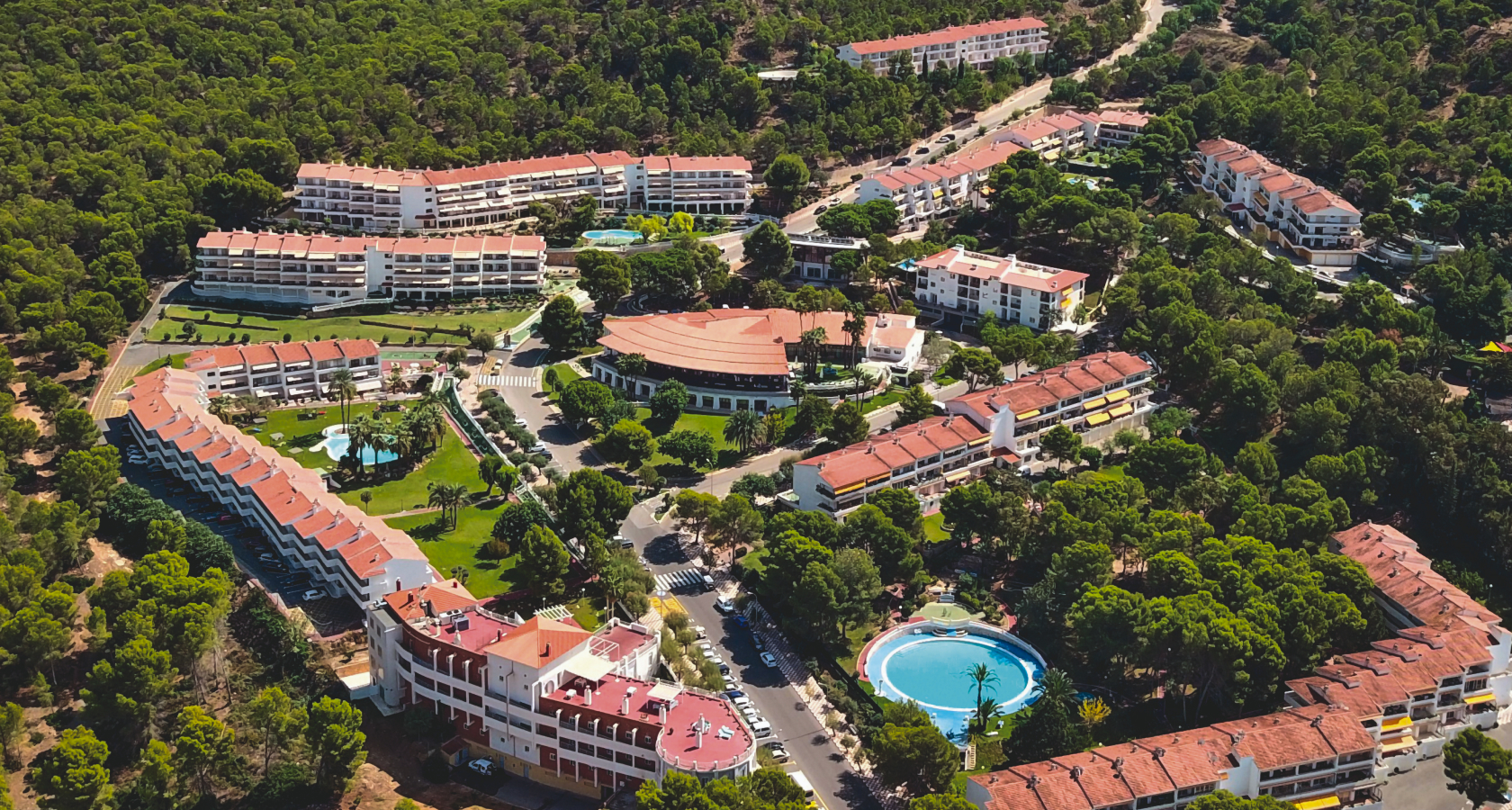
It is the core of community life at Ciudad Patricia. The reception area, restaurant, beauty centre, and some of our main services are located here.
Iris Building
Iris, completed in 2018, offers 15 apartments built to luxury quality standards. It is located just 50 metres from the Central Building.
Gardenia Building
Gardenia is located right across from the Central Building, allowing you to enjoy all the facilities that are just a stone’s throw away from your apartment.
Hortensia Building
At Hortensia, you can enjoy two worlds: the vibrant bustle of the city and the peaceful and relaxing atmosphere of the adjacent pine forest.
Flora Building
Flora, our tallest building, boasts stunning panoramic views of the valley, the mountains, and the resort.
Elisa Building
Elisa is located in a tranquil setting near the Central Building, indoor pool, fully equipped gym, and hobby room.
Heated Swimming Pool
We have an indoor swimming pool that you can enjoy all year round, whether you would like to exercise or have a moment of relaxation.
Swimming pools
We have several swimming pools at the resort where you can swim, cool off, or simply relax and enjoy the healthy climate of the Costa Blanca.
Swimming Pools
We have several swimming pools at the resort where you can swim, cool off, or simply relax and enjoy the healthy climate of the Costa Blanca.
Restaurant
Discover the delicious and healthy menu at the resort’s restaurant, and have an unforgettable time at its bar, in the dining area, or at its outdoor terrace.
Indoor Pool
We have several swimming pools in the complex, where you can swim, cool off, or simply relax and enjoy the healthy climate of the Costa Blanca.
Reception
In the Central Building, our staff are available to assist and help you with whatever you may need.
 Go back
Why Making Friends in Spain Changes After 70 (And What Actually Works)

It often surprises people when it happens.
You have lived in Spain for years. You made friends early on. Some through work, some through neighbours, some through chance encounters that slowly turned into routine. You built a life that felt solid. Social. Comfortable.
Then, somewhere around 70, things begin to change. Not suddenly. Not dramatically. Just enough to notice.
You still enjoy conversation. But the way friendships form, and the effort they require, no longer feels the same. What used to be easy now takes planning. What once felt energising sometimes feels heavy. And advice that worked ten or fifteen years ago no longer quite fits.
This shift is far more common than most people admit. And it is not a failure, personal or social. It is a change in how connection works later in life.
The first social circle was built on momentum
Many expats from the UK, the Netherlands and Northern Europe and Scandanavia arrive in Spain in their late 50s or early 60s with a lot of momentum.
They are active. Curious. Willing to drive long distances for dinners, events, or meetings. Language barriers feel manageable. There is energy for clubs, classes, volunteering, or social groups that meet at fixed times.
Friendships form through activity.
At that stage of life, socialising is often about doing things together. Tennis, padel, walking groups, bridge, book clubs, dinners out. The effort feels worthwhile because energy levels are high and recovery is quick.
That is why many people look back at those early years in Spain and think, why can’t it feel like that again?
The answer is simple, and slightly uncomfortable. You are not in the same phase of life anymore.
Why “staying busy” stops working
One of the most persistent myths around later life is that staying busy is the solution to everything.
Join more groups. Take more classes. Fill the calendar.
For people in their 50s and early 60s, this can work well. Later in life, it often backfires.
Busyness requires planning. It requires showing up at set times. It requires the mental effort of coordination. When energy is finite, these demands can outweigh the benefit of the activity itself.
Worse, busyness can crowd out the kind of connection that actually matters later on. The brief conversation. The familiar face. The sense of belonging that does not require performance.
At around 70, friendships tend to thrive not through stimulation, but through presence.
What actually sustains friendships later in life
Research into ageing and wellbeing consistently points to the same factors. Regular contact. Proximity. Informal interaction. A sense of being seen.
It is not the number of friends that matters most, but how easy it is to encounter them.
At around 70, friendships are more likely to grow when people see each other naturally. On a walk. Over coffee. In shared spaces that encourage pause rather than activity.
This kind of social life is quieter, but deeper. It does not rely on enthusiasm or novelty. It relies on familiarity.
That is why people often say, I don’t need more friends. I just want it to be easier to see the ones I have.
Why personality matters less than environment
Many independent, socially confident people are surprised when they struggle to maintain a social life after 70.
They assume the problem must be personal. That they are not trying hard enough. That they have become less outgoing.
In reality, the environment has changed, or no longer fits.
Large villas outside town. Hills that require driving for everything. Social circles scattered across wide areas. These layouts worked when energy was abundant. They become obstacles later on.
Isolation is often architectural, not emotional.
When homes are designed around privacy and distance, social contact becomes optional but effortful. Over time, optional becomes occasional. Occasional becomes rare.
This is not a failure of will. It is a mismatch between environment and stage of life.
How shared spaces change everything
Places that support social life after 70 tend to share certain characteristics.
They are walkable. They offer shared spaces that feel natural to use. Gardens, libraries, cafés, quiet sitting areas. They allow people to be present without obligation.
Most importantly, they respect independence.
This balance is crucial. Older adults do not want to be organised or supervised. They want to choose when and how to engage. Shared spaces work because they lower the threshold to connection without imposing it.
You can step out, see someone you know, exchange a few words, and return home. No planning. No pressure.
That kind of interaction may seem small. In practice, it is the foundation of a rich social life later in life.
Why moving too early often feels wrong
There is an important distinction here, and one that matters commercially as well as emotionally.
In their early 60s, many people are not ready for this kind of environment. They still want space. Projects. Distance. They may feel that shared living is premature, or unnecessary.
That instinct is usually correct.
After 70, priorities shift naturally. Ease becomes more valuable than acreage. Proximity becomes more appealing than privacy. Reassurance matters more than independence performed at any cost.
This is why people who move at the right moment often say the same thing. I didn’t realise how much effort my old life required until I stopped doing it.
How Ciudad Patricia fits into this stage of life
Ciudad Patricia Independent Senior Living Resort was designed with this phase in mind.
Apartments are fully independent, allowing residents to live on their own terms. At the same time, shared gardens, a café, a library, and communal spaces make everyday contact easy and natural.
There is no pressure to participate. No expectation to socialise. Privacy is respected.
What changes is availability. Connection is nearby, not scheduled.
For many residents, this creates a quiet confidence. They know that if they want company, it is there. If they want solitude, that is respected too.
This balance is what allows social life to continue evolving after 70, without effort or fear.
Confidence comes from knowing connection is close
One of the most overlooked aspects of later life is psychological safety.
Knowing that you can see people if you want to. Knowing that help is nearby if needed. Knowing that you belong somewhere, even on days when you prefer to be alone.
This sense of reassurance changes how people relate to others. It reduces anxiety. It softens withdrawal. It allows friendships to develop slowly and organically.
In this context, independence does not mean doing everything alone. It means choosing how connected you want to be, without obstacles.
Seeing what actually works
If you are over 70 and have noticed that making or maintaining friendships in Spain feels harder than it used to, the most important thing to understand is this.
You are not failing. The rules have changed.
Social life after 70 works best when it is woven into daily life, not layered on top of it. When proximity replaces planning. When environment supports presence.
For many people, visiting a place like Ciudad Patricia helps clarify this shift. Not as a commitment, but as a reference point. A chance to see how social life can function differently, and more gently.
Sometimes, understanding what works is enough to stop worrying about what has changed.
Because friendships do not disappear after 70. They simply need the right conditions to grow.
