







Fill out the form with your details, and we will attend to your request as soon as possible.


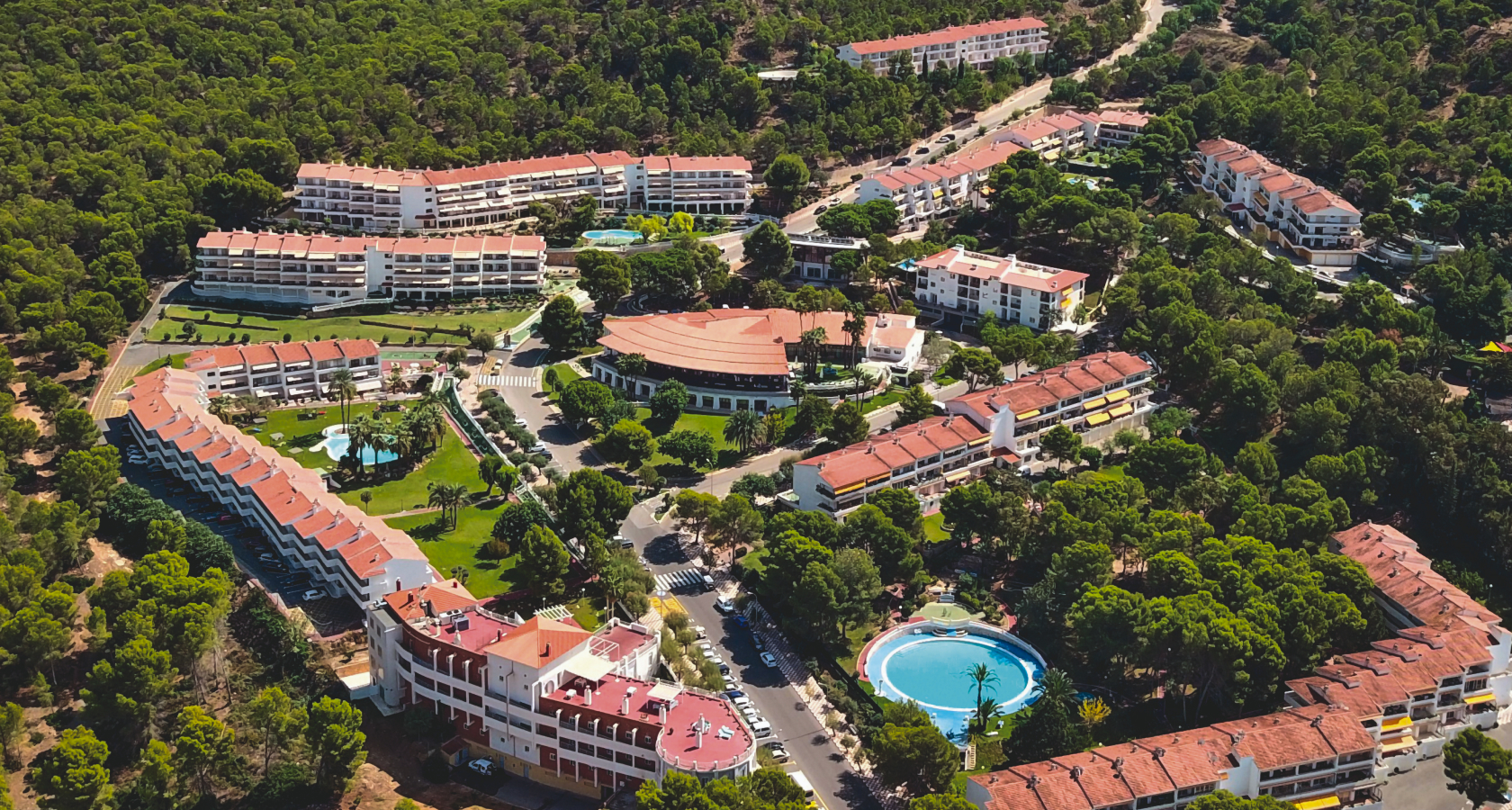


Central Building
Iris Building
Gardenia Building
Hortensia Building
Flora Building
Elisa Building
Heated Swimming Pool
Swimming pools
Swimming Pools
Restaurant
Indoor Pool
Reception

 Filters
Central Building
It is the core of community life at Ciudad Patricia. The reception area, restaurant, beauty centre, and some of our main services are located here.
Iris Building
Iris, completed in 2018, offers 15 apartments built to luxury quality standards. It is located just 50 metres from the Central Building.
Gardenia Building
Gardenia is located right across from the Central Building, allowing you to enjoy all the facilities that are just a stone’s throw away from your apartment.
Hortensia Building
At Hortensia, you can enjoy two worlds: the vibrant bustle of the city and the peaceful and relaxing atmosphere of the adjacent pine forest.
Flora Building
Flora, our tallest building, boasts stunning panoramic views of the valley, the mountains, and the resort.
Elisa Building
Elisa is located in a tranquil setting near the Central Building, indoor pool, fully equipped gym, and hobby room.
Heated Swimming Pool
We have an indoor swimming pool that you can enjoy all year round, whether you would like to exercise or have a moment of relaxation.
Swimming pools
We have several swimming pools at the resort where you can swim, cool off, or simply relax and enjoy the healthy climate of the Costa Blanca.
Swimming Pools
We have several swimming pools at the resort where you can swim, cool off, or simply relax and enjoy the healthy climate of the Costa Blanca.
Restaurant
Discover the delicious and healthy menu at the resort’s restaurant, and have an unforgettable time at its bar, in the dining area, or at its outdoor terrace.
Indoor Pool
We have several swimming pools in the complex, where you can swim, cool off, or simply relax and enjoy the healthy climate of the Costa Blanca.
Reception
In the Central Building, our staff are available to assist and help you with whatever you may need.
 Go back
What Staying Independent Actually Requires in Your 70s

It’s a phrase people use a lot.
“I want to stay independent.”
It sounds simple. Sensible. Almost automatic. But if you pause for a moment and look at what that actually means in daily life, it becomes a little more complex.
Because independence is not just about where you live. It’s about how much effort is required to keep everything working.
And that part is easy to underestimate.
The Quiet Reality Behind “Managing Fine”
Most people in their 70s are, in many ways, doing perfectly well.
They are capable. Experienced. Used to handling things.
They’ve managed careers, families, finances, moves between countries. A leaking tap or a renewal notice is not exactly intimidating.
So when someone asks, “Are you managing alright?” the honest answer is usually:
“Yes, of course.” And that’s true.
But there’s another layer underneath it. Managing fine doesn’t always mean it feels easy.
That’s the part people rarely say out loud.
Independence Has a Practical Side
When people talk about staying independent, they often mean freedom.
Being able to decide how to spend your day. Coming and going as you please. Keeping your own space, your own routines. All of that still matters - a lot.
But independence also has a practical side that becomes more visible over time.
Things like:
- organising repairs
- dealing with service providers
- managing paperwork and accounts
- coordinating deliveries
- keeping track of maintenance
- handling small problems before they become larger ones
None of these things are particularly difficult on their own.
Together, they create a kind of background workload.
A steady hum of responsibility.
The Subtle Shift Most People Notice
There is often no single moment when things change. It’s gradual. Very gradual.
A task that used to feel simple now feels slightly inconvenient. Something that would have taken ten minutes now takes longer or requires more planning. Waiting at home for a delivery starts to feel like a poor use of a morning. Those senior moments!
None of this is dramatic.
But it adds up.
That’s where the idea of independence starts to evolve.
It becomes less about proving you can do everything, and more about deciding what is actually worth doing.
What Staying Independent Really Requires
If you strip it back, staying independent in your 70s usually depends on a few key things.
Not in theory. In practice.
1. A Manageable Living Environment
The physical setup of where you live matters more than people expect.
Distance between rooms. Access to outdoor spaces.
How easy it is to move around without thinking about it. Whether everything you need is within reach.
This is where many traditional homes start to work against you, not because anything is wrong with them, but because they were never designed with long term ease in mind.
By contrast, places like the apartments at Ciudad Patricia are designed around day to day practicality.
Not in an obvious way.
Just in a way that makes life feel easier.
2. Proximity to People, Without Losing Privacy
This is one of the most misunderstood aspects of independence. You do not necessarily want constant social activity. But you also do not want complete separation. You want a social group like you.
There is a difference between being alone and being isolated.
Having people nearby, neighbours, familiar faces, a sense of life around you, creates a quiet form of support.
In Ciudad Patricia’s community, this happens naturally.
People cross paths. They recognise each other. Conversations happen without effort. And yet, privacy remains intact. You can choose your level of interaction.
And, frankly, that balance is important.
3. Practical Support That Doesn’t Feel Intrusive
Here’s where it gets interesting. Most people don’t want “help.” Quite simply, what they want is for things to work. If something needs fixing, it gets fixed. If something needs organising, there is a clear way to do it.
Not complicated. Not stressful. Just handled.
With Ciudad Patricia’s services, this kind of support is built into the environment.
You are not dependent on it, but you are not starting from zero every time something needs attention either.
That difference is subtle, but significant.
4. A Lifestyle That Feels Sustainable
Independence is not just about today.
It’s about whether your current way of living still makes sense in five or ten years. That doesn’t mean anticipating problems. It means noticing patterns. How much effort does daily life require? How much of your time is spent organising things rather than enjoying them? How easy is it to maintain your current setup?
Living on the Costa Blanca still offers everything people value, climate, outdoor life, good food, international community.
The question becomes:
What kind of environment allows you to enjoy that lifestyle without unnecessary effort?
The Difference Between Capability and Preference
Most people in their 70s are still capable of managing their lives fully. That is not in question. But capability and preference are not the same thing.
You might be perfectly capable of coordinating repairs, managing accounts, handling logistics.
The more relevant question is: Do you still want to?
Or would you prefer a way of living where those things require less attention?
This is not about giving anything up.
It is about choosing how you use your time and energy.
What Children Notice, Even If You Don’t
Interestingly, this is often the point where adult children begin to see things slightly differently.
They visit. They observe. They notice how much is involved in keeping everything running.
Or, in some cases, they notice how easy everything feels.
When families visit Ciudad Patricia, the reaction is often quite immediate.
They see:
- people around
- shared spaces that feel natural
- a calm, structured environment
- independence that doesn’t look like isolation
And that changes the conversation. Not dramatically. Just quietly.
A Life That Still Feels Like Your Own
One concern that comes up often is this.
“If I change my living situation, will it still feel like my life?”
It’s a fair question. Independence is closely tied to identity. The answer depends less on the type of property and more on the way daily life is structured.
With Ciudad Patricia’s lifestyle, residents maintain their routines.
They come and go as they please. They travel. They spend time alone or with others.
Nothing is imposed.
The difference is that the environment supports that independence, rather than quietly working against it.
Independence, Reconsidered
So what does staying independent actually require?
Not just in theory, but in practice.
- A manageable environment.
- People nearby.
- Practical systems that work without constant effort.
- A lifestyle that feels sustainable over time.
- And perhaps most importantly, a shift in perspective.
Independence is not about doing everything yourself.
It’s about living in a way that still feels like yours, without unnecessary friction.
That’s the part most people don’t talk about.
If you’re starting to think about what independence really looks like in daily life, it’s worth seeing how others are living it.
You can also explore more perspectives in other articles in the Ciudad Patricia blog.
FAQs
What does independent living really mean in your 70s?
It means being able to live life on your own terms, while having an environment that makes daily life manageable. Independence is not just about capability, it is about how much effort everyday tasks require.
Can you stay independent without managing everything yourself?
Yes. Many people choose environments where practical aspects such as maintenance or services are easier to handle. This allows them to remain fully independent while reducing unnecessary effort.
Why does environment matter more with age?
Because small practical challenges become more noticeable over time. A well-designed environment reduces friction in daily life, making it easier to maintain independence comfortably and consistently.
