







Fill out the form with your details, and we will attend to your request as soon as possible.


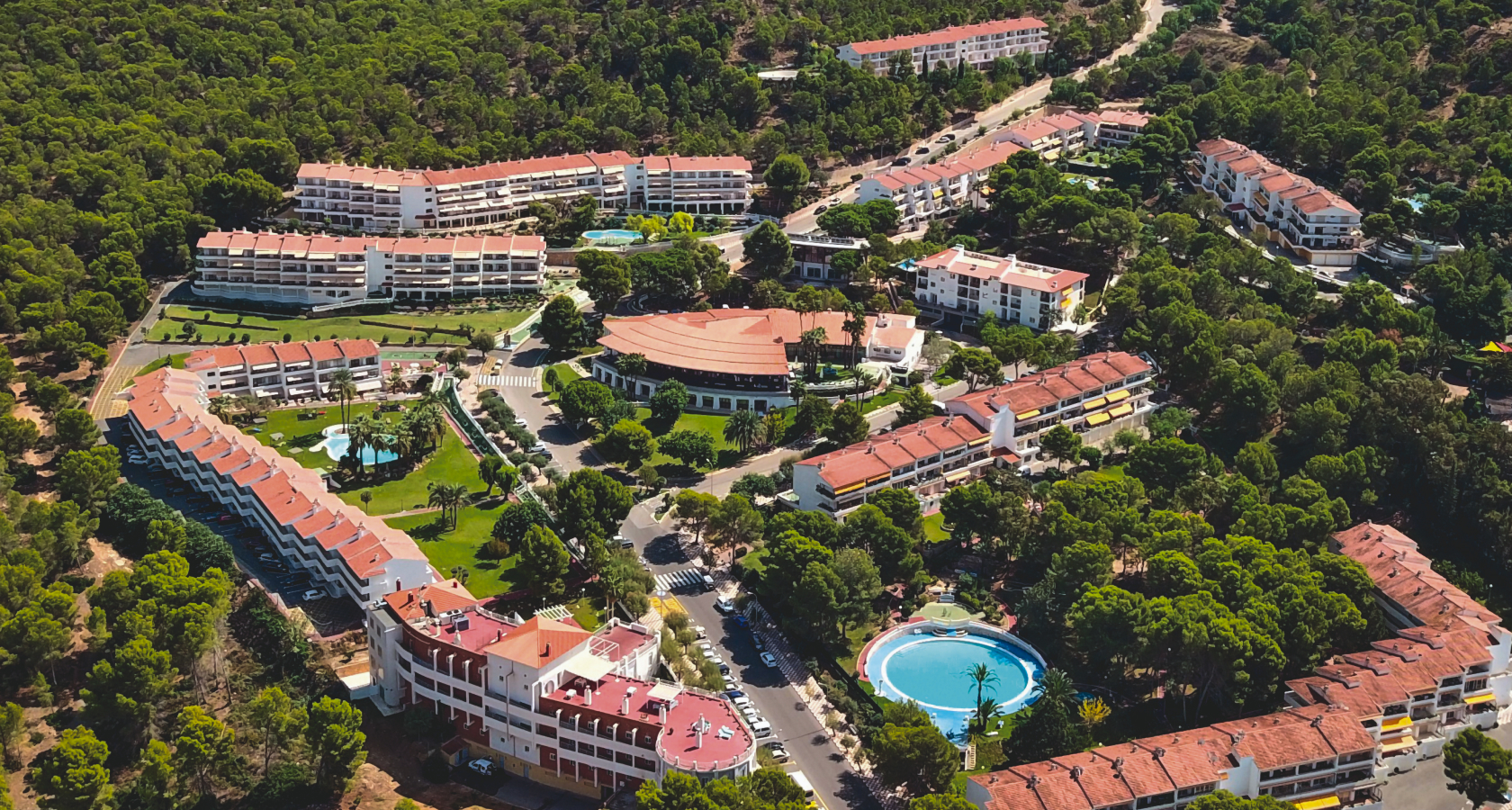


Central Building
Iris Building
Gardenia Building
Hortensia Building
Flora Building
Elisa Building
Heated Swimming Pool
Swimming pools
Swimming Pools
Restaurant
Indoor Pool
Reception

 Filters
Central Building
It is the core of community life at Ciudad Patricia. The reception area, restaurant, beauty centre, and some of our main services are located here.
Iris Building
Iris, completed in 2018, offers 15 apartments built to luxury quality standards. It is located just 50 metres from the Central Building.
Gardenia Building
Gardenia is located right across from the Central Building, allowing you to enjoy all the facilities that are just a stone’s throw away from your apartment.
Hortensia Building
At Hortensia, you can enjoy two worlds: the vibrant bustle of the city and the peaceful and relaxing atmosphere of the adjacent pine forest.
Flora Building
Flora, our tallest building, boasts stunning panoramic views of the valley, the mountains, and the resort.
Elisa Building
Elisa is located in a tranquil setting near the Central Building, indoor pool, fully equipped gym, and hobby room.
Heated Swimming Pool
We have an indoor swimming pool that you can enjoy all year round, whether you would like to exercise or have a moment of relaxation.
Swimming pools
We have several swimming pools at the resort where you can swim, cool off, or simply relax and enjoy the healthy climate of the Costa Blanca.
Swimming Pools
We have several swimming pools at the resort where you can swim, cool off, or simply relax and enjoy the healthy climate of the Costa Blanca.
Restaurant
Discover the delicious and healthy menu at the resort’s restaurant, and have an unforgettable time at its bar, in the dining area, or at its outdoor terrace.
Indoor Pool
We have several swimming pools in the complex, where you can swim, cool off, or simply relax and enjoy the healthy climate of the Costa Blanca.
Reception
In the Central Building, our staff are available to assist and help you with whatever you may need.
 Go back
What Happens When One Partner Ages Faster Than the Other in Spain?

This article examines the experience of uneven ageing within couples living as expats on Spain's Costa Blanca, exploring how one partner often begins declining physically or socially before the other and how that imbalance reshapes daily life in ways that are rarely acknowledged directly. The central argument is that the strain of uneven ageing tends to arrive through gradual accumulation rather than crisis, with one partner quietly absorbing an increasing share of practical responsibility while the other becomes less confident and more dependent without either person naming what is happening. The article argues that living abroad intensifies this dynamic because expat couples frequently lack the nearby family networks and familiar systems that cushion the same process in their home countries, effectively becoming each other's entire support infrastructure. It contends that environment matters as much as determination in preserving autonomy, and that couples who adapt their living situation deliberately, before circumstances force the issue, tend to experience the change as intelligent choice rather than loss. Ciudad Patricia, a residential community in Benidorm on the Costa Blanca, is presented as an example of an environment designed to reduce practical friction and restore a more natural balance to relationships under this kind of pressure, while preserving full independence for both partners.
Most couples do not age at the same pace
A couple in their seventies sit outside a café in Altea. They have lived on the Costa Blanca for nearly twenty years. To anyone passing by, they probably look much as they always have: comfortable together, settled, entirely capable. Even their children still think of them that way, although their daughter has started calling a little more often than she used to.
What most people around them do not see is that the relationship has become less balanced over the past few years.
He used to drive everywhere. He handled paperwork, insurance renewals, tax appointments, repairs, phone calls, all the practical mechanics of life abroad. Then came a hip replacement a few years ago. Recovery went reasonably well, at least medically, but something shifted afterwards. His world became slightly smaller. He stopped liking night driving. Long lunches became tiring. Trips into Alicante began feeling like effort rather than pleasure.
Now she does most of the driving. She deals with the paperwork he once handled automatically. She keeps track of appointments, medications, bills, and the endless practical details that come with maintaining a home in Spain. She still enjoys seeing friends and going out, but increasingly finds herself negotiating around his energy levels, his reluctance, or his discomfort with too much activity.
Nothing dramatic has happened. No major crisis. No moment where life clearly divided into “before” and “after”. That is exactly why this stage catches so many couples by surprise.
Most people assume ageing happens together. In reality, one person often begins adapting earlier than the other. Sometimes physically. Sometimes socially. Sometimes emotionally.
And when you are living abroad, especially away from close family, those differences become much harder to ignore.
The strain often begins with ordinary things
Most couples do not sit down one morning and agree that they need to rethink how they are living. The process tends to begin through accumulation. One person slowly becomes responsible for more practical tasks, more driving, more organising, more remembering, more handling of small domestic complications that once felt shared almost automatically. A hospital appointment in Alicante now requires more planning than before. The supermarket trip becomes longer because one person tires more quickly in large stores. A staircase inside the house starts shaping decisions unconsciously. Dinner invitations become selective because getting home late feels more draining for one partner than the other.
Even social lives can begin diverging slightly. One person still wants movement, variety, spontaneity, while the other begins protecting energy more carefully without necessarily saying so directly. Sometimes this creates tension, sometimes guilt, and often both at once.
People rarely talk openly about this stage because it feels uncomfortable to define. Nobody wants to think of themselves as becoming dependent, and nobody wants to think of their partner carrying an increasing share of daily life either. So couples adapt quietly inside routines. One begins driving more often, one becomes the default organiser, one starts monitoring medication, one keeps track of appointments, and one notices the other becoming slightly less confident and says nothing. These shifts can take years to become visible.
Living abroad changes the equation
For expats in Spain, the practical side of uneven ageing often arrives earlier than expected because everyday life abroad already requires a certain level of organisation and adaptability. Even after decades here, some things simply take more effort than they would “back home”. Medical systems work differently. Administration can still feel tiring. Insurance conversations may happen partly in another language. Family members often live in different countries entirely, and long-standing friendships can become fragmented as people move away, return home, become widowed, or experience health problems of their own.
A couple living in Britain or the Netherlands may have adult children twenty minutes away without really thinking about it. In Spain, many couples become each other's entire infrastructure without fully realising it has happened, and that changes the emotional pressure inside daily life in ways that are difficult to articulate until you are already inside them.
At first, the stronger partner often compensates naturally, willingly, quietly, out of love, habit, loyalty, or simple practicality. But over time, some couples begin noticing that ordinary life has become more effort-heavy than it used to be. Not unhappy, not catastrophic, just harder work. And because many expats value independence deeply, they often continue managing situations long after simpler alternatives would improve daily life considerably.
Why environment matters more after seventy
One of the biggest misunderstandings about later life is the idea that independence depends entirely on determination. Determination matters, certainly, but environment matters too, and a well-designed environment can preserve confidence and autonomy far longer than people expect, while a badly designed one can slowly exhaust even highly capable people.
This becomes obvious in small, accumulating ways. How far do you need to walk to see people? How dependent are you on driving? How difficult is the property to maintain, and how quickly can help arrive during an emergency? How much of the week disappears into administration, repairs, and logistics? These things affect couples differently once ageing becomes uneven, and many expats who move later in life are not looking for care in any institutional sense. They are trying to reduce unnecessary pressure inside everyday life before that pressure starts shaping the relationship itself.
That distinction matters enormously. The strongest relationships often remain deeply affectionate during this stage, but the structure around them becomes inefficient. One person begins carrying too much practical responsibility while the other starts worrying about becoming a burden, and conversations gradually become more functional than they used to be. A life that once felt expansive narrows, almost imperceptibly, into administration.
Why some couples begin adapting earlier
This is partly why more couples on the Costa Blanca are reconsidering how they want to live before a serious health event forces the issue, and usually not because they feel incapable but because they still feel capable enough to choose deliberately. For some, that means moving from a large villa into a more manageable apartment. For others, it means choosing an environment where practical responsibilities are reduced and support exists nearby if circumstances change later.
The psychological dimension is as important as the practical one. When couples make changes early enough, they tend to experience those decisions as intelligent adaptation rather than loss. They remain socially active, they travel, they maintain their routines and continue shaping their lives independently, only now with less maintenance required around the edges.
One Dutch woman living on the Costa Blanca described the experience with surprising directness after moving into a more integrated environment with her husband. They had stopped spending their energy protecting the structure of their life, she said, and started enjoying life again. That observation resonates immediately with many expats who have reached a similar point.
The appeal of places like Ciudad Patricia
Communities such as Ciudad Patricia increasingly attract couples who still think of themselves as independent, because they are. Most residents are not looking for institutional living but for an environment that removes unnecessary friction from later life while preserving autonomy, privacy, and normality. The apartments remain fully independent homes, and residents maintain their own routines, friendships, travel plans, and social lives, while many of the practical concerns that become heavier with age are already integrated into the environment itself.
Maintenance of buildings and shared areas, security, emergency medical follow-up, activities, and support from on-site staff are all included within the residential services structure. For couples managing uneven ageing, that changes the emotional temperature of daily life more than many anticipate.
The stronger partner no longer feels solely responsible for holding everything together, and the other often regains confidence because the surrounding environment requires less effort to navigate successfully. Many couples report, with some surprise, that they begin relating to each other more naturally again once the practical pressure reduces. Less project management, and considerably more companionship.
Adapting does not mean giving up
Expats who moved abroad decades ago were rarely passive people to begin with. In general, they built lives in another country. They learned systems, languages, routines and cultures. The navigated bureaucracy, property purchases, healthcare systems, tax structures, friendships, isolation, reinvention. Many raised families while doing all of it.
That kind of person does not suddenly become fragile at 75, but they do often become more selective about where their energy goes.
There comes a point when preserving independence is no longer about proving you can still manage absolutely everything yourself. It becomes about shaping an environment where daily life remains sustainable, enjoyable, and socially connected for both people inside the relationship.
For many couples in Spain, that realisation arrives earlier than expected.
And often, with a surprising amount of relief once they finally admit it aloud.
Considering What the Next Stage of Life in Spain Might Look Like?
If you and your partner have started noticing that daily life feels slightly heavier than it used to, even in small ways, it may be worth exploring environments designed to make life easier without taking independence away.
Ciudad Patricia in Benidorm offers fully independent apartments within an established international community on the Costa Blanca, with integrated services, maintenance, social spaces, and practical support already built into everyday life.
