







Fill out the form with your details, and we will attend to your request as soon as possible.




Central Building
Iris Building
Gardenia Building
Hortensia Building
Flora Building
Elisa Building
Heated Swimming Pool
Swimming pools
Swimming Pools
Restaurant
Indoor Pool
Reception

 Filters
Central Building
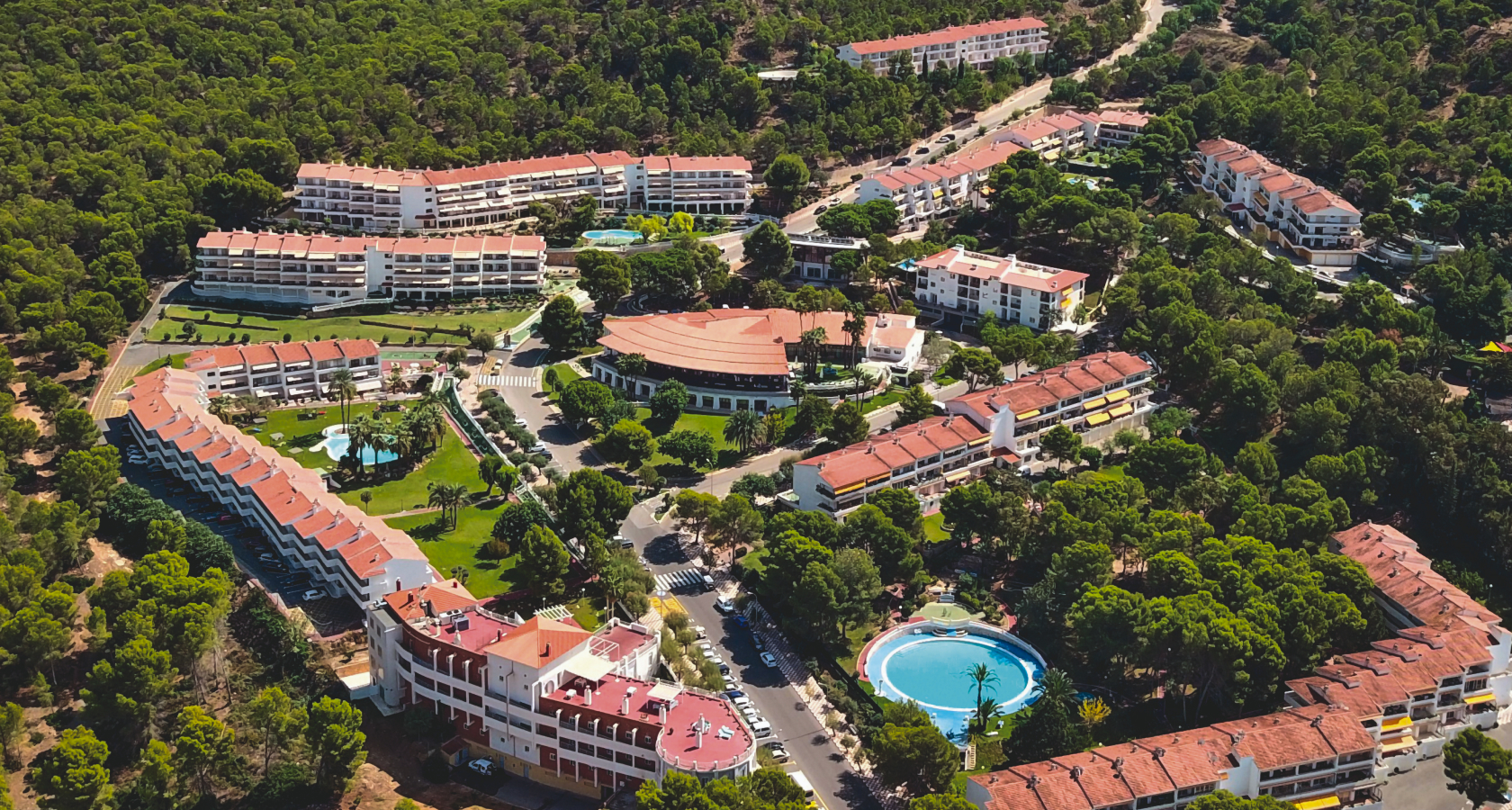
It is the core of community life at Ciudad Patricia. The reception area, restaurant, beauty centre, and some of our main services are located here.
Iris Building
Iris, completed in 2018, offers 15 apartments built to luxury quality standards. It is located just 50 metres from the Central Building.
Gardenia Building
Gardenia is located right across from the Central Building, allowing you to enjoy all the facilities that are just a stone’s throw away from your apartment.
Hortensia Building
At Hortensia, you can enjoy two worlds: the vibrant bustle of the city and the peaceful and relaxing atmosphere of the adjacent pine forest.
Flora Building
Flora, our tallest building, boasts stunning panoramic views of the valley, the mountains, and the resort.
Elisa Building
Elisa is located in a tranquil setting near the Central Building, indoor pool, fully equipped gym, and hobby room.
Heated Swimming Pool
We have an indoor swimming pool that you can enjoy all year round, whether you would like to exercise or have a moment of relaxation.
Swimming pools
We have several swimming pools at the resort where you can swim, cool off, or simply relax and enjoy the healthy climate of the Costa Blanca.
Swimming Pools
We have several swimming pools at the resort where you can swim, cool off, or simply relax and enjoy the healthy climate of the Costa Blanca.
Restaurant
Discover the delicious and healthy menu at the resort’s restaurant, and have an unforgettable time at its bar, in the dining area, or at its outdoor terrace.
Indoor Pool
We have several swimming pools in the complex, where you can swim, cool off, or simply relax and enjoy the healthy climate of the Costa Blanca.
Reception
In the Central Building, our staff are available to assist and help you with whatever you may need.
 Go back
Rethinking Independence After 70: What It Really Looks Like in Daily Life

Independence after 70 is less about doing everything yourself and more about choice, ease, and control over daily life. This article explores how independence changes with age, why environment matters more than effort, and how places like Ciudad Patricia support autonomy, privacy, and social connection without pressure.
Independence does not disappear at 70.
But it does change shape.
That idea alone can feel reassuring. For many people living on the Costa Blanca, especially expats who made a deliberate choice to start again in Spain, independence has always been a defining value. It is tied to identity, pride, and self-respect. So when daily life begins to feel different, there is often an unspoken question underneath it all.
Am I becoming less independent?
In reality, what is changing is not your capacity, but your priorities. Independence after 70 is less about doing everything yourself and more about deciding what is worth your effort. It becomes quieter. More selective. And, for many people, far more satisfying.
Independence does not disappear, it becomes more precise
Earlier in life, independence is often measured by scale.
A large home. A full diary. The ability to manage everything without assistance. There is a sense of achievement in proving that you can handle it all.
After 70, that definition starts to feel less relevant.
Not because you cannot do these things, but because you no longer want life to feel like a test. Energy becomes something you choose how to spend, not something you waste proving a point. You begin to notice the difference between what you can do and what you actually want to do.
That distinction matters.
True independence later in life is about control over your days. Control over your rhythm. Control over how much effort you give to the background tasks of living.
The quiet daily decisions that now define independence
Independence after 70 shows up in small, ordinary choices.
- Choosing whether to go out today or stay in without guilt.
- Deciding how much effort you want to spend on errands.
- Knowing you can socialise easily, but also withdraw when you want to.
These decisions shape daily life far more than big milestones.
Many people notice that their radius of movement becomes smaller, but their sense of control grows stronger. They are less interested in being everywhere and more interested in being comfortable where they are.
That shift is often misunderstood, even by the people experiencing it. It can be mistaken for withdrawal or loss of interest, when in fact it is a refinement of priorities.
Why environment matters more than willpower
One of the biggest myths around independence later in life is that it is purely a matter of mindset.
Try harder. Stay active. Keep pushing yourself.
But independence is not maintained through willpower alone. It is supported, or undermined, by environment.
A setting that requires constant effort to access people, services, or simple pleasures will slowly drain even the most determined person. Distance, isolation, and logistics add friction to everyday life.
On the other hand, an environment designed around proximity and ease quietly supports independence. When things are closer, decisions become lighter. When social contact is available without planning, engagement feels natural rather than forced.
This is why two people with similar health and outlook can experience independence very differently depending on where and how they live.
Independence with proximity, not isolation
There is a common fear that moving closer to others means giving something up. Privacy. Autonomy. Control.
In reality, the opposite is often true.
At Ciudad Patricia, independence begins with private homes designed for daily life rather than display. Residents live in their own apartments, with their own routines and their own sense of space, as described in more detail on the apartments and living spaces section of the site.
What changes is what surrounds that private space.
Shared gardens encourage people to step outside without committing to an event. The community areas create a rhythm where familiar faces appear naturally, without expectation. A café provides a place to sit, read, or talk, something many residents mention when talking about the gastronomy and café spaces. A quiet library offers presence without noise or pressure.
The result is independence that feels supported rather than defended.
You can be alone without being isolated. Social without being busy. Present without being overwhelmed.
Privacy and community are not opposites
Many people equate community with intrusion. They imagine noise, expectations, or pressure to participate.
Well-designed communities do not work that way.
Privacy is not compromised by proximity when choice is respected. In fact, knowing that connection is nearby often makes solitude more comfortable. You are not alone by default. You are alone by choice.
This distinction is crucial after 70.
People want reassurance without surveillance. Connection without obligation. A sense of belonging without loss of self.
When community is designed around these principles, independence becomes easier to live, not harder to maintain.
What changes when independence is properly supported
When daily life requires less effort, something subtle but important happens.
People go out more, not because they are pushed, but because it is easier. Conversations feel lighter. Social contact becomes more frequent but less demanding.
There is less background anxiety about maintenance, security, or logistics. Fewer things compete for attention. Mental space opens up.
Independence stops feeling like something you must protect. It becomes something you simply live.
This is not about transformation or reinvention. It is about alignment.
Independence after 70 is about choice, not proving anything
Perhaps the hardest thing to let go of is the idea that independence must be demonstrated.
After 70, independence is not measured by how much you can still do, but by how much you no longer have to do.
Choosing to simplify is not weakness. Choosing proximity is not surrender. Choosing an environment that fits your current priorities is a form of strength.
You are not giving up independence when you reduce unnecessary effort. You are reclaiming it.
Seeing independence lived, not explained
It is one thing to talk about independence in abstract terms. It is another to see how it plays out in daily life.
Many people explore Ciudad Patricia not because they are ready to move, but because they want to understand how independence can look at this stage of life. Browsing the Ciudad Patricia pages or learning more about life on the Costa Blanca often helps place this lifestyle in context.
Walking through the gardens. Sitting in the café. Noticing the pace, the quiet confidence, the absence of pressure. These details often communicate more than any explanation.
There is no urgency. No expectation. Just observation.
Living independently, on your own terms
Independence after 70 is not about holding on to the past or fearing the future. It is about shaping the present in a way that feels sustainable, calm, and dignified.
Your life does not need to be smaller to be easier. It simply needs to be better matched to who you are now.
When independence is supported by design, by proximity, and by respect for choice, it remains central. Not diminished. Not compromised.
Just lived, quietly and confidently, on your own terms.
If independence is still important to you, but you want daily life to feel lighter rather than more demanding, seeing how it works in practice can be useful. Many people visit Ciudad Patricia simply to observe how independence, privacy, and proximity are balanced in everyday life. A visit or informal conversation can offer clarity without obligation.
FAQs
Does living at Ciudad Patricia mean giving up my independence?
No. Residents live in their own apartments and make their own decisions about how they spend their time. Independence at Ciudad Patricia is about choice and control, not supervision or structured routines. Shared spaces exist to make life easier, not to dictate how you live.
Is Ciudad Patricia suitable only for people who need care or assistance?
No. Ciudad Patricia is not a nursing home or medical facility. It is designed for people who want to live independently in an environment that reduces daily effort and makes social contact easier. Any additional support available is discreet and optional, not defining.
What makes Ciudad Patricia different from living alone in a villa or apartment?
The difference is proximity. At Ciudad Patricia, daily life happens closer together, gardens, café, library, and community areas are within easy reach. This allows residents to stay independent while avoiding the isolation and logistical effort that often comes with living alone elsewhere.
