







Fill out the form with your details, and we will attend to your request as soon as possible.


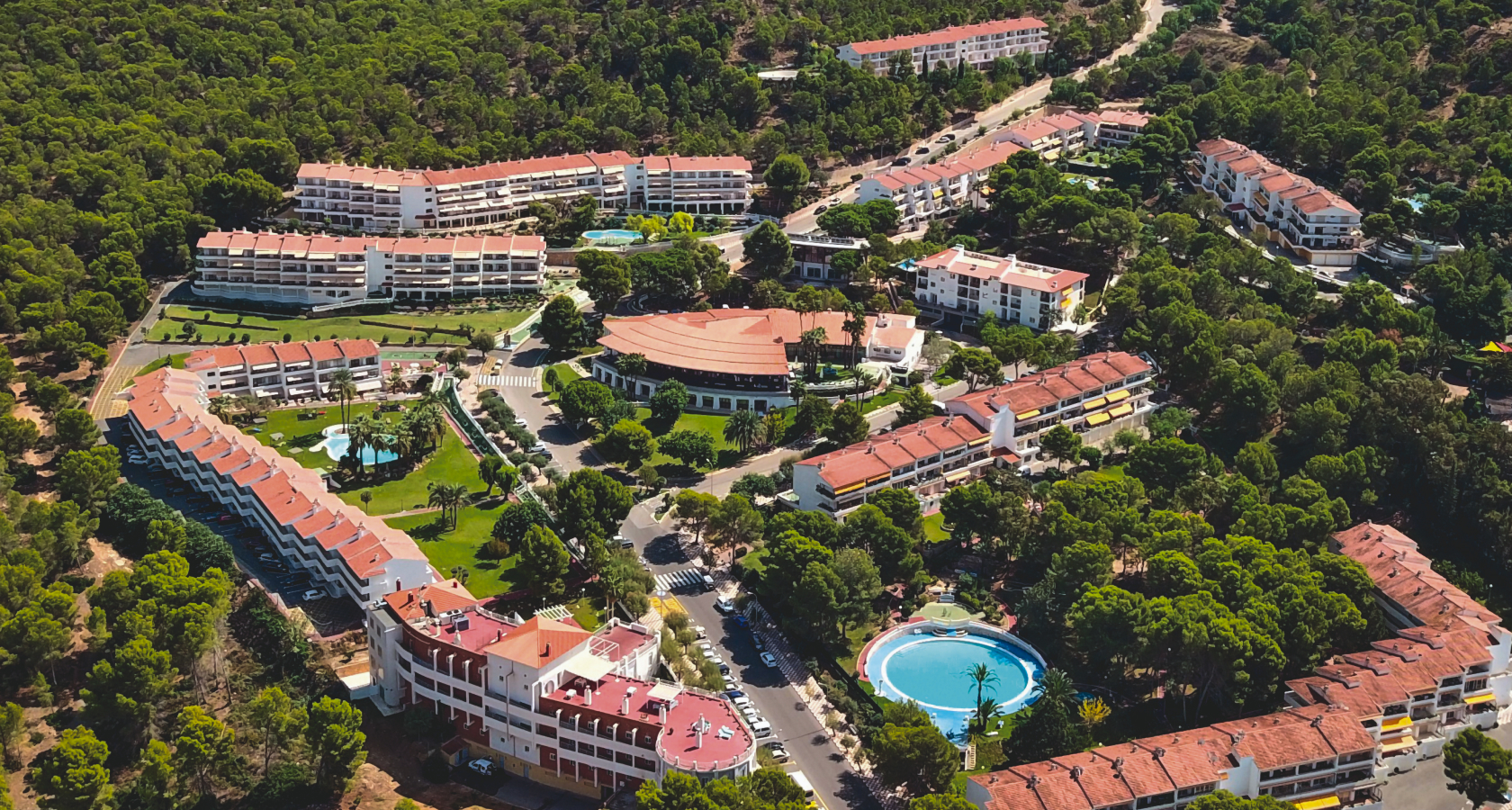


Central Building
Iris Building
Gardenia Building
Hortensia Building
Flora Building
Elisa Building
Heated Swimming Pool
Swimming pools
Swimming Pools
Restaurant
Indoor Pool
Reception

 Filters
Central Building
It is the core of community life at Ciudad Patricia. The reception area, restaurant, beauty centre, and some of our main services are located here.
Iris Building
Iris, completed in 2018, offers 15 apartments built to luxury quality standards. It is located just 50 metres from the Central Building.
Gardenia Building
Gardenia is located right across from the Central Building, allowing you to enjoy all the facilities that are just a stone’s throw away from your apartment.
Hortensia Building
At Hortensia, you can enjoy two worlds: the vibrant bustle of the city and the peaceful and relaxing atmosphere of the adjacent pine forest.
Flora Building
Flora, our tallest building, boasts stunning panoramic views of the valley, the mountains, and the resort.
Elisa Building
Elisa is located in a tranquil setting near the Central Building, indoor pool, fully equipped gym, and hobby room.
Heated Swimming Pool
We have an indoor swimming pool that you can enjoy all year round, whether you would like to exercise or have a moment of relaxation.
Swimming pools
We have several swimming pools at the resort where you can swim, cool off, or simply relax and enjoy the healthy climate of the Costa Blanca.
Swimming Pools
We have several swimming pools at the resort where you can swim, cool off, or simply relax and enjoy the healthy climate of the Costa Blanca.
Restaurant
Discover the delicious and healthy menu at the resort’s restaurant, and have an unforgettable time at its bar, in the dining area, or at its outdoor terrace.
Indoor Pool
We have several swimming pools in the complex, where you can swim, cool off, or simply relax and enjoy the healthy climate of the Costa Blanca.
Reception
In the Central Building, our staff are available to assist and help you with whatever you may need.
 Go back
Moving within Spain in retirement: why many expats prefer not to start again abroad

For many expats already living on the Costa Blanca, or elsewhere in Spain, the idea of starting again in another country has very little appeal. They may still feel foreign in some ways, of course. There are still forms, phone calls, medical appointments and official letters that arrive in Spanish and cause a small sinking feeling. But Spain is no longer an adventure. It is home, or close enough to home that leaving it would feel like an unnecessary upheaval.
The move that once made sense may not make sense forever
A villa in the hills can be perfect at one stage of retirement. Space, privacy, views, visitors, a pool, room for children and grandchildren. A car always ready outside. Lunches on the terrace. A feeling of having chosen something properly different from the life left behind.
Then, slowly, the same house starts to ask more of you. The steps are a nuisance after a knee operation. The garden needs attention even when you are not in the mood. The pool man, the gardener, the electrician - someone has to manage them all. Of course, shopping is still possible, but it has become a small expedition rather than a quick errand.
None of this means Spain has failed. It usually means the property has stopped fitting the person. Too many people delay making a sensible move because they confuse moving home with giving up. In reality, moving within Spain can be the opposite. It can be a way of keeping the parts of Spanish life that still work, while removing the parts that have begun to wear them down.
Why going back is not always the obvious answer
Some expats do return to their country of origin. There are good reasons in some cases: family, health, finances, bereavement, or simply a pull towards familiar places.
But many do not want to go back. The country they left may no longer feel like a simple answer. Friends have moved, aged, or built lives of their own. Adult children may be busy, loving but not available in the daily way people sometimes imagine. The weather can feel harder than it used to. The cost of housing may be worse than expected. The rhythm of life may feel faster, colder, more complicated.
There is the emotional reality, too. Returning can sound practical from a distance, but it may feel like undoing a decision that shaped twenty or thirty years of life. Spain has become the place where they know how to live, which months are quiet, which restaurants stay open in winter, which roads to avoid in August, how to book a specialist, how to get by at the town hall, and when not to bother with anything official because a fiesta is almost certainly on the way.
Moving within Spain keeps more of your life intact
A move within Spain can be more manageable because it does not require a complete change of identity. You already know the health system, the residency rules, the paperwork. You have done all that. This is an adjustment to your living situation, not a rewriting of your whole life.
For some, it means trading an isolated villa for something closer to the centre of town. For others, it means leaving a large family home for somewhere easier to manage. For expats who are widowed, divorced or living alone, it may mean finding a place with more human presence nearby – not because they need looking after, but because the silence has started to settle too heavily in the evenings.
This is where retirement communities in Spain have become quietly relevant, particularly for those who are already rooted in the country. They are not, for the most part, looking for a dramatic reinvention. They are looking for a gentler version of the life they have already built.
That might mean their own apartment, their own terrace, their own furniture, their own routines, but with services and neighbours close enough to take the brittleness out of daily life.
Staying near what you already know
Location becomes more important with age, but not always in the way estate agents describe it. A sea view may still be lovely. A beautiful garden still matters. But other questions begin to carry more weight.
Can you get to a doctor without it becoming a military operation? Is there practical help on hand for the inevitable moments; the Wi-Fi going down, the leaking washing machine, the baffling letter from the tax office? Somewhere to eat when you cannot face cooking, and people nearby who would notice if you disappeared for a few days?
For expats on the Costa Blanca, staying in the same broad area can make a move much easier. You may still be within reach of your existing doctors, friends, favourite restaurants, airport routes, clubs, beaches and habits. You keep the climate. You keep the familiar roads. You keep the sense of Spain that brought you here in the first place.
The hidden cost of “managing perfectly well”
Many older expats are very good at saying they are managing perfectly well. The bills are paid, the car still runs, the house is clean enough. They get to appointments, they cook - hey they cope.
But coping is not the same as living well. A person can manage and still be gradually narrowing their world. They stop going out at night. They avoid invitations if parking will be difficult. They postpone small repairs because finding the right person feels exhausting. They eat less properly when alone. They become more dependent on one neighbour, one friend, or one adult child who lives far away and worries more than they say.
This is usually the moment when moving within Spain starts to make sense.
What a softer move can look like
Ciudad Patricia, in Benidorm, appeals to many expats precisely because it does not ask them to abandon Spain. It offers a different way of living within Spain.
Residents have their own apartments, but they are not expected to navigate every practical problem alone. There is space, gardens, a sense of openness – but also services, neighbours and support within easy reach. For someone who has spent years building a life in Spain, that balance can feel more honest than the two alternatives so many people default to: staying too long in a house that has started to demand more than it gives, or returning, reluctantly, to a country that no longer quite feels like theirs.
It is not about giving up independence. It is about making independence less dependent on luck, stamina and the car always being available.
A good move in later life should reduce pressure without making life smaller. It should make ordinary days easier: meals, appointments, errands, conversation, repairs, exercise, fresh air, privacy, company when wanted, quiet when needed.
The best move may be the one that keeps you in Spain
For many expats, the right answer is not a return home. It is not another country. It is not pretending that the villa, the stairs, the garden and the driving will feel the same forever.
It is a move made at the right time, while there is still energy to choose well.
Spain may still be the right country. The Costa Blanca may still be the right region. The weather, the light, the food, the slower mornings, the winter sun, the familiar mix of Spanish and international life may still be exactly what you want.
Only the living arrangement needs to change. That does not mean starting again, it merely means staying, but with better support around the edges.
If you are already living in Spain and beginning to wonder whether your current home will still suit you in five or ten years, Ciudad Patricia is worth considering. The question is not whether you can cope where you are now. The better question is whether life could be easier, safer and more sociable without leaving the country you chose.
Come and visit us to find out more.
For more information, or to ask a question, please fill out the form below. Thank you.
